
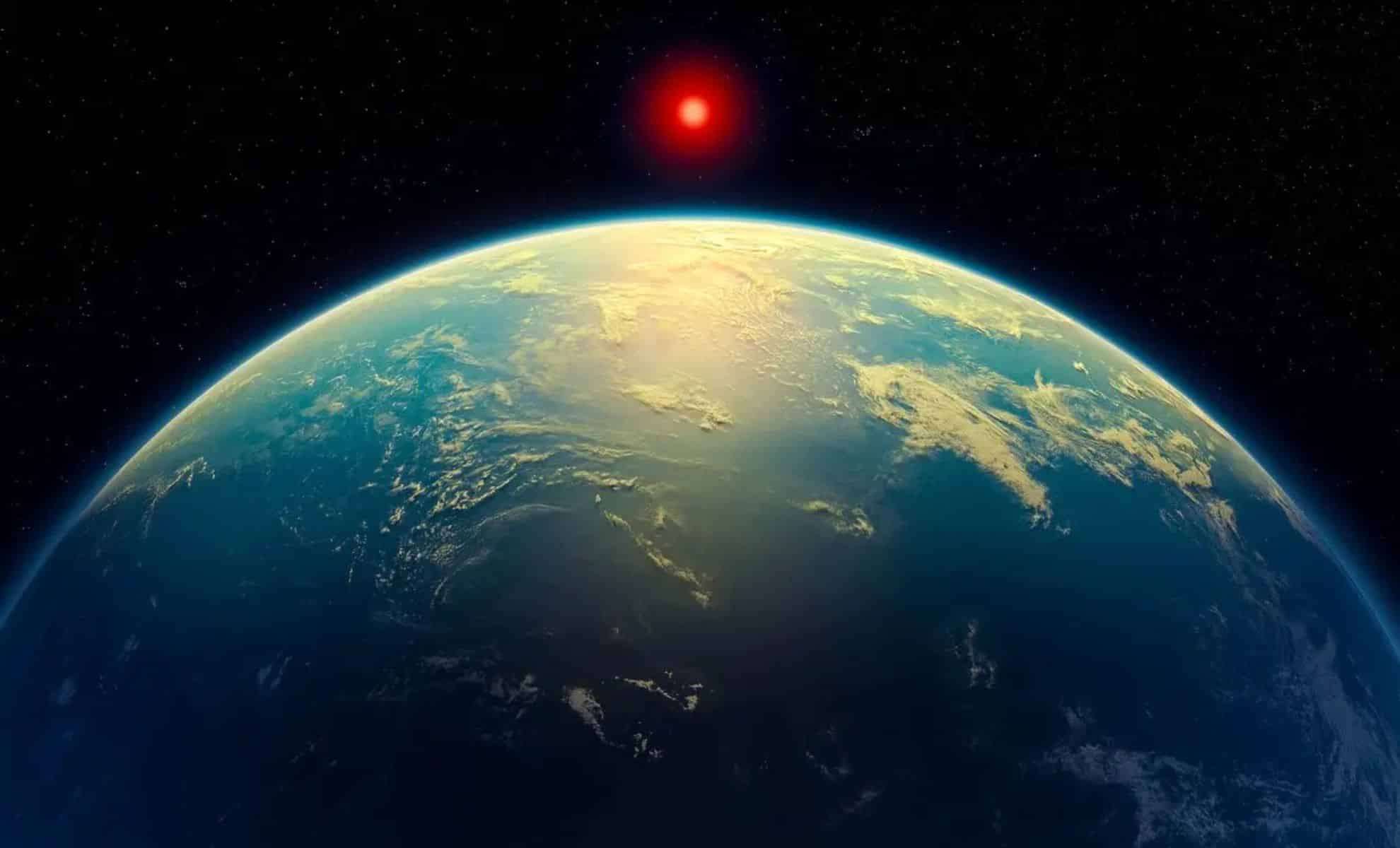
Researchers using the James Webb Space Telescope (JWST) have unveiled compelling signs pointing toward alien life on the exoplanet K2‑18b. Published in The Astrophysical Journal Letters, the study highlights the presence of gases commonly associated with biological activity on Earth, suggesting a significant breakthrough in the quest to find life beyond our solar system.
Situated 124 light-years from Earth, K2‑18b has long intrigued scientists due to its potentially life-supporting conditions. The recent detection of dimethyl sulfide (DMS) and dimethyl disulfide (DMDS)—compounds produced solely by living organisms on Earth—propels this exoplanet into the spotlight as a prime candidate in the search for extraterrestrial life.
Identifying Unique Chemical Footprints on K2-18b
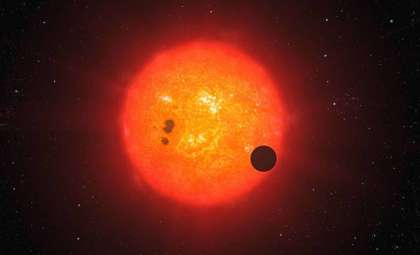
Astronomers utilized Webb's Mid-Infrared Instrument (MIRI) to observe K2-18b as it transited in front of its parent star. This transit spectroscopy technique enabled the team to analyze the planet's atmospheric components, revealing prominent signatures of sulfur compounds, with dimethyl sulfide being particularly abundant.

What distinguishes this discovery is that DMS on Earth arises exclusively from biological sources, primarily marine phytoplankton. The levels detected on K2‑18b exceeded 10 parts per million—dramatically higher than Earth’s atmospheric concentrations—suggesting an ongoing natural source replenishing these gases.
Although the evidence currently reaches a three-sigma confidence level, indicating just a 0.3% chance of a false positive due to noise, it falls short of the five-sigma standard (0.00006% chance) required for definitive proof. Nonetheless, attaining three sigma for such a distant signal is an extraordinary achievement.
Why K2‑18b is a Fascinating Candidate
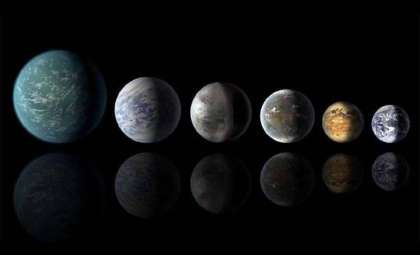
Discovered in 2015, K2‑18b belongs to a class of planets known as Hycean worlds—larger than Earth but smaller than Neptune, possessing a hydrogen-rich atmosphere and possibly expansive oceans beneath its surface. With a mass about 8.6 times that of Earth and a radius 2.6 times bigger, it orbits within the habitable zone of a cool red dwarf star, receiving sufficient warmth to sustain liquid water, an essential ingredient for life.
These latest findings reinforce earlier indications of sulfur-centric atmospheric chemistry observed with different instruments, now bolstered by longer infrared wavelength data. The reproducibility of these results across independent instruments and analytical techniques strengthens the prospect of biological processes at work.
Ongoing Discussion: Biological Signal or Geological Phenomenon?
Despite widespread enthusiasm, scientists exercise caution. Alternative hypotheses propose that non-biological mechanisms such as photochemical reactions or volcanic activity might generate DMS and DMDS. However, the combination of detected gases, environmental conditions, and atmospheric behavior strongly supports a biological source.
“Previous models predicted the presence of elevated sulfur gases on Hycean planets,” said Professor Nikku Madhusudhan, who led the research team. “Our observations align perfectly with these predictions, making the scenario of a life-harboring ocean world the most plausible explanation.”
Co-author Subhajit Sarkar commented, “These findings raise profound questions about the origins of these biosignature gases.” The researchers note that acquiring an additional 16 to 24 hours of JWST observation time could push the detection past the five-sigma threshold, confirming biological activity with high certainty.
Future Prospects in the Search for Life
While JWST has enabled this groundbreaking discovery, next-generation observatories such as the Habitable Worlds Telescope and the European Extremely Large Telescope will provide even finer resolution and allow scrutiny of smaller, Earth-sized planets. Validating biosignatures like DMS on multiple worlds could redefine humanity's understanding of life beyond Earth.
“This moment might represent a turning point,” said Madhusudhan. “We stand on the edge of answering the profound question of whether we are alone in the cosmos.”
- Categories:
- News







0 comments
Sign in to Comment