

The James Webb Space Telescope (JWST) has unveiled a pivotal insight, challenging earlier interpretations of galaxy formation after the Big Bang. Initially, astronomers identified seemingly enormous galaxies that appeared to emerge surprisingly early in cosmic history, raising questions about established cosmological theories.
These galaxies appeared too large, too soon, conflicting with our expectations of galactic development. However, fresh analysis indicates that these galaxies aren’t as massive as originally thought—instead, their apparent giant size results from luminous black holes voraciously consuming gas, creating a deceptive visual effect.
The Role of Black Holes in Galactic Appearance
JWST’s infrared observations revealed early galaxies with unexpectedly vast scales, provoking debate about the accuracy of our models of cosmic evolution. Some proposed that these findings might challenge the standard cosmological model. Nonetheless, a recent study led by Katherine Chworowsky, a graduate student at the University of Texas at Austin, suggests a different perspective: the intense light from accreting black holes inflates the galaxies’ perceived brightness and size.

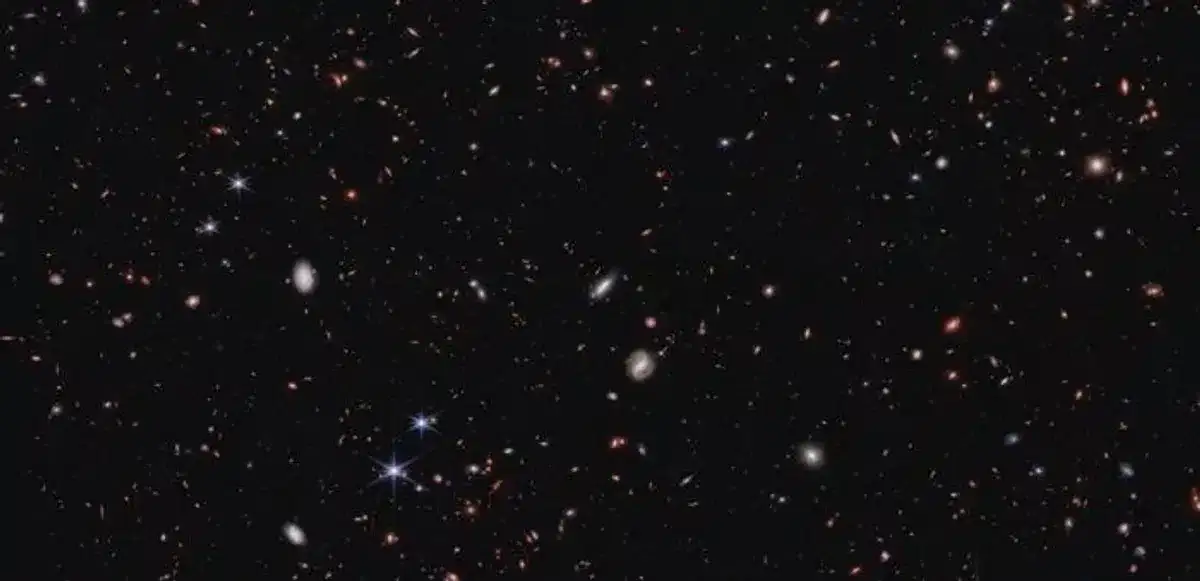
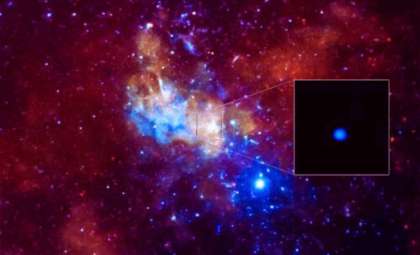
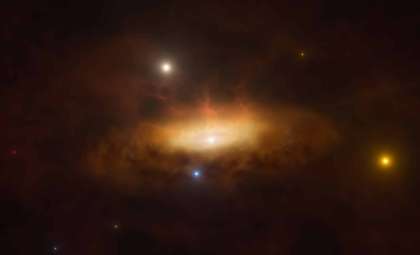
“The presence of black holes within these early galaxies causes them to shine much brighter and appear larger than their true physical size,” Chworowsky explained. As these black holes engulf massive amounts of gas, friction heats the infalling material, generating intense radiation that mimics the glow of larger stellar populations. This phenomenon creates a cosmic optical illusion, obscuring the galaxies’ more modest scale.
By adjusting estimates to exclude the black holes’ contribution, the team found that the galaxies possess significantly less mass than initially believed. “Although we still observe more galaxies than models predicted, none are large enough to challenge our understanding of the universe,” Chworowsky noted. This correction supports the continued validity of the standard cosmological model.
Confirmed Cosmological Model and Emerging Questions
A sense of reassurance has spread through the astronomical community following this discovery, alleviating fears of a fundamental flaw in the dominant theory. As Steven Finkelstein, an astronomy professor at the University of Texas at Austin and co-author, emphasized, “There is no current crisis in cosmology. A well-established theory like this requires overwhelming evidence to be overturned, and that evidence hasn't appeared.”
Still, the puzzle isn’t fully resolved. The observed abundance of massive galaxies in the early universe remains nearly double what was expected, hinting at additional phenomena at play—perhaps an era of particularly efficient star formation.
One hypothesis posits that the densely packed early cosmos facilitated rapid conversion of gas into stars. “In the universe's infancy, galaxies might have been especially adept at forming stars,” Chworowsky suggested. Normally, star creation is slowed by the gas heating and pushing outward during collapse, but higher densities back then could have curtailed gas loss, speeding up star formation.
Continuing Investigations and Unfolding Cosmic Stories
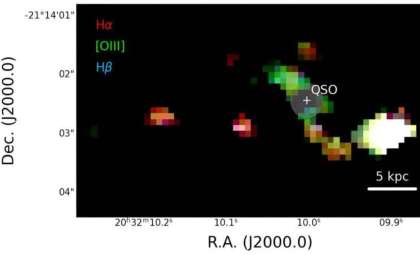
The research team continues to probe these compact stellar systems, often called “little red dots” due to their appearance, aiming to reveal their authentic characteristics. Analysis of their spectra detects fast-moving hydrogen gas, which typically signals black hole accretion disk activity. This bolsters the idea that the extraordinary luminosity originates from black hole processes rather than solely from stars.
“The mystery persists,” Chworowsky reflected. “Science thrives on unanswered questions—it would be dull if a single study resolved everything.” Published in The Astrophysical Journal, their results reinforce the robustness of the standard cosmological model, yet highlight lingering uncertainties regarding early galaxy formation and growth.
Further JWST observations will deepen our grasp of these complex interactions between black holes, star birth, and galaxy development during the universe’s formative billion years after the Big Bang.
- Categories:
- Astronomy ,
- News ,
- Space



0 comments
Sign in to Comment