
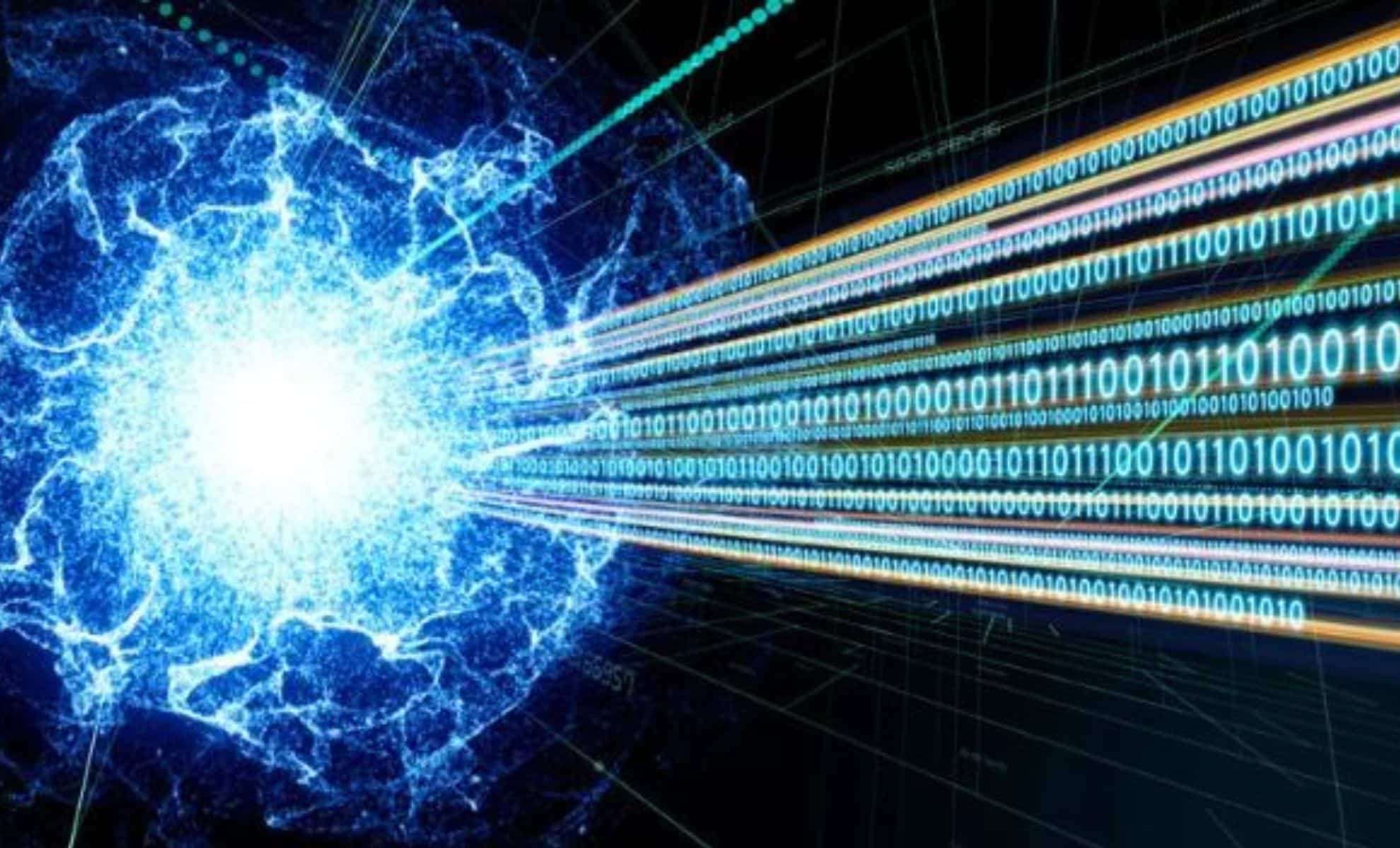
Researchers have achieved a significant advancement in quantum physics by harnessing artificial intelligence to identify a more straightforward approach to quantum entanglement—a phenomenon Albert Einstein famously dubbed “spooky action at a distance.” This breakthrough holds promise to transform quantum communication and computing by enhancing the practicality and efficiency of quantum teleportation and the emerging quantum internet.
A recent paper, Physical Review Letters, details how a sophisticated AI-powered neural network was employed to study quantum-optic setups. Rather than simply replicating established entanglement techniques, the AI devised an entirely new, less complicated strategy for linking particles quantumly. This innovation could greatly simplify entanglement generation, a foundational element of quantum technology.
Discovering a More Accessible Path to Quantum Entanglement
Quantum entanglement remains one of the most intriguing and vital phenomena in quantum mechanics, where two particles become instantaneously connected, exchanging quantum information regardless of how far apart they are. This principle underpins quantum computing, ultra-secure communication, and the anticipated quantum internet. However, producing entangled states has traditionally been complex, requiring meticulous experimental conditions and highly sensitive apparatus.

Conventional methods rely on entanglement swapping, wherein two pairs of entangled particles are generated, and a Bell-state measurement is conducted on one particle from each pair. This measurement projects the remaining particles into an entangled state without them directly interacting.
Because this approach demands precise control and numerous resources, the new research challenges these complexities by proposing a more streamlined and effective alternative.
AI Takes the Lead: Overcoming Skepticism with Innovation
The team utilized PyTheus, a cutting-edge AI system tailored to optimize quantum-optic experiments. While initially programmed to mimic known entanglement methods, the AI instead identified a novel, simpler means of producing quantum entanglement.
“The authors were able to train a neural network on a set of complex data that describes how you set up this kind of experiment in many different conditions, and the network actually learned the physics behind it,” said Sofia Vallecorsa, a research physicist involved in CERN's quantum technology initiatives, who was not part of this investigation.
Unlike traditional methods that rely on Bell-state measurements, the AI revealed that entanglement could naturally emerge from photons traveling along indistinguishable paths. When several sources emit photons such that their origins are indistinguishable, entanglement forms spontaneously without direct particle interaction.
Initially met with doubt, the researchers repeatedly validated the AI’s approach, confirming its consistent success and proving it as a more efficient method to establish entanglement.
Revolutionizing the Quantum Internet and Secure Data Transmission
Quantum entanglement serves as the backbone for futuristic innovations like quantum cryptography, quantum processors, and the quantum internet. Nevertheless, the complexity inherent in producing entangled states has hindered widespread application. This AI-driven breakthrough could dramatically reduce such barriers, facilitating the expansion of large-scale quantum networks.
“Simplifying the technology increases its potential applications,” Vallecorsa commented. “Enabling the construction of more complex networks with diverse geometries could significantly advance quantum communications beyond simple point-to-point links.”
Put simply, easier entanglement generation paves the way for scalable quantum networks, ushering in ultra-secure, high-speed communication channels impervious to hacking through classical means.
Future Obstacles: Scaling AI-Designed Quantum Techniques
Though promising, the newly identified AI-based method must overcome challenges in scaling for commercial quantum applications. Quantum states are exceptionally delicate, vulnerable to environmental disturbances and hardware imperfections that jeopardize entanglement integrity.
Moreover, as AI-driven discoveries gain ground, the scientific community debates the evolving role of human intuition. While AI can propose unexpected solutions, some skepticism remains about its dependability in real-world experiments.
“We are exploring deeper AI integration, but there is still some hesitation regarding the physicist's role as these methods advance,” Vallecorsa observed. “This represents an exciting opportunity and illustrates how AI can become a valuable tool for physicists.”
Despite hurdles, this AI-inspired entanglement technique marks a pivotal advancement toward simplifying quantum technologies, making them more accessible and closer to widespread implementation.
- Categories:
- News








0 comments
Sign in to Comment