

A team of Japanese scientists has engineered a novel type of plastic that balances the necessary strength for regular use with an uncommon ability to fully dissolve in saltwater, marking a pivotal step in combating the worldwide issue of plastic pollution.
Traditional plastics are valued for their toughness, elasticity, and durability—traits that underpin their widespread use. However, these same characteristics cause significant environmental challenges when plastics enter natural ecosystems.
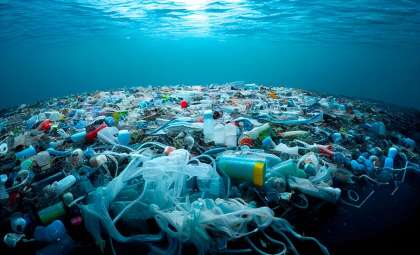
Typically, plastics consist of robust covalent bonds that resist degradation. When these materials end up in nature, they endure for many years, gradually fragmenting into microplastics that pollute waterways, threaten marine organisms, and infiltrate food sources, ultimately affecting human health.

A Revolutionary Approach Based on Reversible Bonding
To tackle this threat, scientists led by Takuzo Aida at the RIKEN Center for Emergent Matter Science (CEMS) have created an innovative plastic that relies on reversible molecular interactions instead of permanent covalent bonds.
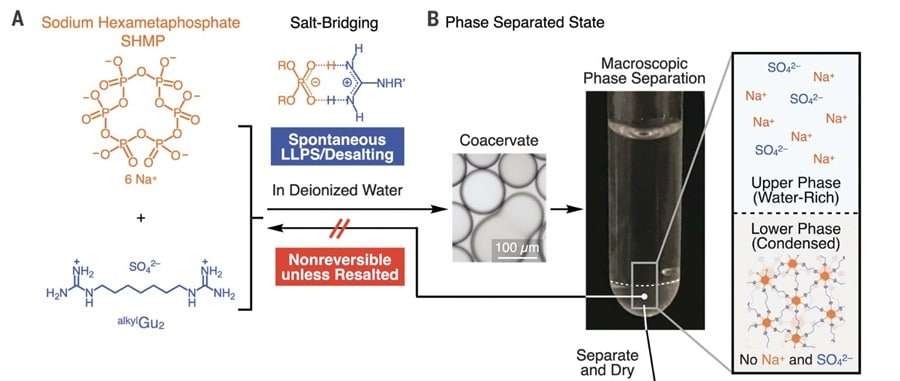
These new supramolecular plastics use ionic monomers linked by salt bridges, replacing traditional covalent polymer chains. This design provides both durability and the unique capacity to dissolve in seawater, breaking apart into harmless compounds which bacteria can then naturally degrade. The plastic's makeup is achieved by combining two specific ionic monomers.
The first monomer, sodium hexametaphosphate, is commonly found in food processing. The second is a guanidinium ion-based monomer, known for forming strong yet reversible bonds. Their interaction forms a cross-linked network through these salt bridges, granting the plastic both toughness and flexibility.
Unlike previous supramolecular plastics, typically considered fragile due to reversible bonding, the RIKEN researchers have engineered these salt bridges to remain stable during use but dissolve upon contact with electrolytes.
Exposure to saltwater causes these cross-links to break down, leading the plastic to collapse and dissolve. Takuzo Aida highlights this unique duality as a major strength:
“While the reversible nature of the bonds in supramolecular plastics has been thought to make them weak and unstable,” he explains, “our new materials are just the opposite.”
Mechanism of Desalting and Dissolution
The team discovered a vital phase transition when mixing the two monomers in water, resulting in a spontaneous separation into two distinct liquid layers. One was a dense, viscous layer abundant in cross-linked salt bridges, and the other a watery solution loaded with displaced salt ions.
For instance, pairing sodium hexametaphosphate with alkyl diguanidinium sulfate expelled sodium sulfate ions into the watery layer. Only the viscous fraction was usable to form a practical plastic. After drying, a pliable and sturdy material named alkyl SP2 emerged.
Skipping this desalting step and drying the entire mixture resulted in a brittle, crystalline solid ineffective for use. Thus, desalting proved crucial for creating a flexible material resilient enough for mechanical applications—until contact with saltwater.
Testing involved immersing samples in saline water, whereupon the plastic quickly absorbed electrolytes. This triggered disruption of the salt bridges, causing the material’s structure to collapse within hours and dissolve into biodegradable molecules. This rapid degradation starkly contrasts with the centuries-long persistence of ordinary plastics.
Applications and Environmental Significance
This advancement paves the way for manufacturing products typically exposed to seawater, such as fishing gear, marine packaging, disposable coastal containers, and boating accessories, from this new supramolecular plastic.
When these items eventually enter the ocean, they would dissolve naturally, preventing the accumulation of persistent waste and greatly diminishing the presence of marine microplastics.
With estimates indicating over 11 million tons of plastic enter oceans annually, materials that retain functionality yet disintegrate safely in marine environments could be transformative for ocean health. This contribution represents a practical approach to reducing the long-term ecological impact of plastics.
Though still experimental, the RIKEN team’s plastic highlights a breakthrough by delivering both durability during use and biodegradability in aquatic settings.
Next steps will likely involve fine-tuning the chemical formulation, broadening monomer options, and evaluating material performance across diverse conditions. Adjusting the salt-bridge chemistry could also allow adaptation for freshwater or industrial applications.
- Categories:
- Science












0 comments
Sign in to Comment