
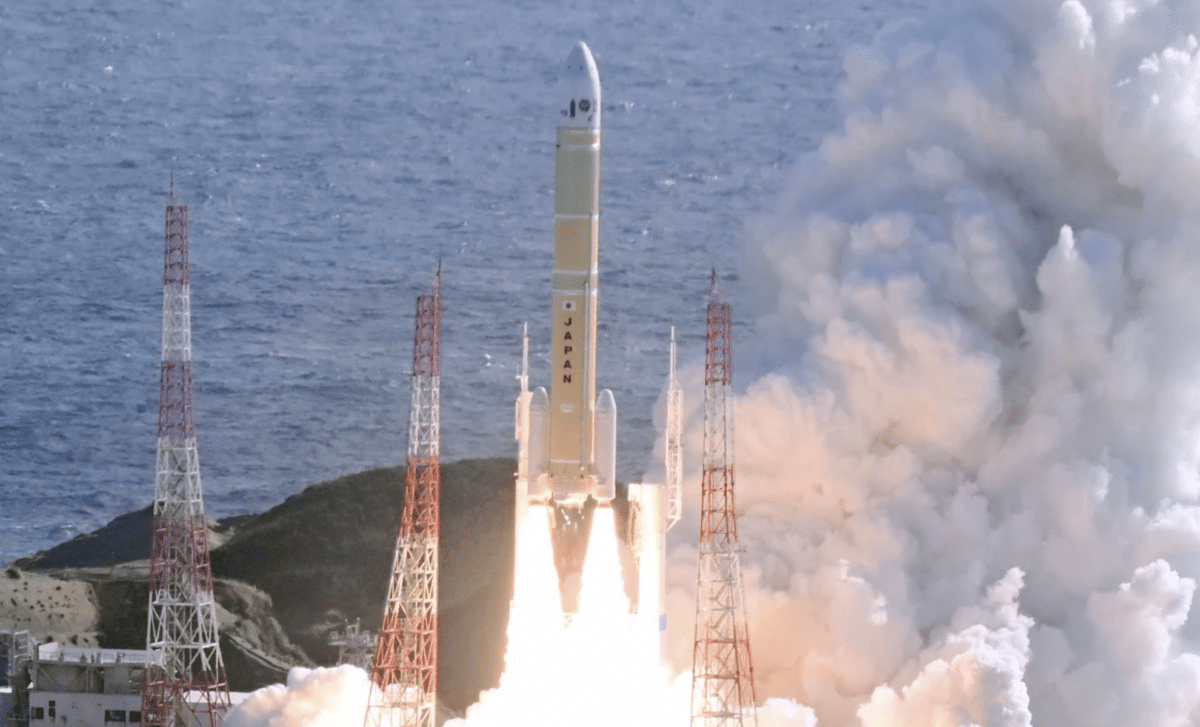
Japan’s quest for a self-reliant satellite navigation framework encountered a major hurdle following the recent unsuccessful deployment of the latest H3 rocket. The rocket, tasked with carrying the Michibiki 5 satellite, launched from the Tanegashima Space Center but failed to place its payload into proper orbit. This setback challenges Japan’s broader space independence strategy, as outlined by AP News.
Another Critical Failure for Japan’s Advanced Launch Vehicle
On December 22, the H3 rocket experienced its second significant malfunction during a pivotal mission phase. Operated by the Japan Aerospace Exploration Agency (JAXA), the vehicle’s second-stage engine shut down earlier than planned. Officials reported uncertainty about whether the Michibiki 5 successfully separated from the rocket, leaving its orbital insertion unclear.
This setback echoes the rocket’s inaugural failure in March 2023, when a similar issue in the second-stage propulsion halted its orbital mission. Despite six successful flights since then, this recent failure disrupted confidence in the rocket’s overall reliability and raised questions about Japan’s modernization of its space launch vehicles.

“We will pull ourselves together so that we won’t fall behind rivals. We’ll fully investigate the cause and put H3 back on track,” said Makoto Arita, H3 project manager at JAXA.
He emphasized that the H3 launch system, still early in its deployment, holds strong potential to compete internationally.
Expanding Japan’s Regional Navigation Network
The lost payload, Michibiki 5, was intended to bolster the Quasi-Zenith Satellite System (QZSS), an advanced regional navigation network operating since 2018. Currently consisting of five satellites, the system supplements the American GPS to deliver enhanced accuracy to users in East Asia, supporting applications such as mobile devices, drones, and marine navigation.
Plans aimed to grow the constellation to seven satellites by March 2026 and further extend it to eleven by the late 2030s, striving toward a fully autonomous positioning system. The recent failure delays this expansion and highlights the vulnerability of such complex infrastructure projects.
Jun Kondo, senior official at Japan’s Ministry of Education, Culture, Sports, Science and Technology, labeled the launch setback as “deeply disappointing” and confirmed formation of a government task force charged with investigating the failure and preserving the integrity of Japan's space endeavors.
Positioning in a Competitive Space Launch Market
Japan’s aspirations extend beyond national prestige, with the H3 rocket designed to offer cost-effective launch services appealing to global customers. It aims to replace the venerable H-2A rocket, known for reliability but higher operating costs.
Thus, establishing a dependable and economical launch vehicle is crucial for Japan’s space and security objectives. As reported by AP News, the failed launch followed closely on the heels of an earlier attempt aborted mere seconds before liftoff due to a malfunction in the ground support water spray system.
JAXA acknowledges the urgency to restore the H3’s reputation and reassure partners. This incident illustrates the inherent difficulties even technologically advanced nations face when pioneering new rocket technologies for orbital insertion.
Looking Forward to Japan’s Space Sovereignty
Although this failure temporarily clouds Japan’s space program, its strategic vision remains firm. The pursuit of geopolitical independence from foreign navigation systems like GPS grows more critical as digital and defense sectors increasingly depend on precise location services.
The Michibiki constellation stands as a pillar in this strategy, enabling Japan to secure enhanced economic and defense benefits, including smart logistics, autonomous transportation, and secure communications.
JAXA’s thorough investigation will dictate how rapidly the H3 rocket can resume flights. The results will significantly influence timelines not only for the Michibiki network expansion but also for Japan’s participation in international endeavors such as the Artemis lunar missions and other planetary explorations.
- Categories:
- Space








0 comments
Sign in to Comment