
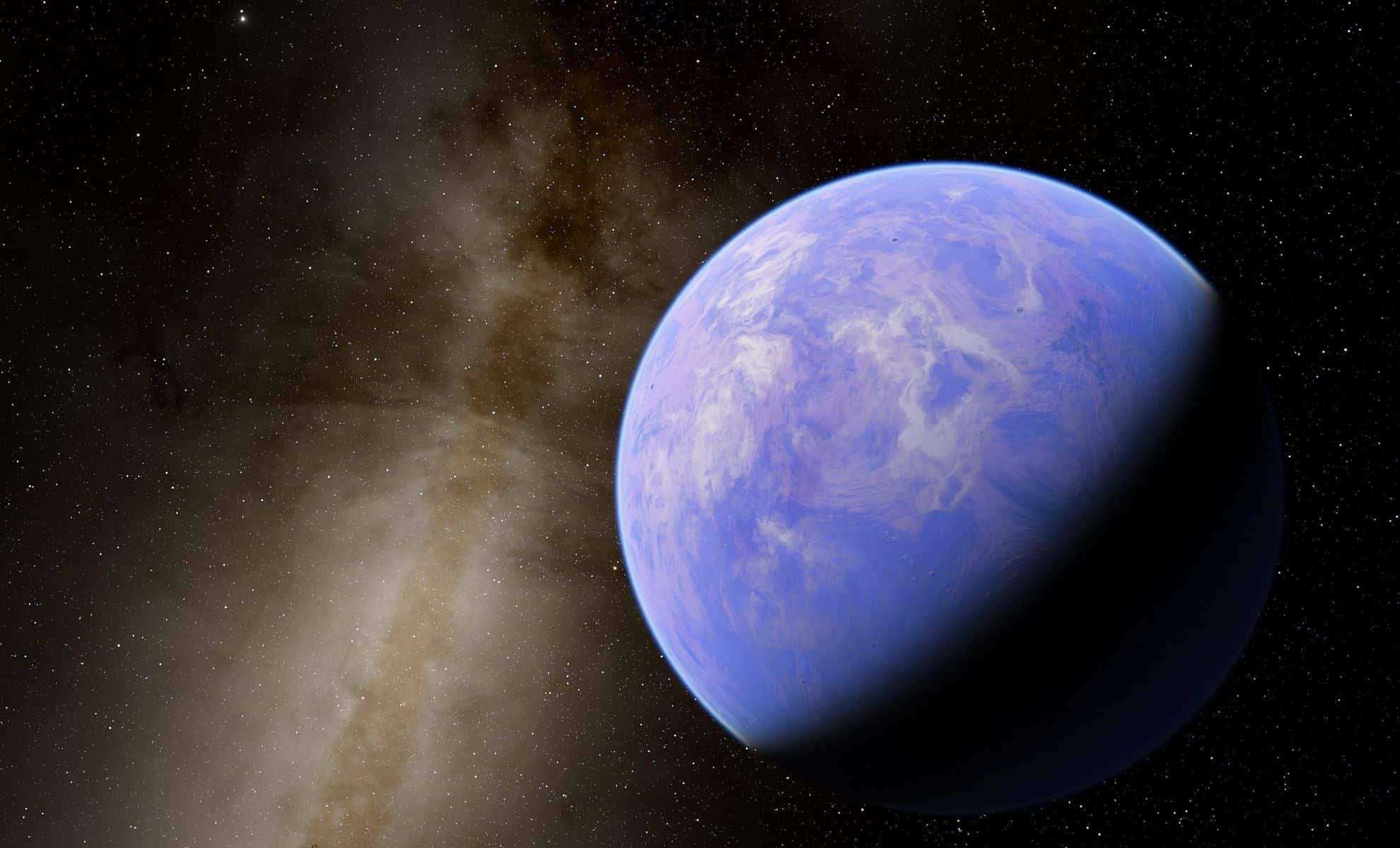
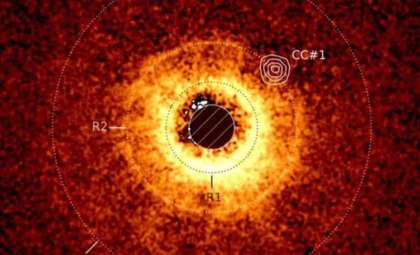
The James Webb Space Telescope (JWST) has uncovered a fascinating new aspect in the search for extraterrestrial life by identifying water vapor—specifically steam—in the atmospheres of several remote exoplanets classified as sub-Neptunes.
These mid-sized, water-rich planets have attracted significant attention, propelled by an advanced modeling approach developed by researchers at the University of California, Santa Cruz. Their innovative results, published in The Astrophysical Journal on July 24, 2025, prompt a fresh perspective on the formation and potential habitability of these intriguing worlds.
Unveiling the Complexities of Sub-Neptune Interiors
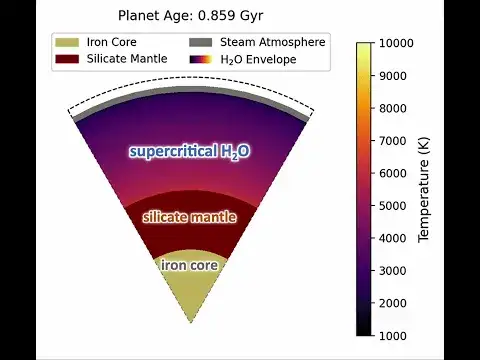
Led by postdoctoral scientist Artem Aguichine, the UC Santa Cruz team has designed a novel model capturing the dynamic processes inside sub-Neptunes. This model simulates their development from birth through billions of years, emphasizing the constant evolution of their atmospheres and inner layers. Instead of a fixed snapshot, it tracks how temperature, pressure, and water fractions fluctuate over geological timescales.

Building on prior frameworks originally crafted for icy moons like Europa and Enceladus, this study extends into the realm of more massive and hotter planets. Sub-Neptunes, often holding masses 10 to 100 times that of Earth, endure extreme environments with intensely heated atmospheres and interiors filled with supercritical water—a hybrid phase exhibiting properties of both liquids and gases.
Even more extraordinary is the potential existence of superionic ice within these planets, a rare state where hydrogen ions move freely through a stable oxygen lattice. While replicated in laboratory conditions, confirming this phase naturally occurring on distant worlds excites astronomers worldwide.
Water’s Role in Creating Life-Friendly Conditions
Spotting water vapor in an exoplanet’s atmosphere marks a critical step in assessing its capacity to support life. Equally crucial is understanding how water behaves amidst the extreme planetary environments. According to the study’s researchers, water’s chemical flexibility enables it to function as both an acid and a base, dissolve essential molecules such as salts and amino acids, and influence a planet’s thermal and chemical balance through hydrogen bonding.
“Life can be understood as complexity,” said Aguichine, “and water has a wide range of properties that enables this complexity.” This property cements water's pivotal role in astrobiology, even on worlds where liquid water might not exist in familiar forms.
The team's evolutionary simulations offer a framework for interpreting JWST's atmospheric observations, helping to predict a planet's makeup, structural characteristics, and habitability potential as these steam worlds evolve.
From JWST's Discoveries to PLATO's Future Insights
JWST’s identification of atmospheric steam marks just the launch point. Many more sub-Neptunes are slated for observation, with the UC Santa Cruz model poised as a vital instrument for deciphering forthcoming data. These detailed simulations reveal insights far beyond present planetary states, aiding in directing the search for life-friendly exoplanets.
The upcoming European Space Agency mission, PLATO, will further refine our understanding by focusing on Earth-sized planets inside habitable zones, while also gathering valuable data on larger, steam-laden worlds. “PLATO will be able to tell us how accurate our models are, and in what direction we need to refine them,” Aguichine shared.
Each new exoplanet discovery deepens our comprehension of water’s unusual behavior under intense conditions. Once dismissed as too hostile for life, steam worlds are increasingly viewed as key candidates in astrobiology’s quest to locate where life might originate beyond our solar system.
- Categories:
- News





0 comments
Sign in to Comment