
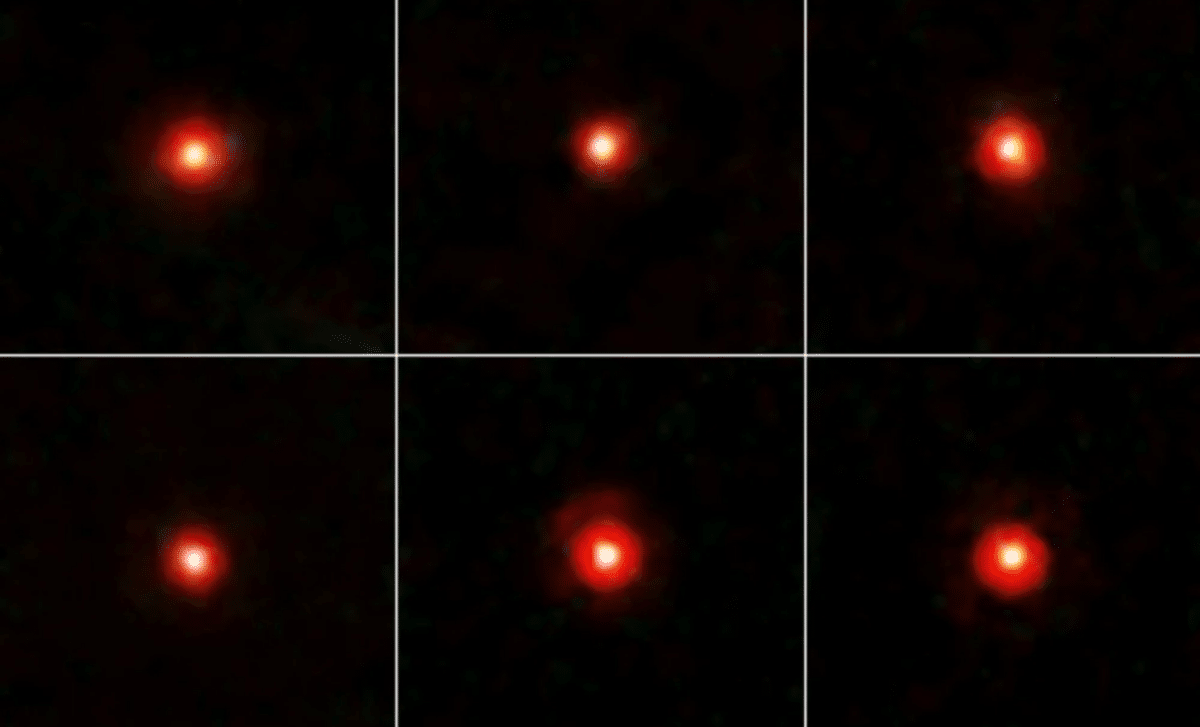
Using the James Webb Space Telescope (JWST), astronomers have identified two dwarf galaxies harboring black holes that challenge established astrophysical paradigms. These black holes reside in galaxies significantly less massive than those conventionally linked to supermassive black holes (SMBHs), suggesting a more rapid growth of black holes in early galaxies than previously assumed.
Surprising Findings: Pelias and Neleus Challenge Established Views
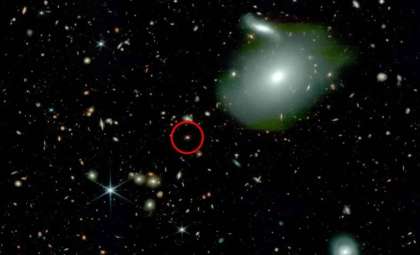
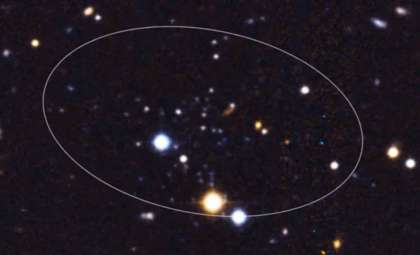
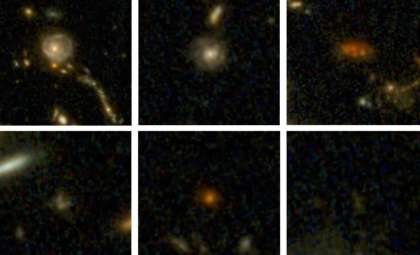
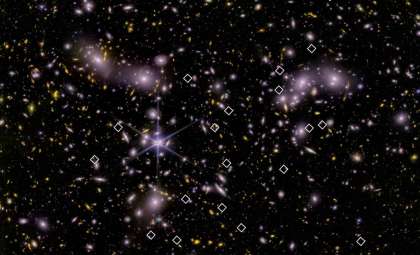
A research team led by Eduardo Iani, with a paper available on arXiv, describes two dwarf galaxies named Pelias and Neleus at redshifts approximately 0.71 and 0.75. Despite their modest sizes and relatively young stellar populations, these galaxies contain black holes weighing up to 60% of the total galaxy mass. Typically, black hole masses represent only 0.1% to 0.5% of their host galaxies. This finding implies that the black holes grew disproportionately faster than their galaxies’ stars.
JWST’s advanced infrared instruments captured detailed spectral energy distributions (SEDs) of these galaxies. The study notes, “We report the discovery and characterization of two compact galaxies, Pelias and Neleus, at z ~ 0.71 and z ~ 0.75,” showing intense blue emissions in the UV-optical range indicative of young, hot stars, yet their SEDs also revealed a sharp rise in near- and mid-infrared wavelengths, signaling the presence of a dust-enshrouded active galactic nucleus (AGN) at their centers.

The Enigma of Dust-Shrouded Active Galactic Nuclei
JWST’s MIRI instrument observations revealed a significant excess in mid-infrared emission beyond what could be explained by star-formation or typical dust heating processes.
“JWST/MIRI photometry reveals a strong mid-infrared excess that cannot be explained by stellar populations or star-formation-heated dust alone, requiring a hot-dust component most naturally associated with a deeply embedded active galactic nucleus (AGN),” the authors explain.
This finding is pivotal because it indicates these black holes are actively accreting but obscured by thick dust, making detection through traditional techniques challenging.
Notably, despite evidence for AGN activity, no X-ray signals were detected from these galaxy centers. The researchers suggest, “The lack of X-ray detections suggests that the accretion may be either heavily obscured or intrinsically X-ray weak.” This absence of X-rays supports the idea that these black holes might be in a Super-Eddington accretion stage, aggressively consuming material at rates far beyond normal limits.
Understanding Super-Eddington Accretion and Swift Black Hole Expansion
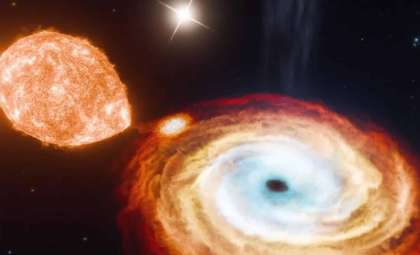
The Super-Eddington accretion model offers an explanation for the rapid black hole growth observed. In this regime, black holes intake mass at extraordinary speeds, surpassing classical growth ceilings. The team proposes that this mechanism could be essential for early-universe black hole development, especially in compact, low-mass galaxies like Pelias and Neleus. They state, “Super-Eddington phases are thought to enable rapid early black-hole growth, particularly in low-mass galaxies.”
Dwarf galaxies like these, with stellar masses near 107 solar masses, represent some of the smallest systems known to harbor active nuclei. The rapid black hole expansion seen here confirms supermassive black holes can form even in such petite galaxies. “Overall, Pelias and Neleus demonstrate that rapid, dust-enshrouded black-hole growth can occur in galaxies with stellar masses of only ∼ 107 solar masses,” the study emphasizes.
Looking Ahead: Unlocking the Secrets of Black Hole Evolution
This groundbreaking identification of overmassive black holes in dwarf galaxies paves the way for further exploration. Scientists aim to locate additional similar galaxies to assess the prevalence of this phenomenon. Upcoming observatories like the Roman Space Telescope and the Extremely Large Telescope (ELT) will be instrumental in systematically searching for low-mass, dust-hidden AGNs. These cutting-edge facilities promise the capability to discern the detailed internal makeup of such galaxies, crucial for testing prevailing black hole growth theories during early formation epochs.
These findings underscore JWST’s transformative role in pushing cosmic frontiers. “At longer timescales, facilities such as the Roman Space Telescope and ELT-class observatories will enable systematic searches for similar low-mass obscured AGN and resolve their internal structure, providing crucial tests of whether the embedded accretion phase inferred here represents a common pathway in DG evolution,” the authors conclude.
Anticipate numerous forthcoming insights into the profound links between black holes and galactic structures, potentially revolutionizing our grasp of universal evolution and the cosmos itself.
- Categories:
- News


0 comments
Sign in to Comment