
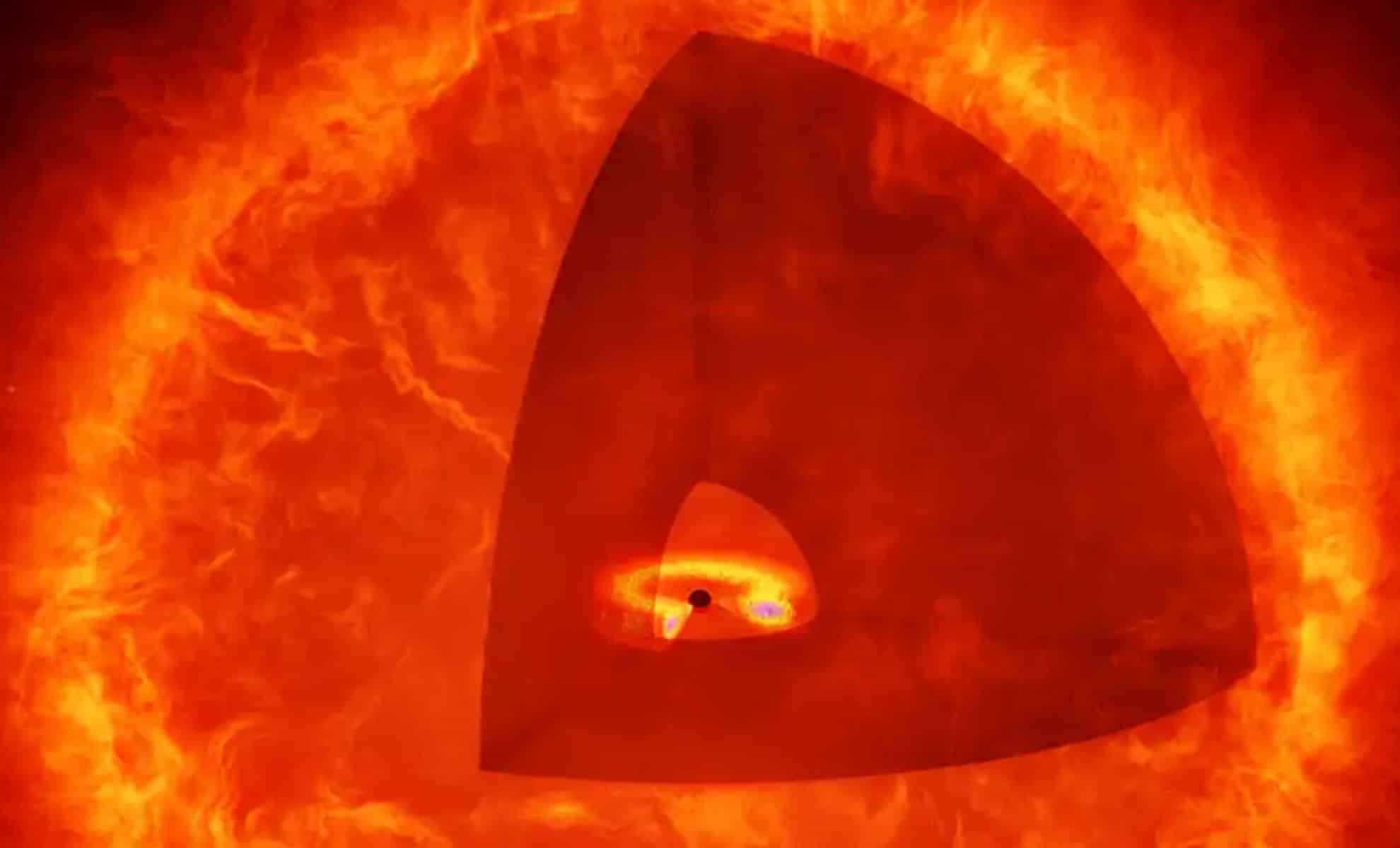
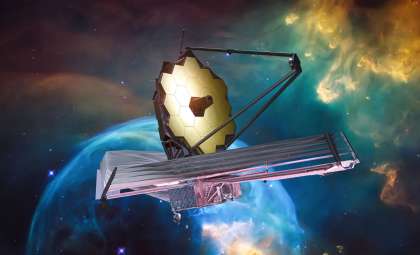
A distinctive group of bright red spots scattered through the distant cosmos has intrigued astronomers, leading to a groundbreaking hypothesis: these sources might not be primitive galaxies but a novel type of astronomical entity called black hole stars. This revolutionary interpretation, detailed in a recent Astronomy & Astrophysics paper, challenges current explanations of some of the most enigmatic observations from the James Webb Space Telescope (JWST).
Unexpected Red Dots Challenge Previous Assumptions
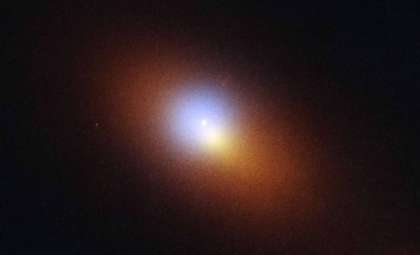
Soon after JWST began sending back its pioneering deep-field images in 2022, astronomers noticed peculiar pinpoint sources emitting intense red light. These so-called tiny red dots were unexpectedly luminous given their small size, appearing at a mere 500 to 700 million years post-Big Bang, a period marking the universe’s nascent stages.
Scientists initially classified these objects as youthful galaxies densely packed with stars. Yet the calculations presented a dilemma: to account for their brightness, these galaxies would require an enormous accumulation of stars—on the order of hundreds of billions of solar masses—condensed into exceptionally compact volumes. As noted by astrophysicist Joel Leja from Penn State, “Such a galaxy’s night sky would be extraordinarily bright.”

Forming stars at this scale and density far surpasses anything previously observed, whether in our Milky Way or other known systems.
The Spectral Break That Sparked New Theories
July 2024 brought a pivotal discovery: data from the RUBIES program (Red Unknowns: Bright Infrared Extragalactic Survey) revealed an extraordinary red dot, dubbed The Cliff for its distinctive spectral feature known as a Balmer break. While such breaks typically signify reduced star formation in galaxies, The Cliff displayed an unusually sharp break that defied all existing models.
Light from this entity had traversed approximately 11.9 billion years before reaching Earth, dating back to a period when galaxy assembly was ongoing. Yet, The Cliff was already massive and strikingly compact, exhibiting none of the typical spectral traits of known galaxies. Lead author Anna de Graaff from the Max Planck Institute for Astronomy remarked, “Its extraordinary characteristics pushed us to reconsider and devise new frameworks.”
Introducing Black Hole Stars as an Alternative Explanation
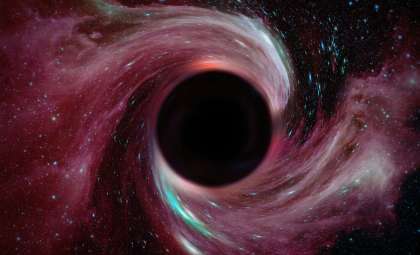
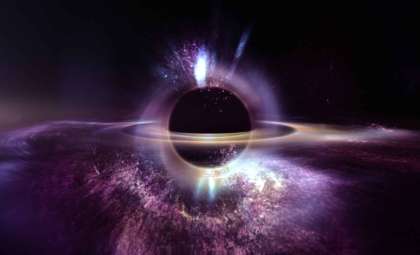
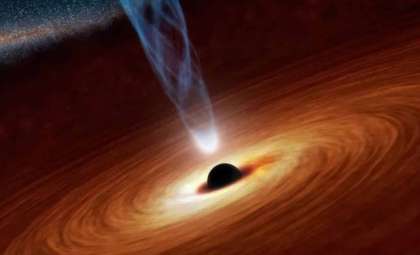
Failing to fit The Cliff's traits into established frameworks, researchers put forth the concept of black hole stars. Contrary to normal stars powered by nuclear fusion, these entities consist of a supermassive black hole enveloped by a thick hydrogen gas shell. The black hole’s accretion heats this outer gas, causing it to emit light.
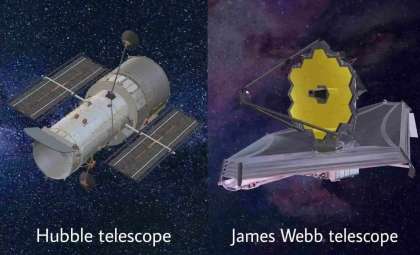
Despite not fulfilling the traditional definition of a star, this arrangement produces radiation resembling a stellar atmosphere. The turbulent outer layers absorb and re-radiate energy in a manner akin to cold, red stars. JWST’s proficiency in infrared observation enables detection of these outer gas layers, a feat beyond the reach of earlier instruments like Hubble.
Remarkably, The Cliff’s spectral signature better matched that of a single massive star rather than a galaxy, supporting the black hole star hypothesis.
Illuminating the Growth of Early Supermassive Black Holes
These theoretical black hole stars could serve as efficient black hole growth engines, allowing accretion at rates substantially higher than typical galactic centers. Though similar ideas have been explored for intermediate-mass black holes, the new observations hint at a wider significance for these objects.
Joel Leja explains that this concept could transform our understanding of galaxy development: “Black hole stars might represent the earliest evolutionary stages of the supermassive black holes currently observed in galaxies.”
The theory remains in its infancy, pending additional data. Future JWST observations are already planned to further investigate and validate this provocative idea.
Anna de Graaff emphasized, “This theory currently aligns best with the data, but more research is essential.” The universe’s early epochs continue to challenge our understanding, with these faint red sources potentially revealing cosmic phenomena never before recognized.
- Categories:
- News



0 comments
Sign in to Comment