

An Australian Ph.D. candidate has successfully synthesized cosmic dust in a controlled laboratory setting, paving the way to better understand the molecular roots of life that predate Earth’s existence. Published in The Astrophysical Journal, this research reveals that complex organic compounds can develop under plasma conditions similar to those found near aging stars and stellar nurseries, supporting the hypothesis that life’s building blocks formed in space before arriving on early Earth.
Simulating Deep Space Conditions in the Lab
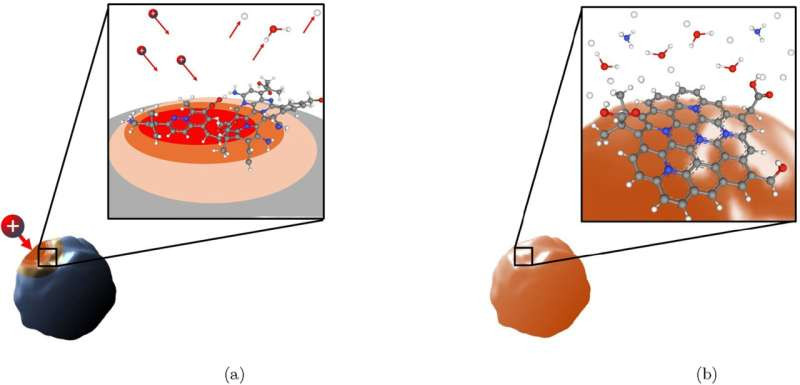
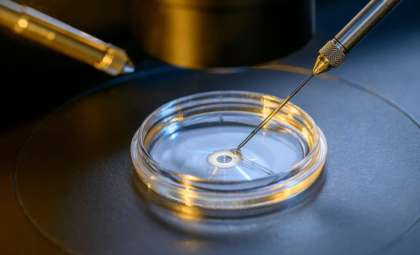
The study aimed to mimic the extreme environments far beyond Earth, where matter is subjected to intense radiation, energetic particles, and electric fields. Scientists used vacuum glass tubes to recreate near-space vacuums, introducing a blend of nitrogen, carbon dioxide, and acetylene, gases typical of cosmic regions. Applying electrical potentials close to 10,000 volts, the team generated glow-discharge plasma, which broke molecular bonds and enabled rapid chemical recombination. Over time, molecules reformed into increasingly complex compounds, eventually depositing as thin dust films on silicon surfaces, closely resembling interstellar and cometary dust in both makeup and structure.
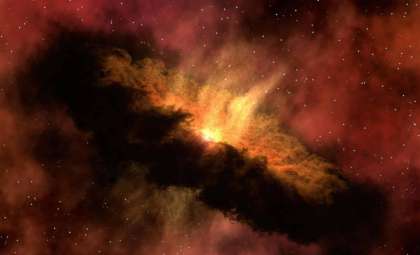
“We no longer have to wait for an asteroid or comet to come to Earth to understand their histories,” Losurdo said. “You can build analog environments in the laboratory and reverse engineer their structure using infrared fingerprints. This can give us huge insight into how ‘carbonaceous cosmic dust’ can form in the plasma puffed out by giant, old stars or in cosmic nurseries where stars are being born and distribute these fascinating molecules that could be vital for life. It’s like we have recreated a little bit of the universe in a bottle in our lab.”
Add Cosmo Herald as a Preferred Source

The Essential Role of Cosmic Dust in Life’s Genesis
Microscopic cosmic dust is crucial in space chemistry, serving both as catalysts and vaults for complex organic molecules. These tiny grains drift through the cosmos, constantly impacted by energetic ions and electrons that facilitate chemical reactions rarely occurring on planets. The lab-produced dust included abundant carbon, hydrogen, oxygen, and nitrogen—the so-called CHON elements—which are foundational to biomolecules like amino acids, nucleobases, and sugars. This finding strengthens the view that much of life's chemical makeup was forged in space before arriving on Earth.
“Covalently bonded carbon and hydrogen in comet and asteroid material are believed to have formed in the outer envelopes of stars, in high-energy events like supernovae, and in interstellar environments,” Losurdo said. “What we’re trying to understand are the specific chemical pathways and conditions that incorporate all of the CHON elements into the complex organic structures we see in cosmic dust and meteorites.”
Aligning Lab Results With Observational Astronomy
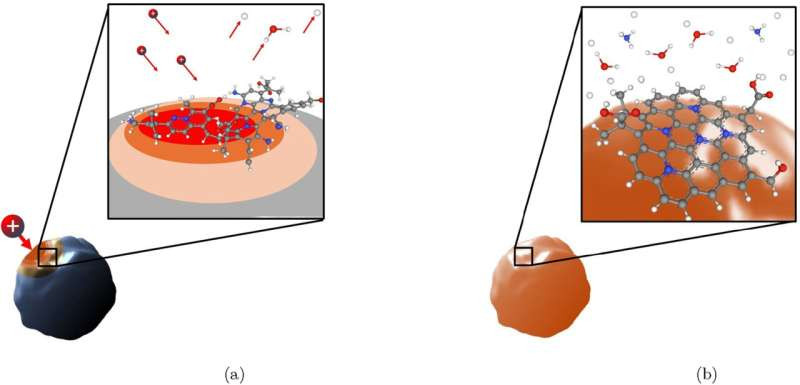
A key confirmation of the experiment’s success came through infrared spectroscopy, a technique widely used to analyze distant cosmic dust clouds. Each molecular arrangement absorbs and emits infrared light in unique patterns, producing spectral fingerprints that reveal composition. The laboratory-created dust exhibited infrared features that closely matched those detected in space, indicating the plasma-driven process faithfully mimics natural cosmic chemistry. This close match allows researchers to directly connect lab findings with telescope data, bolstering the credibility of lab simulations for studying otherwise inaccessible cosmic environments.
Published in The Astrophysical Journal, these insights also guide the interpretation of infrared measurements from star-forming regions, supernova remnants, and disks around young stars, where organic chemical activity is high.
Unlocking the Past of Meteorites and Asteroids
The study extends beyond chemistry to help decode the physical histories of meteorites and asteroids reaching Earth. Surface features like smoothing, clustering, and compaction reveal cumulative exposure to ions and heat over geological timescales. By replicating these effects in the lab, scientists can estimate conditions such as temperature and radiation intensity that shaped these materials during space travel, offering deeper insights into their cosmic origins.
“By making cosmic dust in the lab, we can explore the intensity of ion impacts and temperatures involved when dust forms in space,” Professor McKenzie said. “That’s important if you want to understand the environments inside cosmic dust clouds, where life-relevant chemistry is thought to be happening. This also helps us interpret what a meteorite or asteroid fragment has been through over its lifetime. Its chemical signature holds a record of its journey, and experiments like this help us learn how to read that record.”
Mapping Life’s Molecular Journey Across the Cosmos
The ultimate goal is to build an exhaustive database of infrared signatures from lab-made cosmic dust, enabling astronomers to pinpoint and compare organic-rich zones throughout the galaxy. Matching observational data with known experimental conditions helps researchers trace where and how complex chemistry arises, connecting stars’ life cycles with planet formation and life’s emergence. This research bolsters the idea that the core components for life are widespread in the universe and that Earth’s organic inventory was seeded by spaceborne processes predating our planet.
- Categories:
- Science






0 comments
Sign in to Comment