
For years, the elusive nature of dark matter—the unseen substance constituting the bulk of the universe's mass—has challenged scientists worldwide. Recently, a pioneering study utilizing NASA’s Fermi gamma-ray space telescope has uncovered promising signs that could provide the first tangible proof of dark matter’s existence. This research, released on November 25 in the Journal of Cosmology and Astroparticle Physics, offers new insights into a cosmic enigma that has puzzled physicists for nearly a century.
Advancing the Quest to Identify Dark Matter
Dark matter has captured the curiosity of astronomers due to its invisible yet influential presence, inferred solely through gravitational interactions with observable matter. Its existence was first proposed in the 1930s by Fritz Zwicky, who noted the unexpectedly rapid movement of galaxies within the Coma Cluster, which couldn't be explained by visible matter alone. Later, in the 1970s, Vera Rubin’s observations of spiral galaxies showed stars orbiting faster than anticipated, suggesting an unseen mass—dark matter—was exerting gravitational pull.
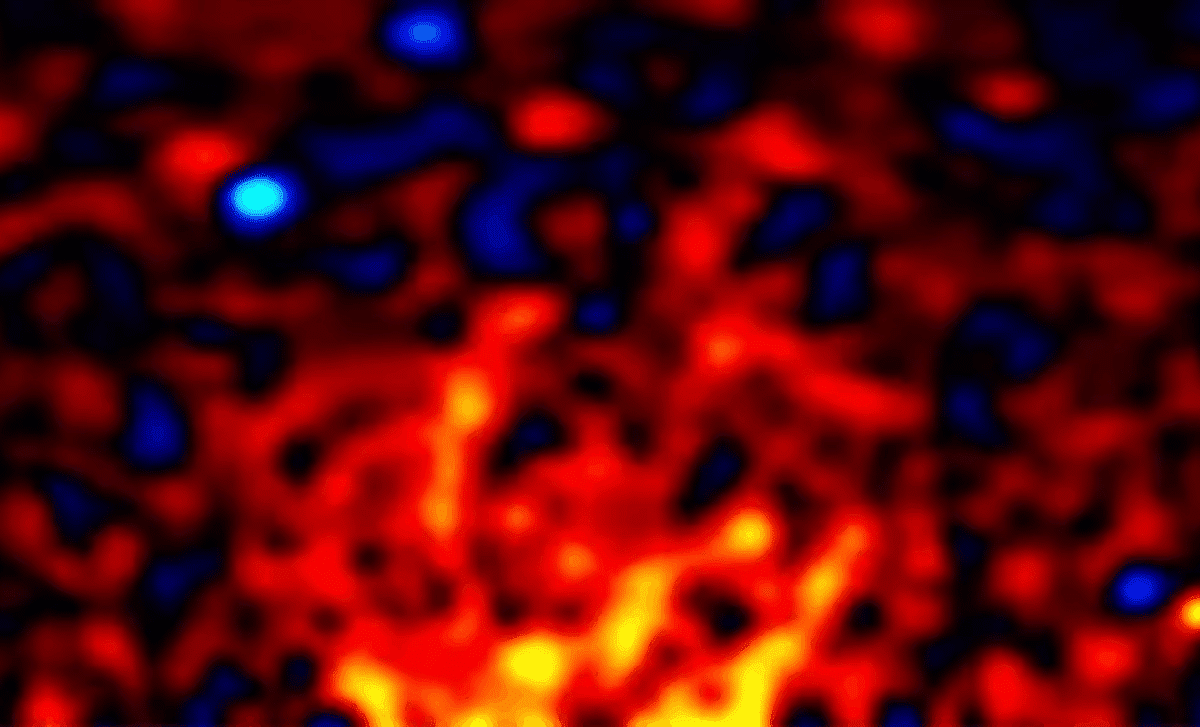
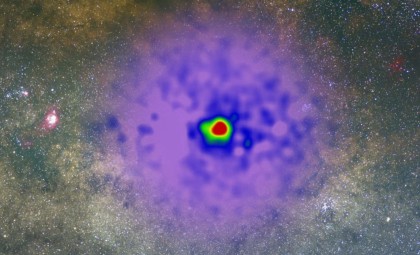
Detecting something that doesn’t emit or absorb light has been a significant obstacle until now. A team led by Tomonori Totani at the University of Tokyo directed the Fermi telescope toward the Milky Way's center, observing gamma rays that could signify the first direct detection of dark matter. These high-energy rays appeared in a halo-shaped formation, suggesting the annihilation of dark matter particles—a phenomenon long predicted but never confirmed. The findings, published on November 25 in the Journal of Cosmology and Astroparticle Physics,

Gamma Rays Illuminate Dark Matter’s Hidden Landscape
The research concentrated on the dense region at the Milky Way’s core where dark matter is believed to accumulate. Scientists detected gamma rays with photon energies of 20 gigaelectronvolts—significantly higher than typical cosmic emissions. Totani noted, "We detected gamma rays with a photon energy of 20 gigaelectronvolts (or 20 billion electronvolts, an extremely large amount of energy) extending in a halolike structure toward the center of the Milky Way galaxy." The spatial pattern of these gamma rays closely matches theoretical models of the dark matter halo.
These gamma-ray signals correspond closely with the anticipated signature from the annihilation of WIMPs (Weakly Interacting Massive Particles), leading dark matter candidates. This result represents a crucial advancement for astrophysics, hinting that dark matter might be within the reach of direct observation, although further data collection is required to confirm these findings.
Dark Matter: Unveiling a New Fundamental Particle
Despite remaining mysteries about dark matter, this potential breakthrough points to a previously unknown particle type beyond those cataloged in the current standard model of particle physics. Totani remarked, “If this is correct, to the extent of my knowledge, it would mark the first time humanity has ‘seen’ dark matter.” Such a discovery could revolutionize our comprehension of the universe’s constituents, revealing a new particle family that interacts weakly with normal matter.
The ramifications extend beyond confirmation of dark matter’s presence—this could signify the dawn of new physics concepts, potentially bridging theoretical divides between quantum mechanics and general relativity and deepening our understanding of cosmic forces.
Future Directions in Dark Matter Investigation
While the present evidence is compelling, Totani and colleagues stress that additional observations are necessary to bolster confidence in their conclusions. “This may be achieved once more data is accumulated, and if so, it would provide even stronger evidence that the gamma rays originate from dark matter,” Totani emphasized. Continued operation of the Fermi telescope promises further data to test this hypothesis.
Moving forward, dark matter research will integrate sustained observational campaigns, enhanced computational modeling, and the innovation of next-generation detection instruments. Should these approaches reinforce current findings, humanity may soon unravel one of the universe’s longest-standing mysteries.
- Categories:
- Physics







0 comments
Sign in to Comment