
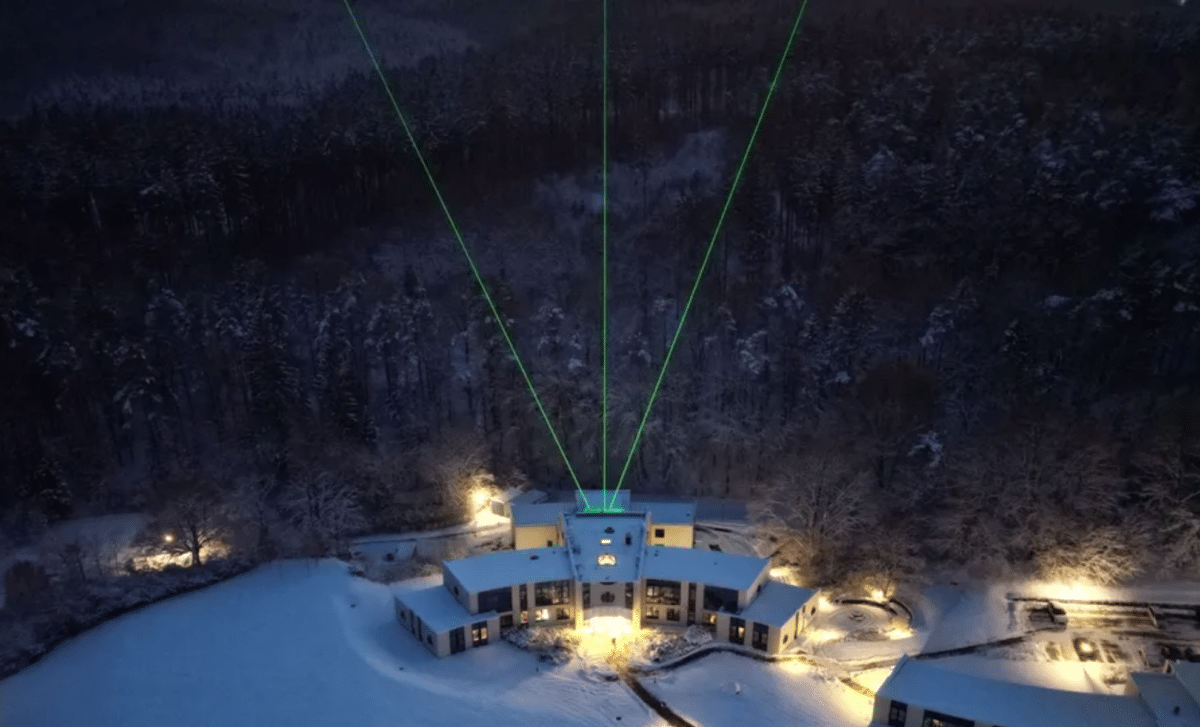
Scientists have unveiled an advanced laser-based monitoring technique that offers unique insights into how falling satellites and rocket fragments are affecting Earth's upper atmosphere. Research from the Leibniz Institute of Atmospheric Physics (IAP), featured on the IAP website, highlights rising chemical residues traced to an increase in satellite reentries linked to today's booming space ventures. This discovery raises fresh concerns regarding the environmental footprint of rapidly growing orbital activities and mega-constellation deployments.
An Unusual Lithium Cloud Sparked the Study
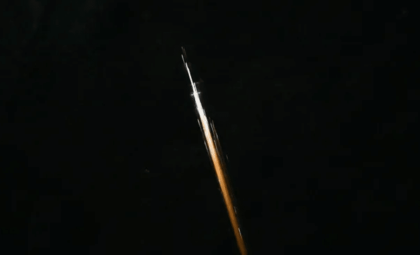
The investigation intensified on the night of February 19-20, 2025, when scientists observed an extraordinary lithium cloud in Europe’s upper atmosphere. Lithium levels measured were about ten times greater than typical background concentrations. By tracking the air mass, researchers connected the anomaly to a region west of Ireland coinciding with the descent path of a SpaceX Falcon 9 rocket stage reentering Earth's atmosphere.
This marked a pivotal moment in directly linking satellite debris reentry with measurable atmospheric contamination. Deploying cutting-edge LiDAR technology—a laser remote sensing system capable of detecting chemical signatures over large distances—the team found that materials disintegrating during reentry were injecting metallic compounds into normally pristine upper atmosphere layers.

Experts suggest this may signal the onset of a broader environmental challenge. The volume of satellites burning up each year is expected to soar as commercial space efforts expand. Thousands of satellites from burgeoning broadband constellations will eventually reenter and release compounds about which scientists currently have limited knowledge.
“Lithium plays a vital role in tracking human influence on the middle atmosphere because of its prevalent use in satellite technologies,” explained Michael Gerding from the optical and rocket soundings division at the Leibniz Institute of Atmospheric Physics (IAP) in Kühlungsborn, Germany.
Innovative Laser Systems Monitor Metals from Space Debris
To shed more light on this emerging issue, IAP researchers have engineered a sophisticated three-channel lidar system that targets detection of elements discharged during spacecraft reentry. This enhanced system identifies traces of copper, aluminum oxide, and hydrogen fluoride—substances associated with spacecraft construction and rocket fuels.
This initiative is among the first directed at systematically tracking atmospheric contamination caused by contemporary space activities. Since these compounds usually occur only in minute amounts at such altitudes, their increasing concentrations raise significant concerns. The IAP website associates this rise closely with the surge in global satellite launches and orbital structures.
“Satellite and rocket stage ablation is projected to become a major source of metals in the mesosphere, yet comprehensive monitoring efforts to date are limited,” Gerding stated at the 2026 European Geosciences Union gathering in Vienna.
Efforts continue to enhance the lidar system for ongoing surveillance of specific spacecraft-derived elements. Robin Wing, another scientist at IAP, mentioned that preliminary tests are complete and refinements are underway for wider application. Copper is a prime focus due to its widespread use in satellite electronics and structures.
“These materials, which typically exist only in trace quantities at these altitudes, are influencing the mesosphere and upper stratosphere far beyond previous observations. This impact is anticipated to grow notably in the coming years,” the IAP website notes.
Scientists Highlight Potential Threats to Atmospheric Health
The consequences of persistent satellite reentries are attracting growing scientific attention. A recent article in the journal Advances in Space Research cautions that materials from space debris might already be altering mesosphere and lower thermosphere chemistry, potentially affecting critical processes such as ozone dynamics.
The research, led by Leonard Schulz from the Technische Universität Braunschweig’s Institute of Geophysics and Extraterrestrial Physics in Germany, examined how the proliferation of satellites is escalating both orbital debris and pollution through repeated atmospheric entries. The focus has shifted beyond orbital collision risks toward understanding how metallic aerosols and chemical byproducts from burning space objects could reshape atmospheric behavior over time.
“There's a pressing demand for focused searches targeting space debris surviving reentry and impacting Earth’s surface, detailed monitoring of debris ablation, and ground-based experiments simulating reentry conditions,” wrote Schulz and colleagues.
The study also warned that today’s mega-constellations could dramatically worsen this issue as thousands of satellites end their service lives yearly, generating constant atmospheric reentry events.
“The rapid growth of large satellite constellations intensifies both orbital debris challenges and risks associated with debris reaching Earth’s surface,” the team emphasized.
Emerging Atmospheric Pollution Linked to Space Activity
Traditionally, air pollution concerns have centered on emissions originating from the planet’s surface. However, the surge in private spaceflight is urging researchers to consider a newfound category of pollution originating far above Earth. Unlike surface emissions, particles from reentering space debris settle directly into sensitive atmospheric zones where their chemical effects remain largely unknown.
Many questions persist about these metallic compounds, such as their atmospheric lifespan, their interaction with ozone chemistry, and potential cumulative consequences as global launch frequency accelerates. As private companies and national programs expand space access, this issue may develop faster than current atmospheric research capabilities.
“Beyond well-known problems,” the scientists concluded, these new observations “point to a considerable risk posed by space waste reentry affecting Earth’s atmosphere and, consequently, human environments.”
- Categories:
- Space





0 comments
Sign in to Comment