
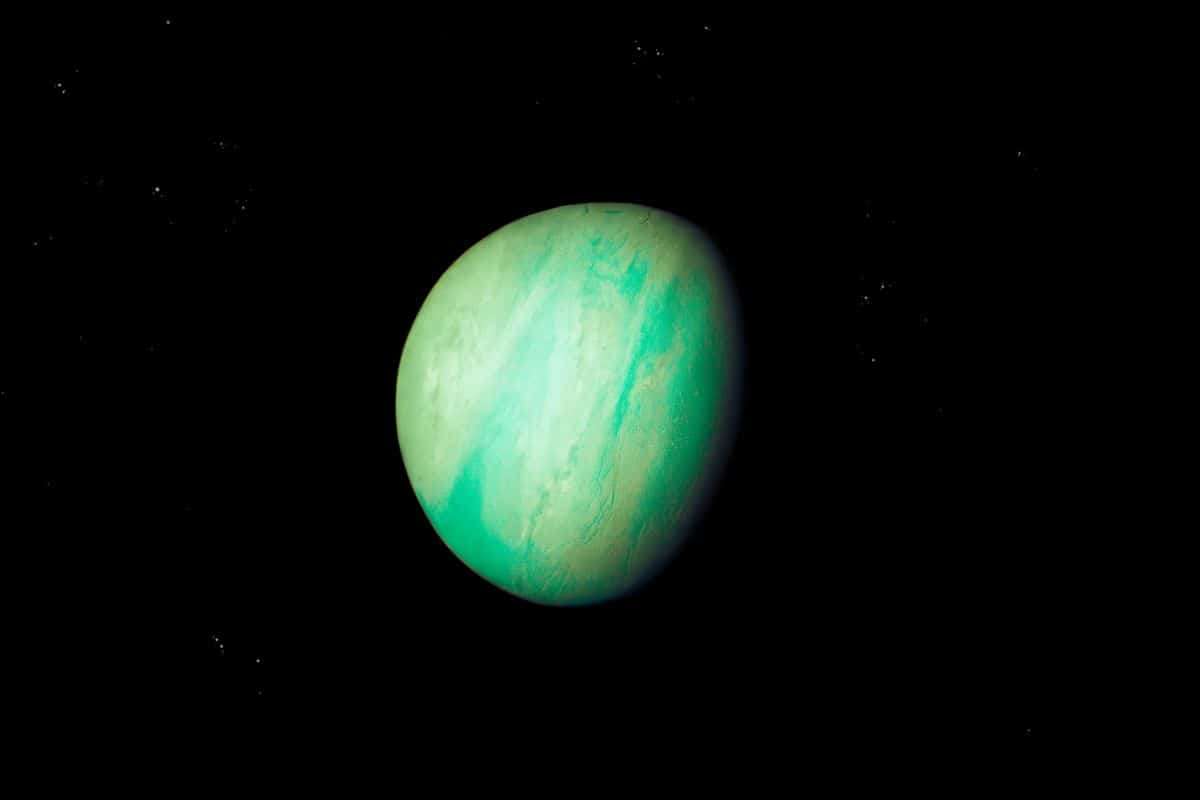
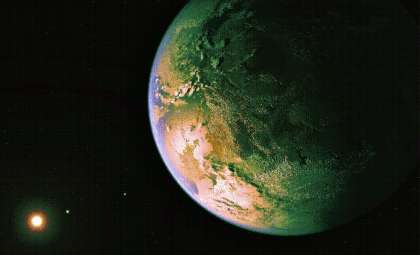
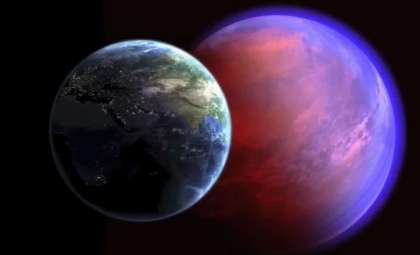
Astronomers have uncovered a super-Earth orbiting a star similar to the Sun, located just 20 light-years from Earth. This planet, called HD 20794 d, resides within its star’s habitable zone, where conditions might allow liquid water to exist, making it a compelling candidate for investigating Earth-like atmospheres and potential life-supporting environments.
An Earth-Sized World Within the Habitable Range
HD 20794 d is the third planet discovered orbiting its star, but it stands out due to its placement in the habitable zone. With a mass approximately six times that of Earth, it completes one orbit every 647 days. This distance from its star places it in a region where temperatures could permit water to remain liquid on its surface.
While the presence in the habitable zone does not confirm the planet is habitable, the discovery is noteworthy given how few exoplanets fit these parameters. Its relative closeness to our solar system also presents exciting possibilities for detailed atmospheric analysis with upcoming astronomical instruments.

Two Decades of High-Precision Measurements
The confirmation of HD 20794 d resulted from over 20 years of meticulous observations conducted by teams at the Instituto de Astrofísica de Canarias (IAC) and the Universidad de La Laguna (ULL). Researchers employed the radial velocity technique, which detects subtle wobbles in a star’s motion caused by orbiting planets.
Critical to this achievement were advanced spectrographs such as ESPRESSO and HARPS, operating at ESO facilities in Chile. These tools are capable of picking up minuscule signals from distant worlds. After initially spotting signs of HD 20794 d in 2022, scientists continued observations for two more years to validate the planet’s existence.
A Valuable Target for Future Atmospheric Probes
One of the most thrilling aspects of this discovery is the planet’s proximity, which makes it a prime subject for detailed atmospheric studies. Upcoming observatories like the Extremely Large Telescope (ELT) and space missions planned by NASA and ESA will be equipped to explore its atmospheric gases and search for possible biosignatures—indicators of biological processes.
“This planet is an ideal candidate for investigating terrestrial atmospheres with cutting-edge instruments and missions,” said Nicola Nari, the lead author of the study.
Climate Dynamics That Differ from Earth
Though HD 20794 d lies in the habitable zone, its environment is quite distinct from Earth’s. Unlike Earth’s nearly circular orbit, this super-Earth follows an elliptical path, causing its distance from the star to fluctuate significantly throughout its 647-day year.
This orbit could trigger wide temperature swings, with phases bringing the planet closer to the star’s warmer inner habitable edge, followed by excursions to cooler, more distant regions.
Advancing the Search for Earth-like Worlds
Scientists emphasize that being in the habitable zone doesn’t ensure a planet is inhabited. HD 20794 d is not a twin of Earth, but its closeness and suitable conditions make it invaluable for researching how planetary atmospheres and habitability may evolve.
“While not a new home for humanity, HD 20794 d’s unique orbit and position provide an exceptional chance to observe how habitability conditions change over time and impact atmospheric development,” commented Alejandro Suárez Mascareño, a co-author of the research.
- Categories:
- Space







0 comments
Sign in to Comment