
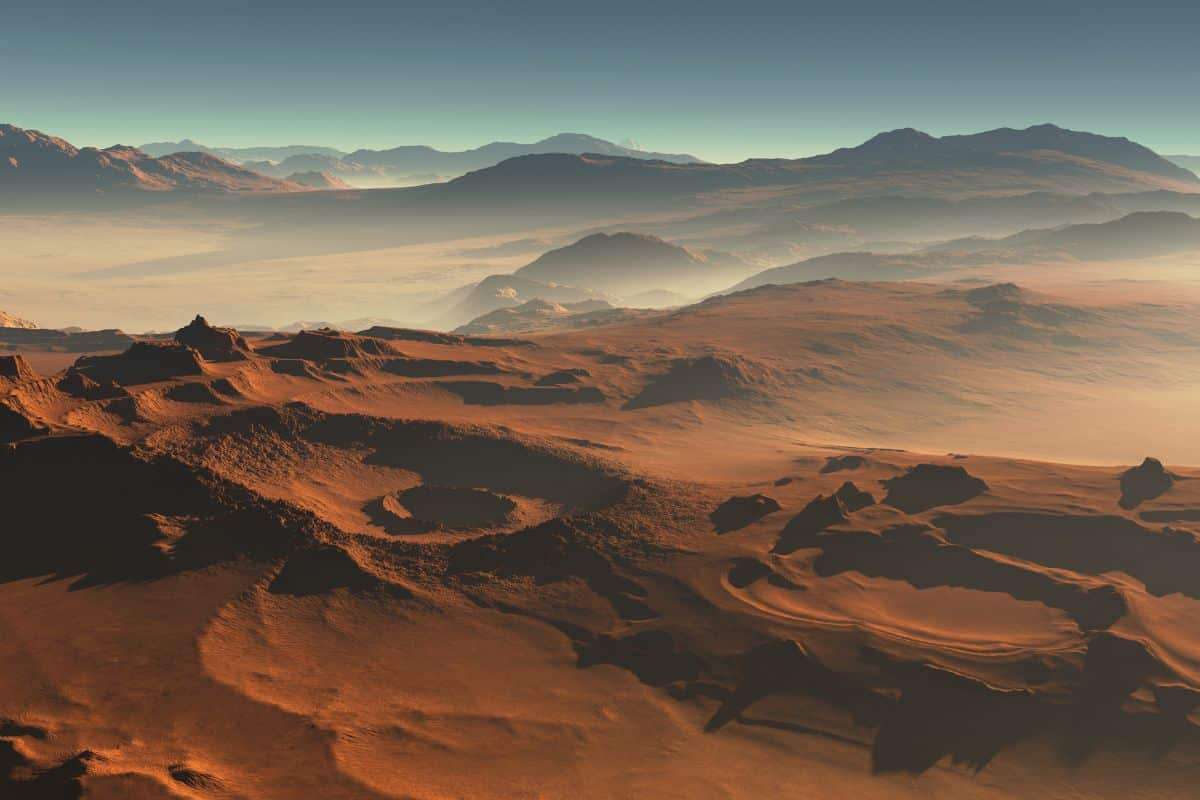
Once abundant with extensive lakes and rivers, Mars poses a critical question: did it ever harbor life? Innovative research conducted in an Algerian desert could offer vital clues. By harnessing laser-driven techniques, researchers have identified biological markers embedded within ancient rocks that closely resemble those potentially lying beneath the Martian surface.
A Terrestrial Mars Analog
Led by Youcef Sellam from the University of Bern, the investigation concentrated on a sulfate-rich quarry located in Sidi Boutbal, Algeria. About five million years ago, the Mediterranean Sea nearly vanished, leaving behind substantial sulfate mineral deposits.
This event parallels Mars’ ancient history, during which its once-flowing water bodies evaporated, depositing analogous sulfate minerals across its surface.

Sellam’s team discovered that gypsum from the Algerian site remarkably preserved microbial fossils. The rapid crystallization of gypsum effectively encapsulated microorganisms before decomposition could occur, preserving their biological form.
This process indicates that if Martian microbes ever existed, their fossilized remains might likewise be protected in gypsum deposits on Mars.
Innovative Laser Analysis
To identify microbial traces in the Algerian gypsum, Sellam’s group employed a laser ablation ionization mass spectrometer, a state-of-the-art, compact instrument that could be integrated into future Mars exploration rovers. The laser vaporizes the mineral surface, transforming it into plasma for analysis.
“Our laser ablation ionization mass spectrometer can precisely detect biosignatures in sulfate minerals. This approach is adaptable for use on upcoming Mars rovers or landers for on-site examination,” explained Sellam.
The technique uncovered elongated, coiled filaments embedded in the gypsum, identified as fossilized sulfur-oxidizing bacteria. These microbial fossils were found alongside minerals like dolomite and clay, which commonly form in biologically influenced settings.
Dolomite’s stabilization by microbes is noteworthy since it would typically dissolve in acidic environments. Similar mineral arrangements on Mars could strongly indicate past microbial activity.
Implications for Mars Exploration
This discovery opens new avenues for Mars exploration strategies, encouraging missions to prioritize gypsum-bearing landscapes when searching for life evidence. The ESA’s Rosalind Franklin rover, scheduled to launch shortly, will be equipped with tools to investigate mineral compositions for biosignatures on Mars.
Meanwhile, NASA’s Perseverance rover is already analyzing Martian soil and rock. Should these samples include gypsum, scientists may verify whether microbial life ever existed on the Red Planet.
Advancing the Quest to Detect Martian Life
Although promising, distinguishing authentic microbial fossils from mineral mimics remains a challenge. Sellam points out that future efforts must enhance detection accuracy to avoid false positives caused by geologic formations.
Nonetheless, this research signifies notable progress. Understanding extreme earthly environments helps scientists refine methods to hunt for extraterrestrial life.
As this technique matures, the coming years of Mars exploration might finally reveal answers to one of humanity’s most profound mysteries: has life ever existed beyond Earth?








0 comments
Sign in to Comment