
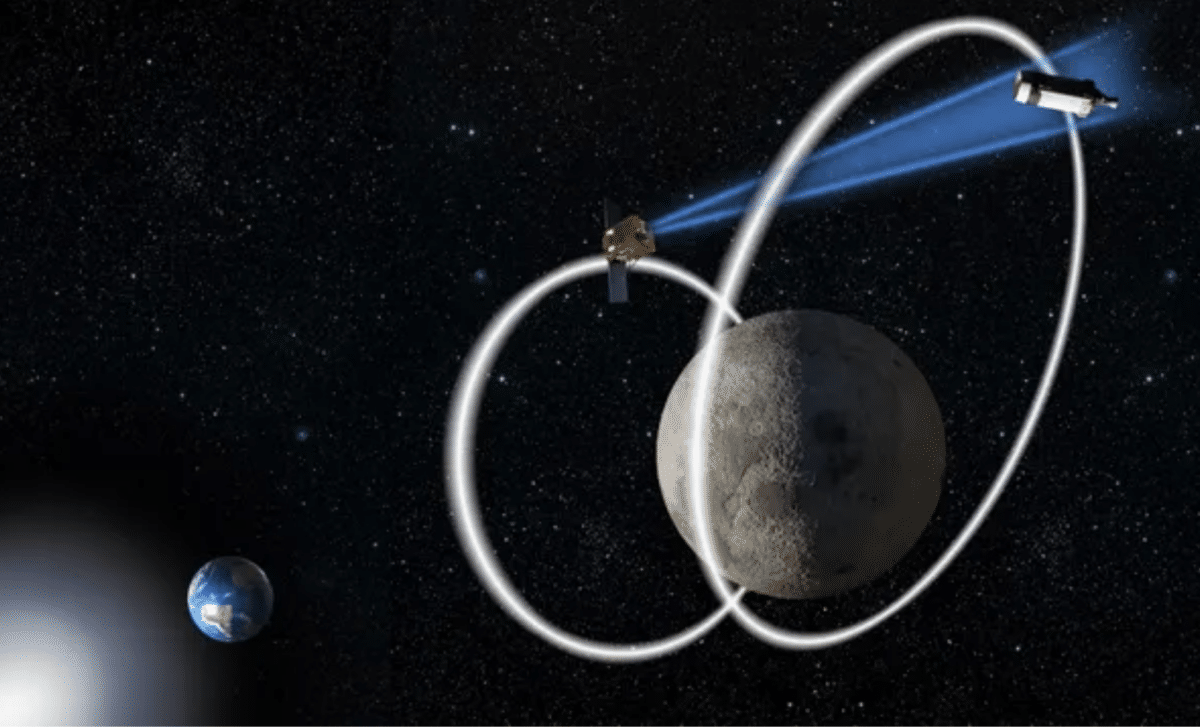
New insights reveal that the zone between Earth and the Moon, known as cislunar space, could transform into a critical strategic bottleneck. Restrictions in this area might disrupt international markets and burgeoning space industries.
Decoding the Significance of Cislunar Space
Cislunar space might seem expansive, yet spacecraft trajectories are limited by gravitational dynamics, constraining movement along specific paths. These include pivotal points such as Lagrange points and stable corridors, concentrating space traffic despite the vastness.
The study highlighted by Space.com outlines how these natural pathways could serve as essential infrastructure. With NASA’s Artemis missions targeting sustained lunar presence and private sector ventures eyeing industrial operations, these routes will grow busier, becoming pivotal for moving personnel, machinery, and materials securely.

Reflecting this growing strategic importance, government policies are evolving. The U.S. Space Force’s growing focus on cislunar space signals a shift from purely scientific interest to national security concerns. Dominance over these corridors could determine control over communications, navigation, and resource flows between Earth and the lunar surface.
Lessons Drawn from Terrestrial Geopolitical Flashpoints
Recent geopolitical standoffs underscore how geography dictates global stability. Marc Feldman, director of the Center for the Study of Space Crime, Piracy and Governance, notes, “In parallel, Iran has blocked the Strait of Hormuz, causing global energy markets to spike and everyone to notice, yet again, how vulnerable we are to accidents of geography.” He adds, “Sometimes, a pair of events contains a warning, if you are able to see it.”
Feldman likens maritime chokepoints to space transit routes: “Just as the Strait of Hormuz is a narrow waterway, cislunar space, though seemingly large, actually contains a few unique and exclusive points of transit through which all lunar travel must pass.” These concentrated routes could be subjected to monitoring or control, paralleling vulnerabilities observed in international shipping lanes.
As lunar exploration grows, dependency on these narrow pathways will intensify. Any disruption could delay missions, halt supply chains, and ripple through Earth’s industries. The economic fallout might mirror global upheavals triggered by blockades of crucial seaways, where even brief disruptions cause significant turmoil.
The Vast Economic Potential of Lunar Development
The strategic worth of cislunar space hinges on anticipated advancements. Peter Garretson explained to Space.com, “It depends on if your valuation is only current value or includes future value. By analogy, are you asking about this year revenues or expectation of future revenues expressed in Net Present Value. Obviously any current commercial value of the moon is tiny, but at the same time, the expectation of future value is gargantuan, both in market and strategic value.”
These high expectations stem from visionary concepts of lunar industry and space infrastructure, such as utilizing lunar resources for assembling massive orbital constructs like solar power plants and data hubs. Launching materials from the Moon demands considerably less energy compared to Earth, positioning the Moon as a prime source for space manufacturing.
As these industries expand, entire sectors could become reliant on lunar supply chains. Facilities for data processing, energy generation, and fabrication orbiting Earth may depend on uninterrupted material flows via cislunar space, making the region a crucial economic artery vulnerable to disruption.
Assessing the Possibility of a Space Blockade
While still theoretical, the concept of a space blockade is considered plausible by experts. Garretson remarked, “Certainly. At some future point, could such interdiction have a serious impact on the global economy? Maybe.” Increasing reliance on advanced orbital systems deepens the consequences of any interference.
Space-based blockades wouldn’t necessarily require physical obstructions—they could involve jamming navigation aids, sabotaging communications, or seizing control of strategic orbital positions. Advances in technology could empower both nations and corporations to exercise such forms of interdiction.
As humanity extends its reach beyond Earth, terrestrial strategic dynamics are expected to manifest in space. Cislunar space could become a domain where access control is paramount, intertwining space exploration’s future with Earth’s economic security.
- Categories:
- News











0 comments
Sign in to Comment