
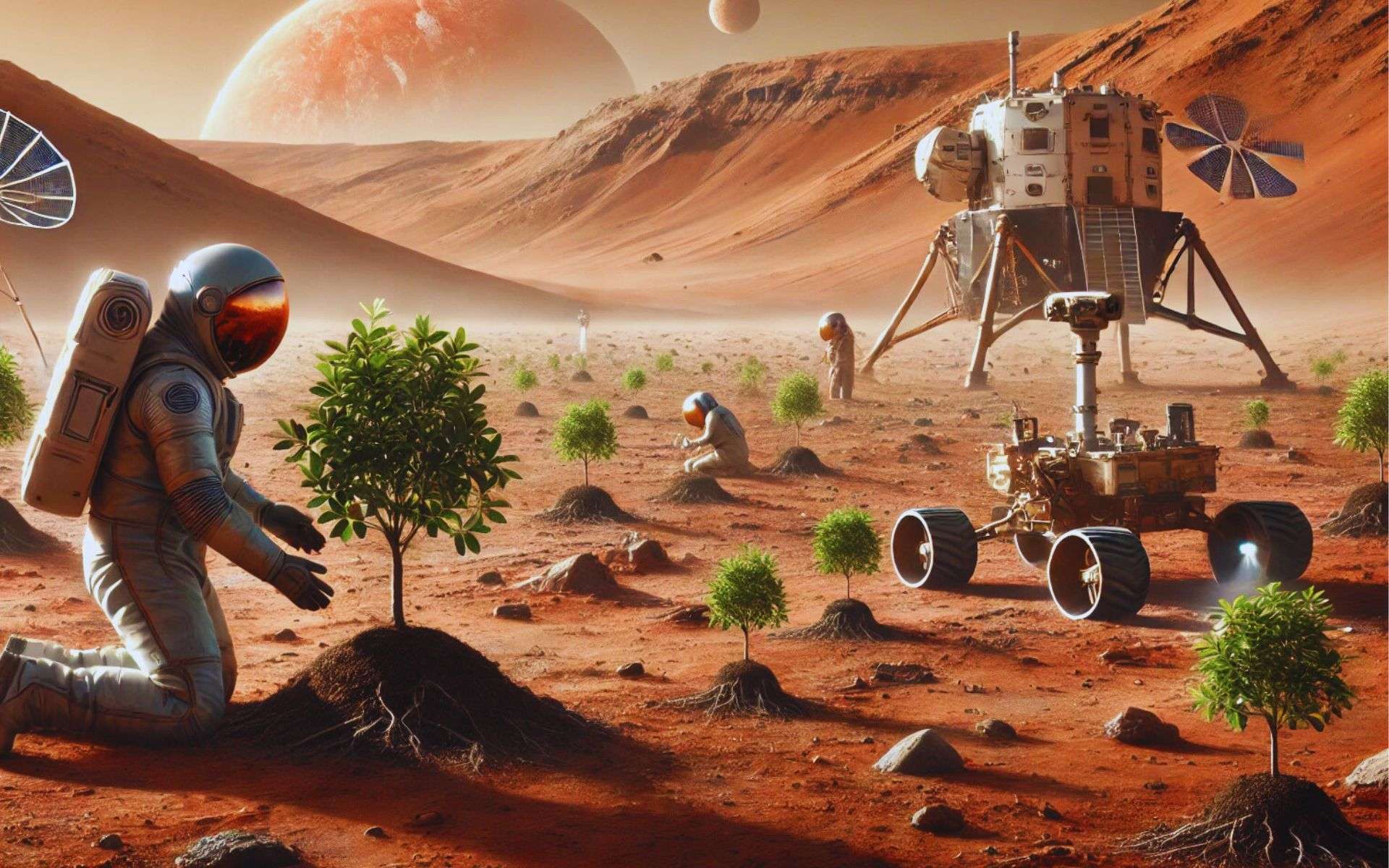
Humanity dreams of turning Mars into a vibrant, life-supporting world, prompting scientists to investigate where the first forests might flourish if terraforming becomes achievable. Contrary to expectations, Mars’ potential “Green Belt” may not resemble Earth’s tropical regions. Instead, experts suggest that woodlands could initially develop far from the Martian equator, adding a surprising chapter to Mars’ possible future landscape.
Overcoming the Martian Atmosphere Barrier
The concept of terraforming Mars remains theoretical and demands overcoming massive obstacles before any vegetation can grow. A key requirement involves boosting the Red Planet’s atmospheric pressure by roughly sixteen times its current thin level of 0.6 kPa to create a thick, stable atmosphere.
Maintaining a sustainable greenhouse effect is essential—not only to trap sufficient warmth to keep water in liquid form but also to moderate extreme temperature shifts between chilly nights and brief warm days on Mars.

Should advanced technologies enable humanity to enact such a profound atmospheric change, scientists believe specific Martian locations could become hospitable to tree growth and even forest expansion. Recent findings, presented at the Astrobiology and the Future of Life conference, identify a surprising candidate area for Mars’ first forests.
The Hellas Basin: Mars’ Potential Green Refuge
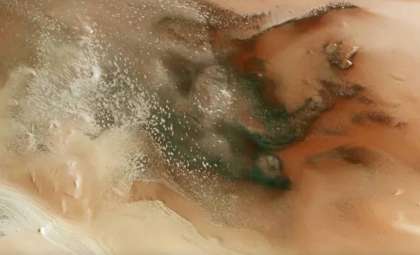
Unlike Earth, where tropical latitudes support the richest plant life, Mars’ distinctive orbit suggests the Hellas Basin in the Southern Hemisphere may be the prime site for its inaugural forests. This enormous crater, spanning 2,300 kilometers across, offers a natural lowland that could sustain vegetation under favorable conditions, marking it as an ideal spot for the Red Planet’s earliest green growth.
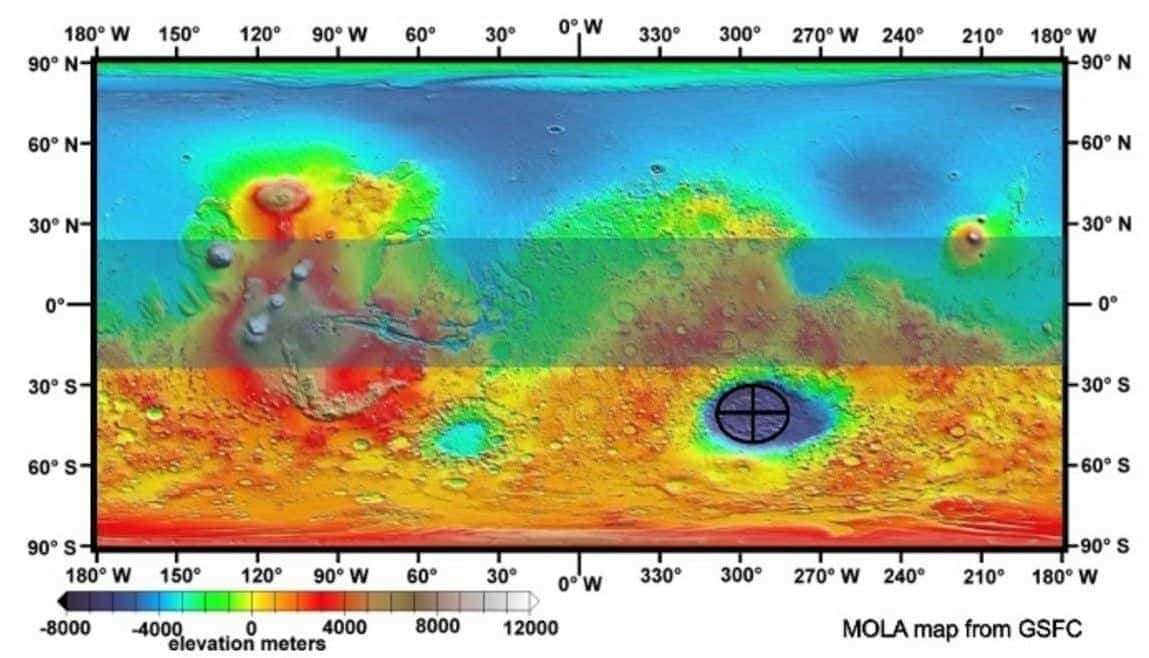
This intriguing choice arises from Mars’ elliptical orbit. Unlike Earth’s nearly circular path, Mars experiences significant seasonal variations due to its elongated route. The Southern Hemisphere benefits from prolonged summers, especially near perihelion when Mars is closest to the Sun, bathing Hellas Basin in intense sunlight. Coupled with the basin’s low elevation providing extra atmospheric pressure, Hellas emerges as a promising environment for trees to establish themselves—potentially Mars’ first green sanctuary.
Distinctive Climate Conditions on Mars
Mars’ orbital properties would yield unusual climate dynamics for any inhabitants. Unlike Earth’s relatively stable solar input, Martian summers would be brief but intense, followed by long, harsh winters. Such conditions might favor resilient plant species adapted to endure prolonged cold spells and scarce resources during the darker periods.
For Mars to nurture an ecosystem, an engineered greenhouse atmosphere would be mandatory. The chance to maintain liquid water year-round and moderate temperatures could be possible in locations like Hellas Basin, where geographical features and orbital patterns combine to create a more temperate and stable climate.
Key obstacles for establishing a thriving green Mars include:
- Enhancing Atmospheric Pressure: Raising surface pressure by at least sixteen times to support plant life.
- Temperature Control: Creating a greenhouse effect to dampen extreme temperature fluctuations.
- Reliable Water Sources: Securing a continuous supply of liquid water.
- Adapting to Seasons: Developing plants capable of surviving Mars’ intense summers and protracted winters.
Hellas Basin: A Future Hub for Martian Forests?
While terraforming Mars remains within the realm of speculative science, imagining forests thriving in Hellas Basin ignites hope for the Red Planet’s green potential. Advancements in research and technology could someday enable this expansive basin to become Mars’ own “Garden of Eden,” the birthplace of its first sustainable ecosystems.
The path to a verdant Mars is fraught with challenges, but studies like these illuminate what might be possible. If human ingenuity turns terraforming into reality, Mars could one day transform from a barren world into a landscape rich with forests—with Hellas Basin at the heart of this extraordinary change.




0 comments
Sign in to Comment