
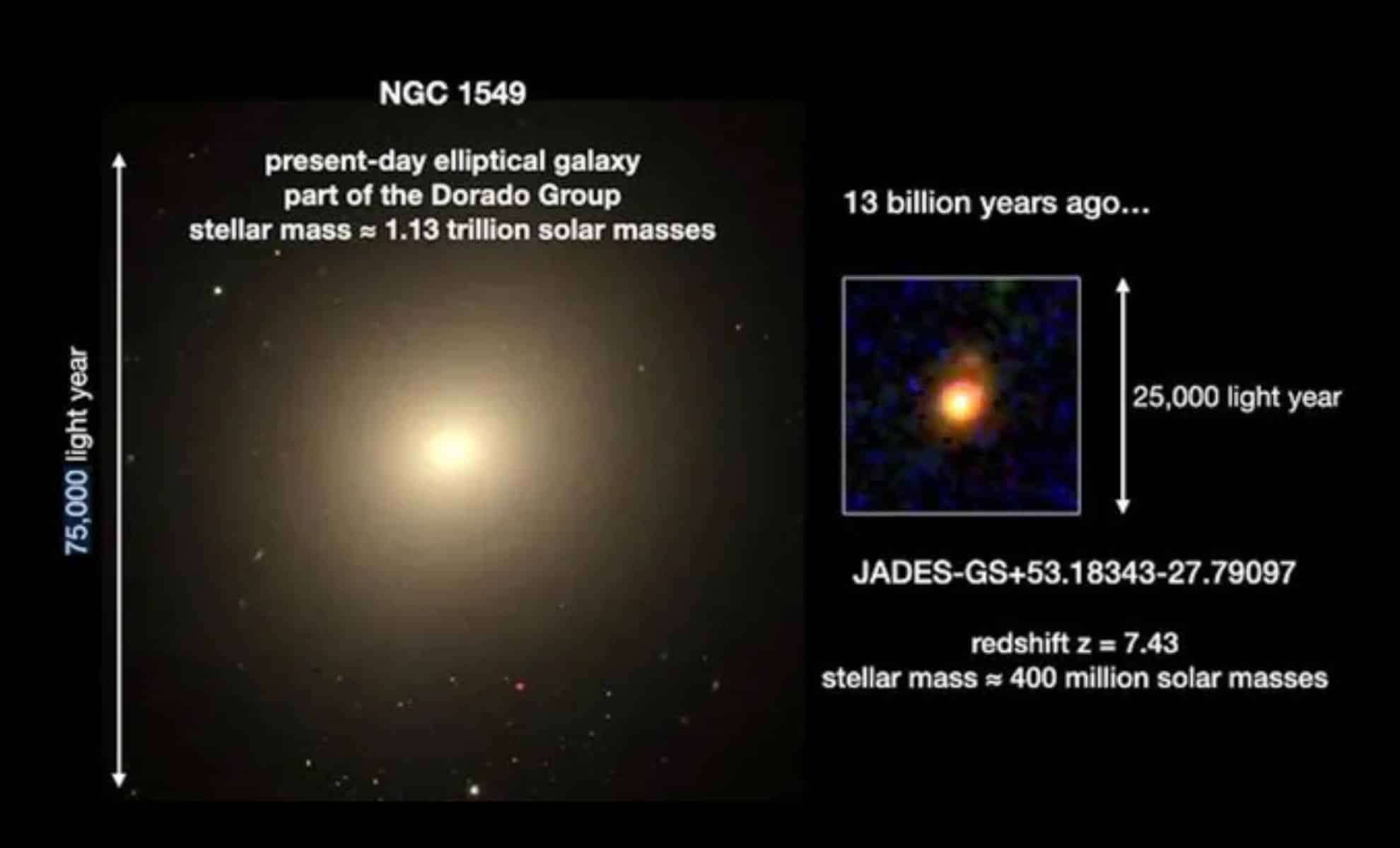
Using the James Webb Space Telescope, astronomers have unveiled surprising insights about galaxy formation soon after the universe's inception.
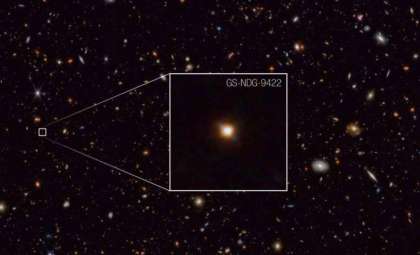
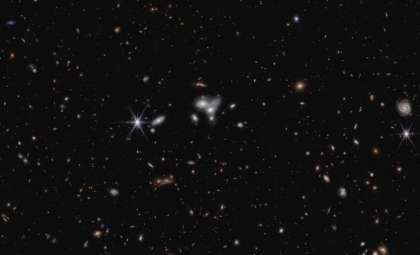
Observations of a galaxy from just 700 million years after the Big Bang show stars forming in an unusual manner. Instead of developing predominantly at the center, star formation is more vigorous in the outer regions, demonstrating an inside-out growth pattern that challenges conventional models. This galaxy was studied as part of the JWST Advanced Extragalactic Survey (JADES), which focuses on exploring galaxies from the universe’s earliest times.
Early Galaxies Growing from the Inside Out
The target galaxy, much smaller than our own Milky Way, is experiencing rapid star formation predominantly along its edges, while its center holds a dense collection of older stars. Remarkably mature in its development given its young cosmic age, the galaxy defies expectations. Sandro Tacchella of the University of Cambridge, a co-author, described the process as analogous to a spinning figure skater gathering speed by pulling in gas from farther away, resulting in stellar buildup from the inside out.

Though theorized previously, confirming this process required the advanced capabilities of the James Webb Space Telescope. Previous instruments lacked the precision necessary to observe such detail so close to the dawn of time. Co-author William Baker praised JWST’s revolutionary impact: “It’s like being able to check your homework.” For the first time, astronomers can validate their theoretical frameworks with observational data dating back more than 13 billion years.
The Dynamics Behind Rapid Galaxy Expansion
The team applied stellar population synthesis to analyze the galaxy’s varied light emissions, helping them discern the mix of young and old stars. This allowed them to calculate the galaxy’s stellar mass growth and star formation rate. They uncovered that, despite a compact, dense core, star production dominates the outer regions, allowing the galaxy to roughly double its mass every 10 million years. By contrast, the Milky Way’s mass doubling takes about 10 billion years.
This accelerated growth suggests an abundant reservoir of gas fueling star formation on the galactic outskirts. Tacchella noted, “The high density in the core paired with the ongoing star formation shows this galaxy is rich in gas.” This points to unique environmental conditions during the universe’s infancy that promoted rapid stellar development.
Interestingly, the early galaxy shares central density traits with present-day massive elliptical galaxies, which are over a thousand times larger. These parallels hint at divergent star formation processes in the early cosmos, or significant evolutionary shifts since then.
Consequences for Understanding Galaxy Development and Future Work
This insight into inside-out growth opens new discussions about how galaxies evolve. Tacchella and his colleagues are investigating other primordial galaxies to see if this growth pattern is widespread or an isolated case. “Were such characteristics common among early galaxies, or is this galaxy unusual?” he wonders. Through examining galaxies spanning vast epochs, astrophysicists aim to reconstruct a comprehensive picture of galactic lifecycles from birth to the present.
The study exemplifies how the James Webb Space Telescope is transforming cosmic research by enabling snapshots of galaxies from billions of years past. These observations deepen our understanding of star formation, the buildup of galactic centers, and the continuous inflow of gas that sustains stellar growth.
Tacchella highlighted the wider ramifications: “With JWST, we can finally explore the universe’s first billion years, prompting new questions about galactic evolution.” The next goal for researchers is to establish whether other early galaxies exhibit similar growth trends, potentially redefining our grasp of how galaxies transform over cosmic time.





0 comments
Sign in to Comment