
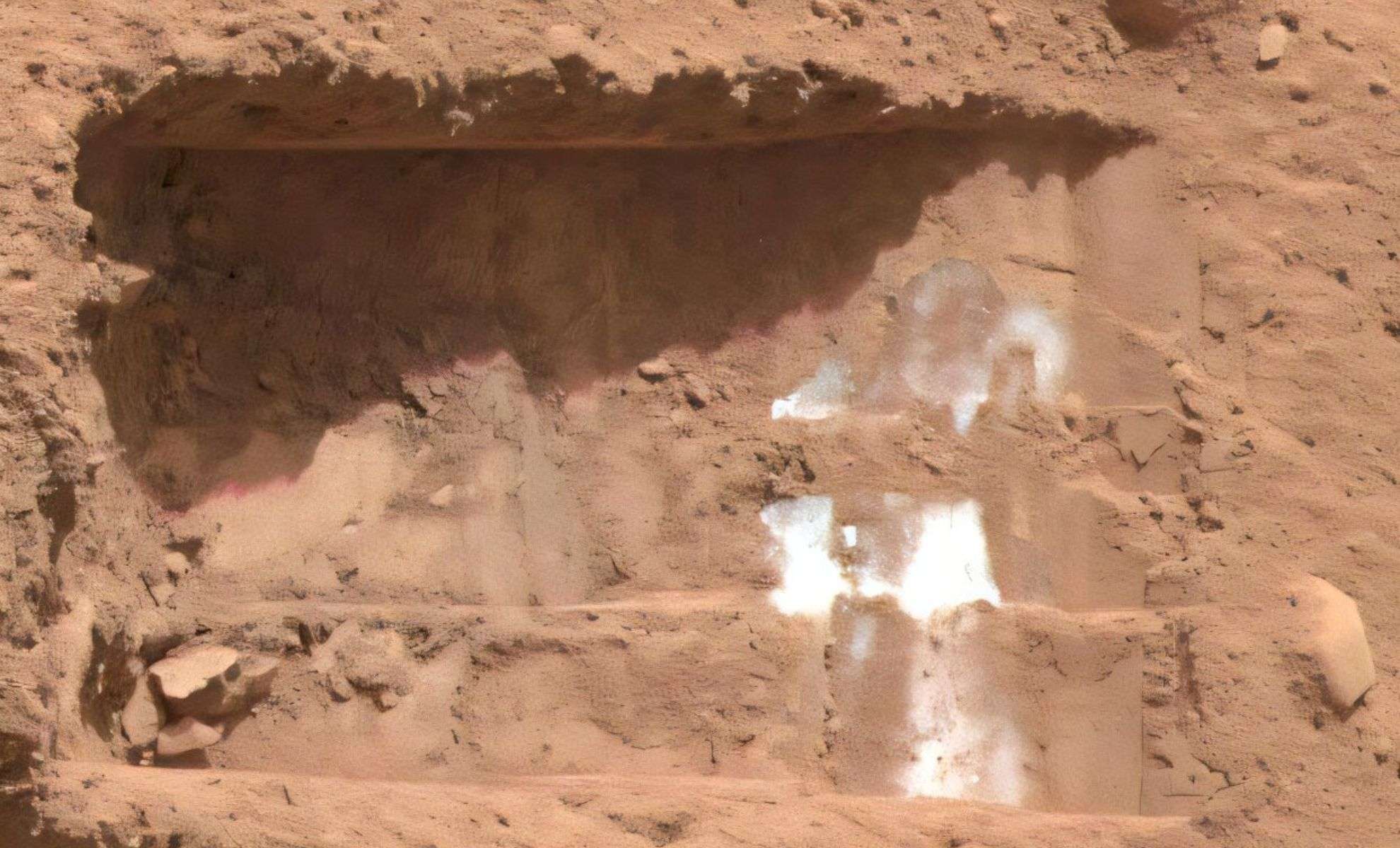
New research spearheaded by NASA and Penn State scientists reveals that organic compounds could survive for tens of millions of years when encased within Martian ice, offering a crucial lead in the hunt for evidence of extinct microbial life. In laboratory settings simulating Mars’ harsh surface conditions, amino acids embedded in pure ice demonstrated significantly greater longevity compared to those mixed with soil particles.
Historically, most missions have prioritized examining Martian soil and rocks, but recent data highlight ice-dense zones—including permafrost layers and frozen sediments—as potentially superior environments for long-term biomolecular preservation.
As reported by Phys.org, the researchers recreated Martian temperature and radiation environments in the laboratory, exposing samples to simulated cosmic radiation equivalent to 50 million years of exposure. Findings indicate that organic molecules confined in ice could still be intact today, depending on their specific location beneath the surface.

Amino Acids Exhibit Enhanced Stability in Ice
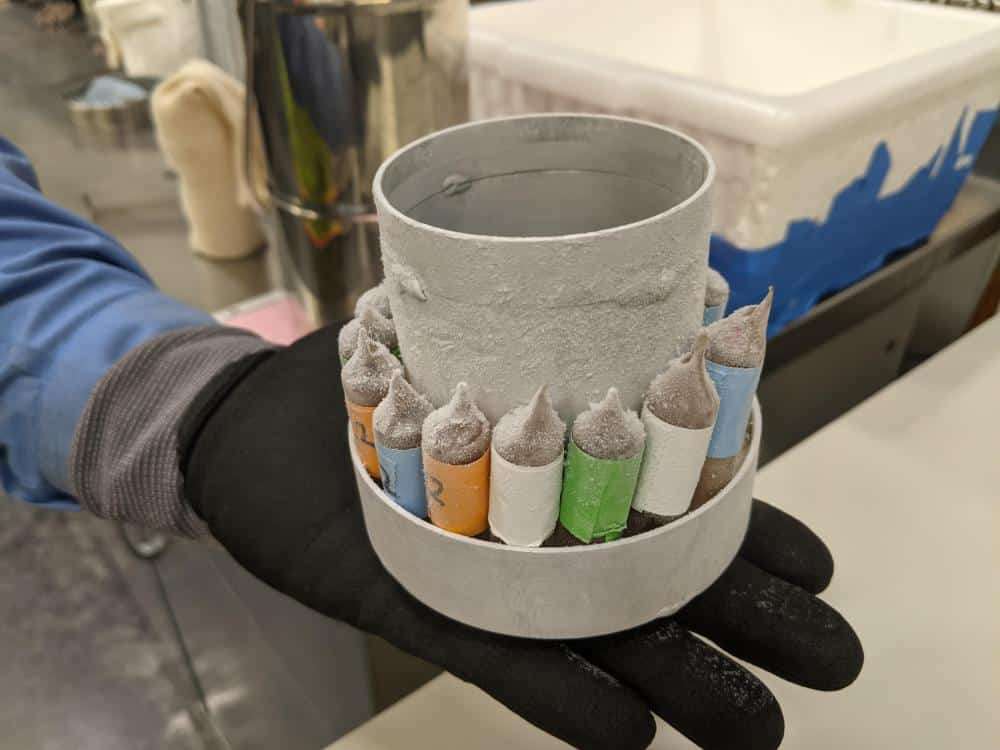
Under the leadership of Alexander Pavlov of NASA’s Goddard Space Flight Center, the experiment placed E. coli bacteria samples into test tubes containing either pure ice or simulated Martian sediment mixtures. These were cooled to –60 °F and exposed to gamma radiation mimicking 20 million years of cosmic radiation, performed at Penn State’s Radiation Science and Engineering Center. An additional 30 million years was simulated to assess long-term effects.
According to their study published in Astrobiology, samples preserved in pure ice retained over 10% of their original amino acids, which form the building blocks of proteins. Conversely, those mixed with mineral soils showed much faster organic breakdown. Pavlov noted this result was surprising, challenging prior 2022 findings that suggested even small ice content accelerated amino acid destruction.
Mineral Interactions May Influence Radiation Effects
The quicker deterioration seen in soil-ice blends may stem from how radiation engages with mineral surfaces. Pavlov and colleagues propose that interfaces where ice contacts silicate minerals form slippery boundaries, allowing damaging particles easier access to fragile organics. In contrast, the solid ice environment restricts particle movement, reducing damage.
“While in solid ice, harmful particles created by radiation get frozen in place and may not be able to reach organic compounds,” Pavlov explained in the Phys.org report.
This highlights that pure ice deposits, instead of ice-soil mixtures, might be significantly more effective in retaining ancient organic signatures.
Interest Grows in Mars’ Subsurface Ice Layers
This breakthrough refocuses exploration efforts on buried ice reserves. The 2008 Phoenix lander made the first direct observations of ice beneath Mars’ surface near its northern polar region, yet most current rovers lack the capability to penetrate deep frozen ground.
Chris House, co-author and director of Penn State’s Consortium for Planetary and Exoplanetary Science and Technology, pointed out that the organic preservation timescales demonstrated far exceed the ages of typical surface ice on Mars, which usually are less than 2 million years old. This boosts hopes for uncovering molecular traces if future missions can access deeper ice layers.
“Future missions need a large enough drill or a powerful scoop to access it,” House emphasized, suggesting tools similar to Phoenix’s design.
While these discoveries do not definitively prove life ever existed on Mars, they expand the scope of future investigations. If ancient microbes were once present and became trapped in ice, their biomolecular footprints may still remain preserved beneath the planet’s frozen surface.
- Categories:
- News




0 comments
Sign in to Comment