
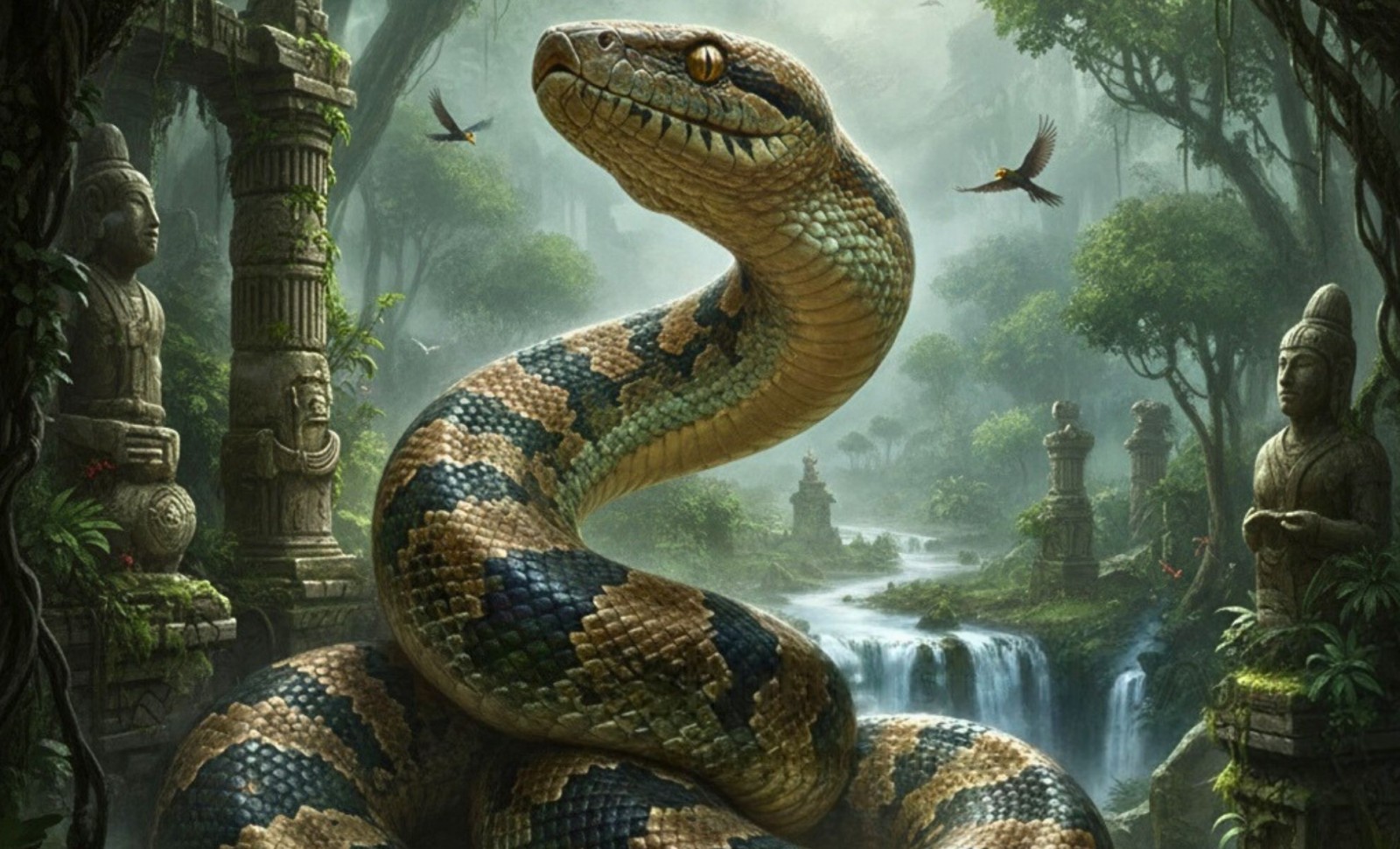
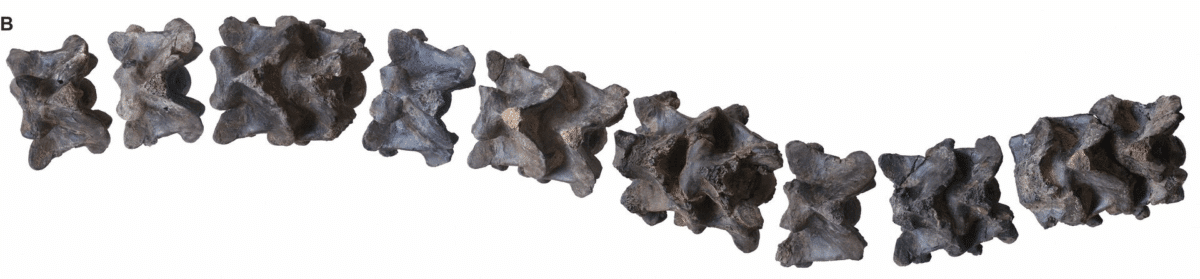
Researchers in India have uncovered fossilized remains of Vasuki indicus, among the largest snakes known to have existed. These vertebrae were excavated from a lignite mine in Gujarat, a region renowned for its abundant fossils, revealing that this colossal snake might have grown as long as 49 feet (15 meters), surpassing the length of a Tyrannosaurus rex.
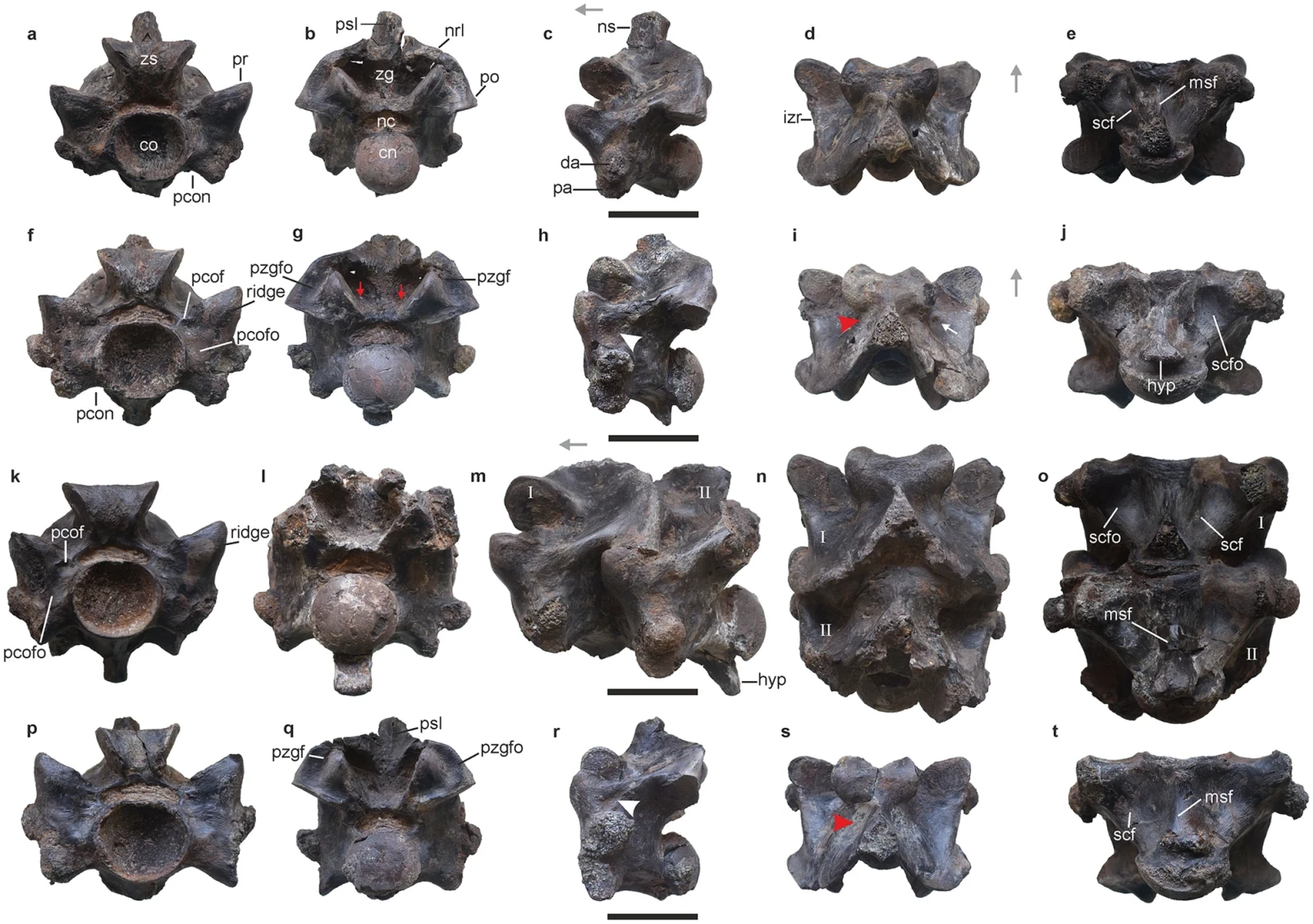
Published in Scientific Reports, the study details the discovery of 27 vertebrae, some still aligned naturally, enabling scientists to estimate the snake’s size and locomotion. Named after the legendary serpent king from Hindu lore, Vasuki indicus lived approximately 47 million years ago during a notably warmer geological period.
Revisiting the Giant Serpent of Antiquity
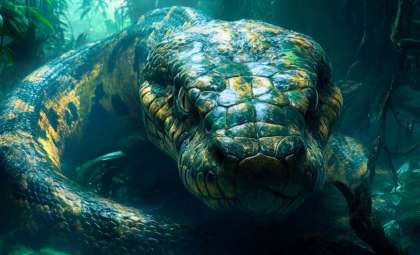
This prehistoric snake is believed to have employed stealth and patience, resembling the predatory strategies of today’s pythons and anacondas.

“Considering its large size, Vasuki was a slow-moving ambush predator that would subdue its prey through constriction,” explained Debajit Datta, the lead researcher from the Indian Institute of Technology Roorkee (IITR).
According to the research, this hunting method indicates that Vasuki likely fed on sizable prey such as turtles, crocodilians, and fish. The warmer climate of its era would have supported the growth of such gigantic reptiles in humid, marsh-like habitats.
The snake's girth, estimated at nearly 17 inches (44 cm) in diameter, would have made it a formidable presence in its ecosystem.
The Titanoboa Connection and Its Significance
The 2009 discovery of Titanoboa in northern Colombia provided insight into prehistoric giant snakes. According to Sunil Bajpai, a paleontologist at IITR, Vasuki closely matches Titanoboa in size.
“The estimated body length of Vasuki is comparable to that of Titanoboa, although the vertebrae of Titanoboa are slightly larger than those of Vasuki. However, at this point, we cannot say if Vasuki was more massive or slender compared to Titanoboa.”
Titanoboa reached lengths near 42 feet (13 meters), whereas estimates for Vasuki range from 36 to 49 feet (11 to 15 meters). Still, Dr. Bajpai emphasizes that additional fossils are needed before declaring which snake was larger or heavier.
Both these snakes thrived during the Cenozoic era, after the dinosaurs' extinction, and rank among the largest terrestrial vertebrates ever discovered.
Insights into an Ancient Hunters’ Behavior
Experts suggest that the snake spent much of its time coiled within swampy waters, moving slowly and conserving energy. “Vasuki was a majestic animal,” commented Datta. Its methodical hunting style involved lying in wait and ambushing unsuspecting prey.
The snake’s skull remains unrecovered, but its vertebrae provide substantial evidence of its massive frame and slow pace. The largest vertebra measures 4.5 inches (11.1 cm) across, emphasizing its powerful build over agility. The fossils hint that Vasuki was likely among the final representatives of the Madtsoiidae family, which thrived during the late dinosaur period before dwindling around 12,000 years ago.
- Categories:
- Science


0 comments
Sign in to Comment