
A remarkable discovery has emerged from Colorado, where scientists have identified a previously unknown species of early mammal. This finding enhances our grasp of Earth’s ancient biodiversity and evolutionary tale.
Researchers at the University of Colorado Boulder uncovered this new mammal, which inhabited swampy regions during the Cretaceous period, coexisting with some of the most famous dinosaurs to ever roam the planet.
Introducing Heleocola: A New Mammalian Species
The species, called Heleocola piceanus, was detailed in the PLOS One journal. The lead author, Jaelyn Eberle, Ph.D., a geology professor and vertebrate paleontology curator at the university’s Natural History Museum, spearheaded the research. The discovery traces back to a fossil unearthed in 2016 by paleontologist John Foster, who contributed as a co-author.

This intriguing fossil consists of a fragmentary lower jawbone featuring three molars. While limited in size, mammalian teeth possess distinctive characteristics that are critical for accurate species identification.
Analyzing these dental features, the team determined that Heleocola was a marsupial roughly the size of today’s muskrat. The fossil is the first jawbone of a therian mammal—encompassing marsupials and placentals—found in the Williams Fork Formation, a geologic layer dating from 74 to 70 million years ago in northwestern Colorado and northeastern Utah.
A Swampy Habitat in Ancient Colorado
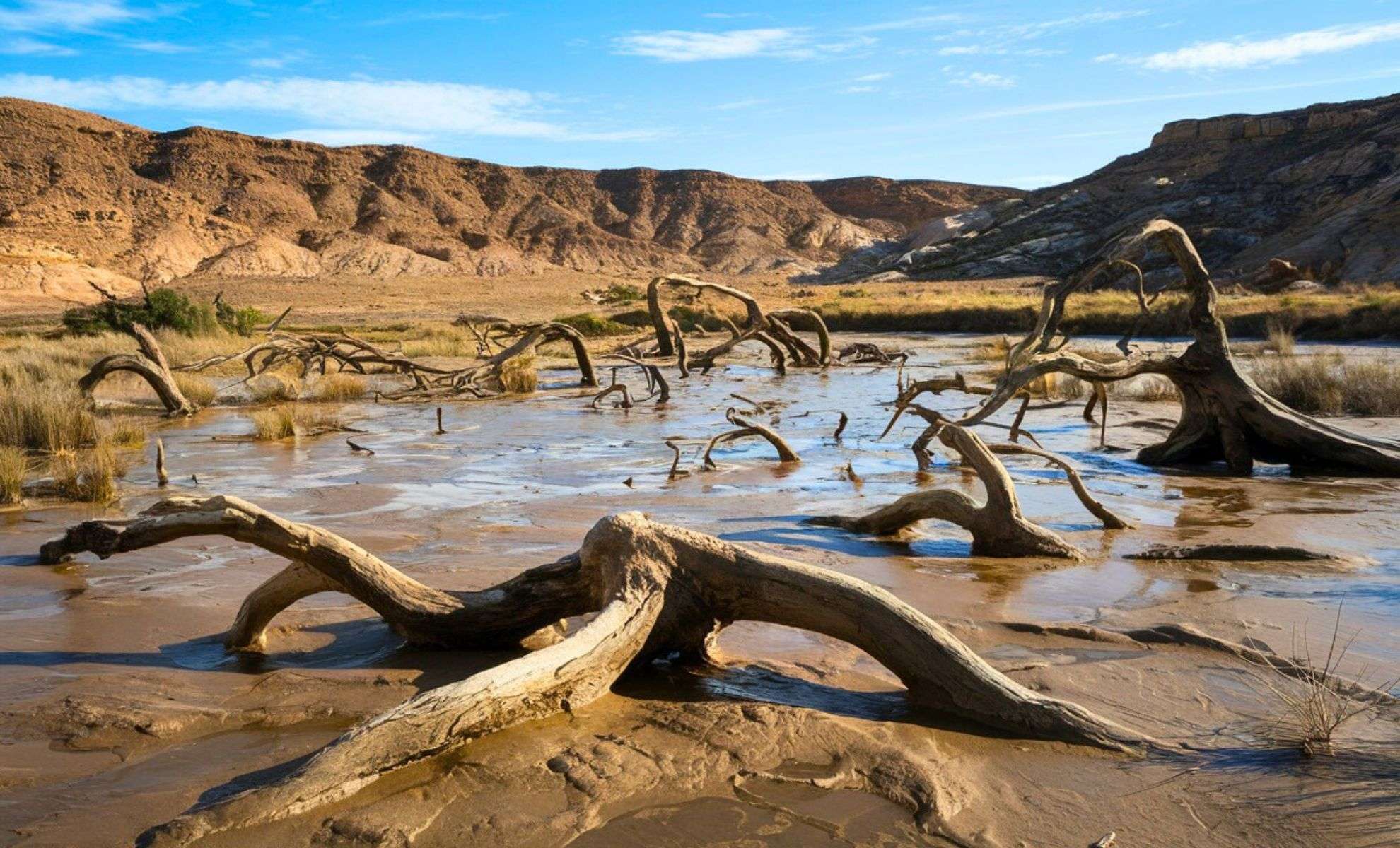
The Colorado we see today once resembled a watery landscape dominated by swamps rather than arid desert. This area during the late Cretaceous was part of the Western Interior Seaway, a massive shallow sea stretching across North America.
The ecosystem of freshwater swamps and estuaries around this sea created an ideal environment for creatures like Heleocola. Its fossil was discovered within the Williams Fork Formation, renowned for preserving evidence of such ancient wetland habitats.
Eberle’s team suggests that Heleocola thrived as a "plant-focused omnivore", feeding on roots, fruits, and seeds. Given its modest size, it likely included insects and small animals in its diet, inferred from the structure of its molars.
Rewriting the History of Marsupials in North America
Though marsupials are now primarily associated with Australia, the find of Heleocola indicates they were once more prevalent across North America. This single fossil offers a rare window into the continent’s early marsupial evolution.
Currently, the only marsupial native to North America is the Virginia opossum (Didelphis virginiana), but Heleocola reveals a richer, more complex past diversity of marsupials during the dinosaur era.
This fossil helps expand the marsupial family tree and deepens our understanding of how these mammals evolved, sharing their world with dinosaurs long before mammals rose to prominence.
Visualizing Heleocola’s World
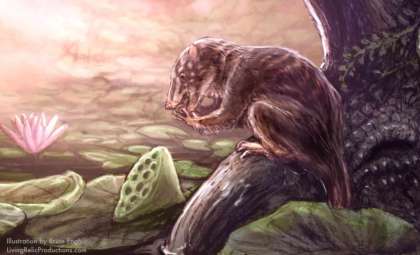
To illustrate the creature’s appearance and environment, paleoartist Brian Engh partnered with the research team to produce a vivid artistic rendering of Heleocola.
Engh’s creation portrays the mammal nibbling on a lotus seed atop the snout of Pentaceratops, a horned dinosaur from the same age. Although less famous than its cousin Triceratops, Pentaceratops was a contemporary resident of the Williams Fork Formation.
This visual offers a compelling glimpse into how diverse species might have interacted, enriching the scientific story with imaginative depth. The artwork was shared on Instagram, highlighting possible ecological relationships.
Rediscovering North America’s Marsupial Heritage
Eberle and colleagues highlight a key observation: fossils of mammals from the Williams Fork Formation are scarce, and those known typically include only isolated teeth. The jawbone fragment from a therian mammal is thus a significant addition to the fossil record.
Therians encompass both marsupials and placental mammals, and this finding implies that marsupial mammals were once more broadly established in North America than prior records indicated.
The identification of Heleocola encourages new avenues for exploration into the diversity of mammalian life during the dinosaur era, suggesting a richer family tree than previously recognized.
This discovery presents crucial evidence that marsupials were important components of Cretaceous ecosystems and contributes to understanding how mammals evolved in the aftermath of dinosaurs’ extinction.
- Categories:
- Science



0 comments
Sign in to Comment