
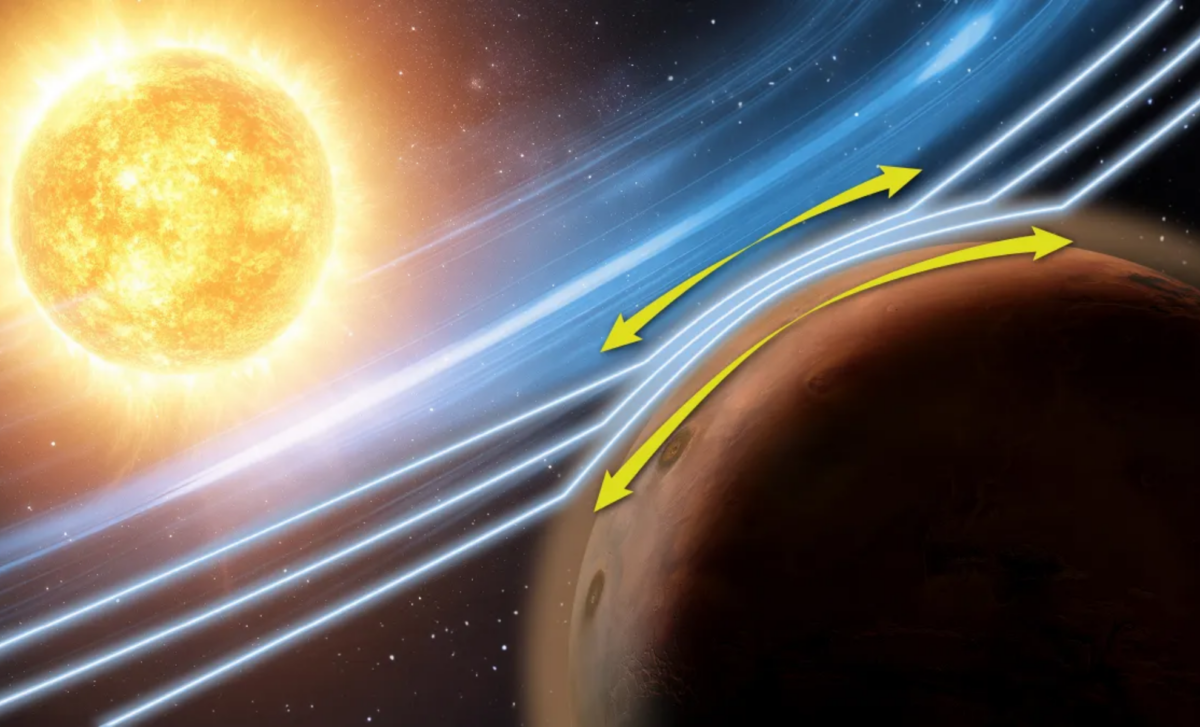
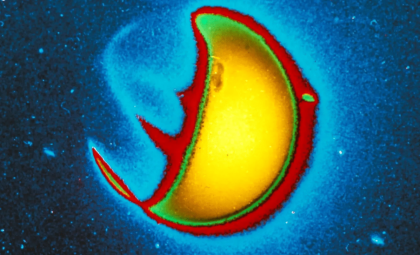
NASA’s MAVEN spacecraft has identified a distinctive event within Mars’ atmosphere never documented before. Recorded in December 2023, this observation captures a rare interaction between charged particles and magnetic structures on the Red Planet, a process previously observed only in Earth's magnetic environment. This finding provides valuable new knowledge about space weather effects on planets lacking a global magnetic field, advancing our comprehension of Martian atmospheric behavior.
First Detection of Zwan-Wolf Effect in Martian Ionosphere
Published in Nature Communications, the study describes the inaugural observation of the Zwan-Wolf effect on Mars. While typically linked to Earth's magnetosphere, this phenomenon involves charged particles being compressed along magnetic flux tubes, which helps to deflect the solar wind. Due to Mars’ lack of a global magnetic field, its interaction with solar wind is distinct, making this discovery unprecedented.
“When investigating the data, I all of a sudden noticed some very interesting wiggles,” said Christopher Fowler, a research assistant professor at West Virginia University in Morgantown and lead author of the study. “I would never have guessed it would be this effect, since it’s never been seen in a planetary atmosphere before.”
Add Cosmo Herald as a Preferred Source

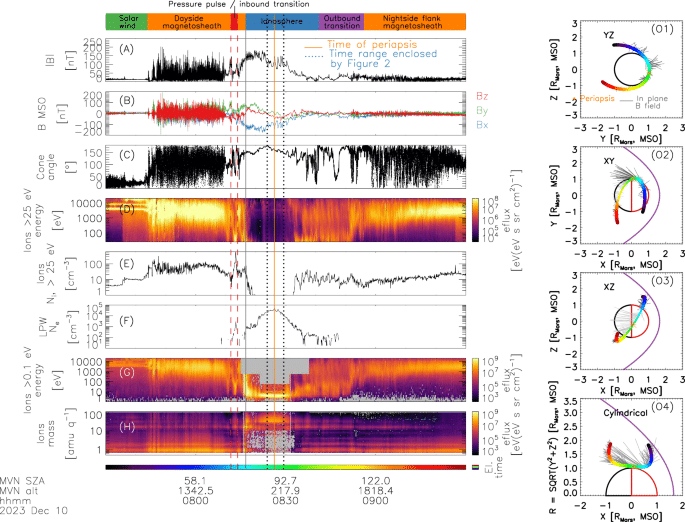
Fowler and colleagues examined fluctuations in MAVEN’s magnetic field recordings, pinpointing these oscillations as the Zwan-Wolf effect occurring inside the Martian ionosphere below 200 km altitude. The ionosphere, composed of electrically charged particles, reacts intensely to solar storms, amplifying the phenomenon and enabling its detection.
New Insights Into Space Weather and Planetary Sciences
This discovery sheds light on how solar storms and space weather phenomena influence Martian conditions. Unlike Earth’s global magnetic shield, Mars’ magnetic environment is induced through interactions of solar wind with its ionosphere. This magnetic field’s size and shape can fluctuate dramatically during intense solar events, profoundly affecting the planet’s atmospheric processes.
“No one expected that this effect could even occur in the atmosphere,” Fowler explained. “That’s what makes this even more exciting. It introduces interesting physics that we haven’t yet explored and a new way the Sun and space weather can change the dynamics in the Martian atmosphere.”
Researchers now believe the Zwan-Wolf effect might be continuously present on Mars at levels too subtle for detection, altering the understanding of atmospheric escape and particle movement on planets without significant magnetic fields.
Broader Implications for Other Worlds
Beyond Mars, these results may offer valuable insights for other unmagnetized celestial bodies, such as Venus and Titan. Comprehending how charged particles are shifted within Mars’ atmosphere improves models of space weather impacts across the solar system. This knowledge is vital for preparing future missions and designing spacecraft capable of enduring harsh space weather conditions.
“Knowing how space weather interacts with Mars is essential,” said Shannon Curry, principal investigator of MAVEN and research scientist at the Laboratory for Atmospheric Space Physics at the University of Colorado Boulder. “The MAVEN team continues making new discoveries with our datasets and finding these links between our host star and the Red Planet.”
NASA highlights that gaining these insights is crucial for the safe planning of missions and safeguarding equipment both in orbit and on Mars’ surface.
- Categories:
- Nasa




0 comments
Sign in to Comment