
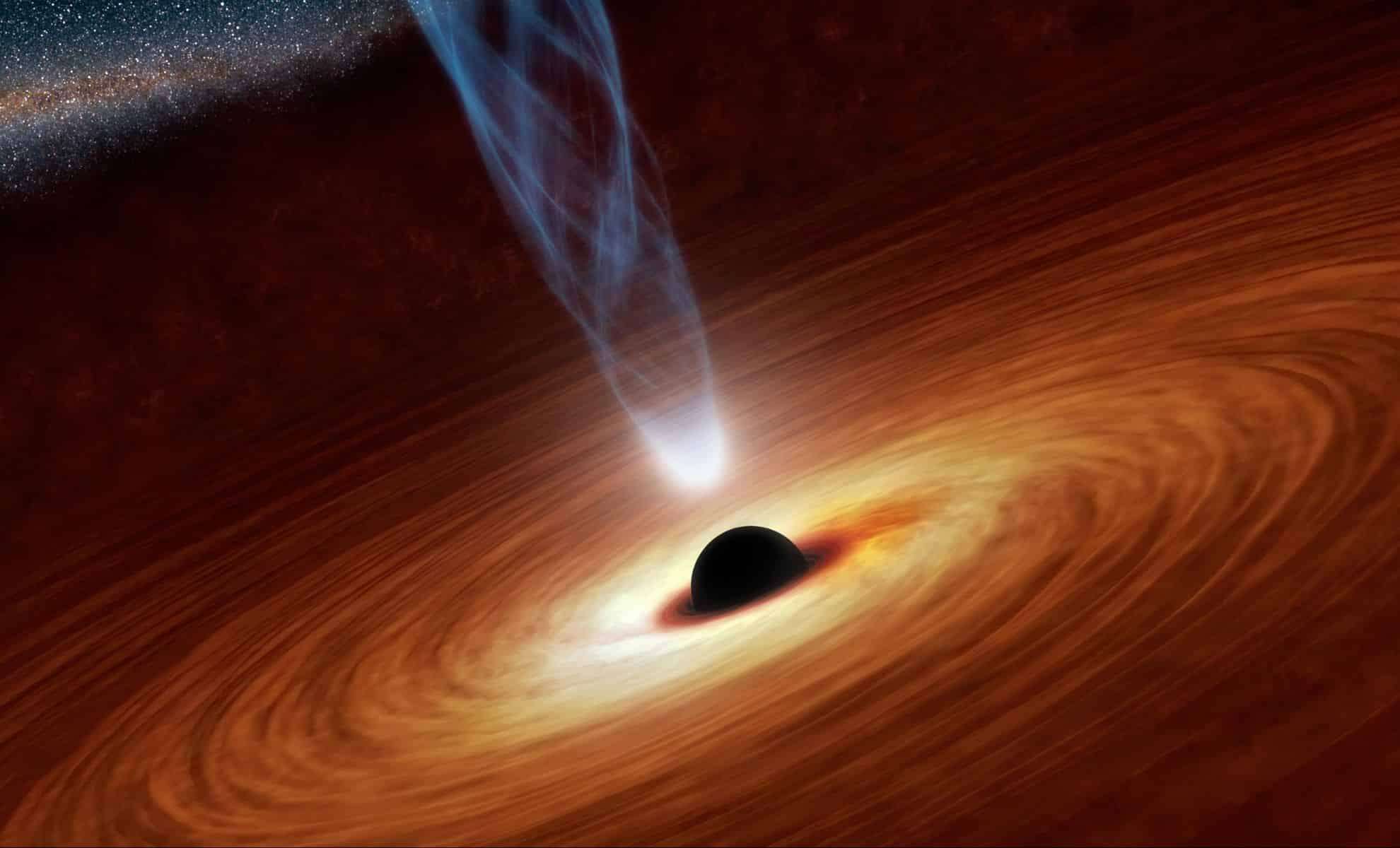
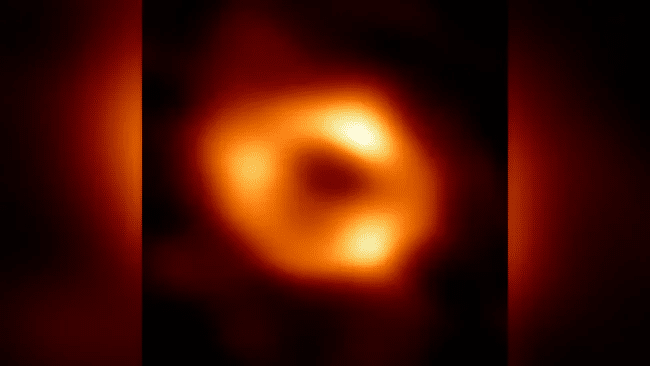
New research Astronomy & Astrophysics has uncovered that Sagittarius A*, the supermassive black hole at the core of our galaxy, is rotating at nearly its top speed, with its spin axis directed almost straight toward Earth. Utilizing data from the Event Horizon Telescope (EHT) enhanced by cutting-edge machine learning, this study provides unprecedented insights into the black hole’s properties and behavior.
Advancing Astrophysics Through Machine Learning Innovations
This investigation marks a significant stride in combining astrophysics with artificial intelligence. Researchers employed sophisticated machine learning algorithms, specifically a Bayesian neural network, to interpret the Event Horizon Telescope's data. This approach, proficient in managing uncertainty and capturing error margins, allowed scientists to extract nuanced information often obscured by signal noise. Unlike traditional image averaging methods, the neural network analyzed comprehensive datasets capturing polarization visibilities over time and frequency, mirroring the natural operations of very long baseline interferometry (VLBI). This technique preserves vital data, revealing consistent patterns even amid noisy observations.
The findings reveal that Sagittarius A* spins at a rate near its maximum—estimated between 0.8 and 0.9—with its rotation axis closely aligned with Earth's viewpoint. This alignment results in unique polarized light signatures, shedding light on the movement of hot plasma in the black hole’s accretion disk and its dynamic environment.

Data Processing: Overcoming Complex Challenges
Deciphering the signals from Sagittarius A* is a formidable task involving vast quantities of observations from multiple global observatories. Processing millions of synthetic datasets to train the machine learning algorithms required an extraordinary computational effort. Chi kwan Chan, a lead researcher from the University of Arizona, highlighted the project's scale, emphasizing the logistical and technical hurdles in harnessing simulations and real-world calibration to ensure accuracy.
The team generated realistic, calibrated datasets through forward modeling to replicate conditions experienced by the EHT. These simulations integrated corrections for atmospheric interference and calibration errors, illustrating both the project’s ambitious scope and the growing role of machine learning in analyzing complex astrophysical phenomena.
Insights into Sagittarius A* and Its Astrophysical Significance
The precise measurement of Sagittarius A*’s rapid spin with an Earth-facing axis profoundly impacts understanding of plasma behavior near black holes. Spin influences material infall, while the spin axis orientation shapes the emitted electromagnetic radiation's structure, including polarized emissions. This unique vantage point offers scientists a rare opportunity to observe these processes in exceptional detail.
Research indicates that light originating near Sagittarius A* is predominantly generated by highly energized electrons within its accretion disk, a crucial area of study among black hole features. The disk’s plasma dynamics reveal energetic phenomena at play in this extraordinary cosmic object. Moreover, the study suggests that the surrounding plasma's energy arises mainly from disk interactions rather than from jet emissions.
Looking Forward: Enhanced Observations and Technological Growth
The discoveries open the door to an exciting future for black hole research. Upcoming observations aim to refine spin measurements and validate the current model. A significant enhancement to the EHT is the addition of the Africa Millimetre Telescope in Namibia, which will broaden the telescope array's perspective by extending baselines into the Southern Hemisphere. This expansion will facilitate more frequent, multi-frequency observations, enabling better testing of Sagittarius A*’s high-spin, near face-on orientation and detailed mapping of magnetic fields channeling energy into the accretion flows.
Continued advancements in data gathering and machine learning promise to sharpen the precision of black hole analyses. Improved telescope sensitivity and reduced uncertainty will help unravel key mysteries about the roles supermassive black holes play in the evolution of galaxies.
- Categories:
- News






0 comments
Sign in to Comment