
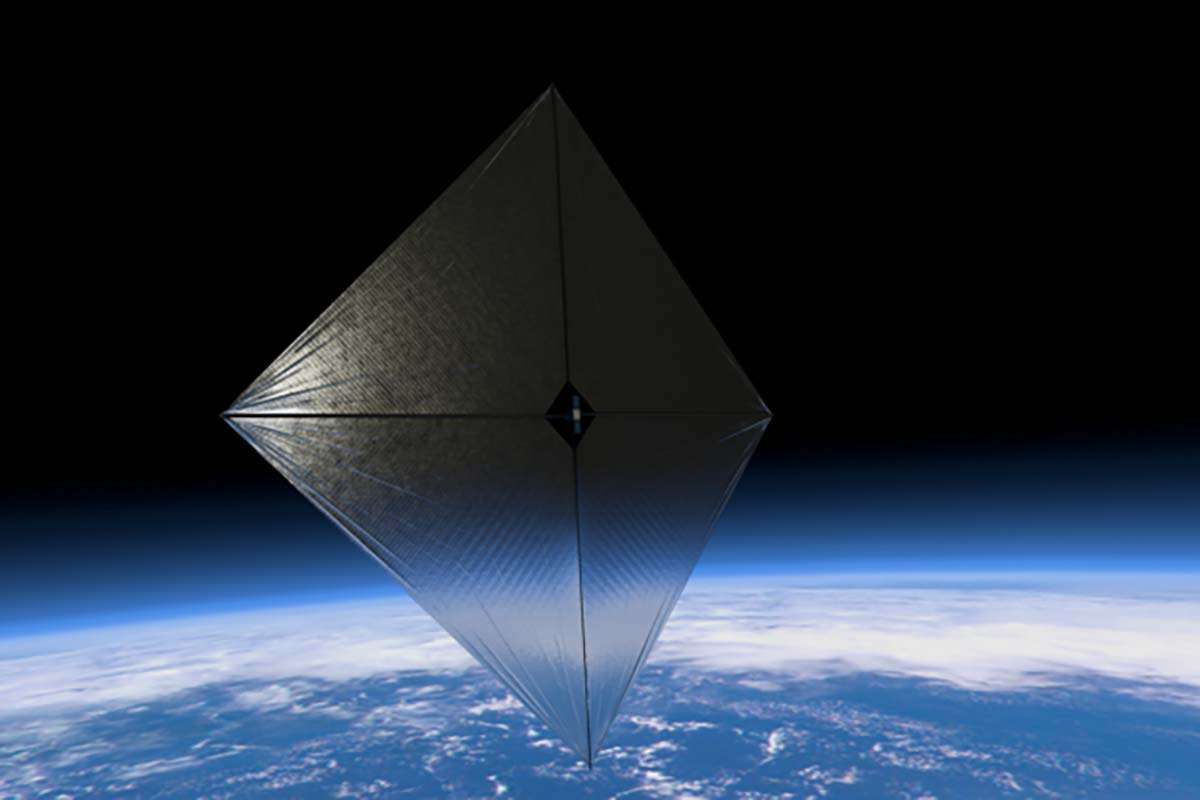
NASA’s Advanced Composite Solar Sail System (ACS3) mission, designed to pioneer solar sail propulsion, is encountering major difficulties after the spacecraft began spinning uncontrollably due to orientation loss.
The engineering team is actively working to diagnose the root of this problem, which appears linked to a structural fault in one of the spacecraft’s essential support booms. Launched in April 2024, this project represents an important advancement in harnessing sunlight as a means of propulsion. However, the current setback threatens to postpone vital testing phases.
Goals of the Mission and Initial Challenges
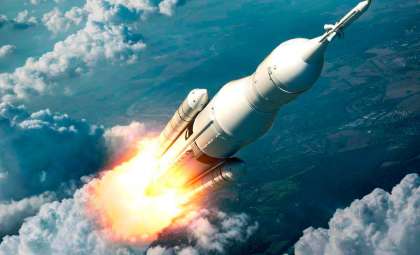
The ACS3 vehicle, approximately the size of a standard microwave oven, was deployed via Rocket Lab’s Electron rocket from New Zealand. Its primary mission is to validate how solar sail technology can propel spacecraft by utilizing sunlight instead of conventional chemical fuels. This method relies on photon pressure from sunlight exerted on large, reflective sails — a concept similar to how wind propels a sailboat. By adopting this technique, space travel could become more cost-effective and less dependent on heavy fuel loads for extended missions.

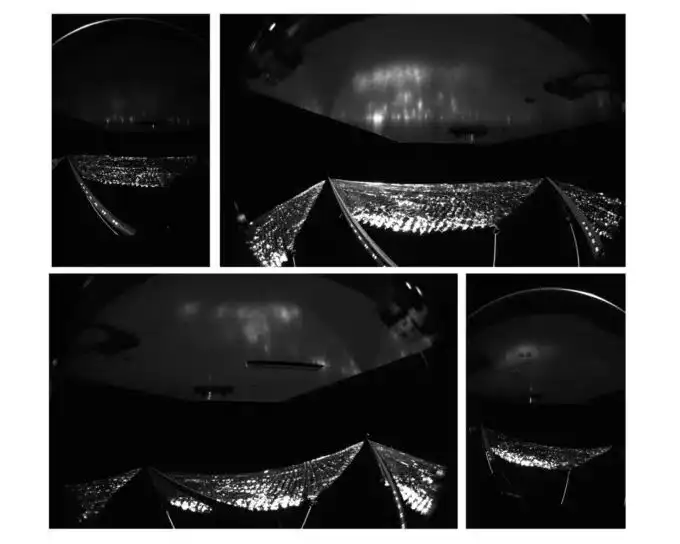
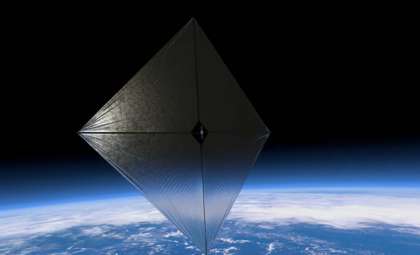
Following a successful launch, the operation advanced until the deployment phase of four reflective sails spanning 30 feet in a square configuration. These sails are extended and supported by lightweight composite booms, engineered to maintain tension and stability. Shortly after deployment, NASA personnel observed a subtle bend in one of the booms, potentially undermining the craft’s structural soundness. According to an agency update, “the primary objective of the Advanced Composite Solar Sail System demonstration is to test deployment of the booms in space to inform future applications,” yet this deformation has caused significant delays in resuming spacecraft systems.
The bending likely occurred when the booms extended tightly during sail unfolding. NASA estimates that “the bend may have partially relaxed over weeks while the spacecraft was slowly rotating.” However, this flaw disrupted the spacecraft’s ability to maintain its orientation, forcing a shutdown of the attitude control system responsible for stabilization. Without this control, ACS3 continues to spin erratically, complicating efforts to restore normal function and commence propulsion demonstrations.
Steps Underway to Recover Stability
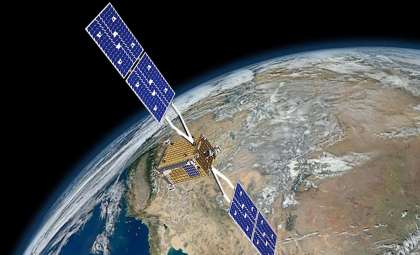
NASA’s engineers are concentrating on realigning the spacecraft so its sails face directly toward the Sun. Correct orientation is vital for the sails and solar panels to effectively capture solar energy. Until this is achieved, the spacecraft remains in a “low power mode” to preserve essential energy resources, allowing critical communications with mission control to continue. The agency highlights that “the team is conserving the spacecraft’s energy for priority operations—such as two-way communications with mission control—until its attitude control system is reactivated.”
Once the attitude control system is operational again, ACS3 will gain the ability to stabilize and halt the uncontrollable rotation. This will enable NASA engineers to conduct a thorough evaluation of the boom’s damage and collect comprehensive data regarding the spacecraft’s condition. Despite current hurdles, the mission team remains hopeful that the propulsion system can demonstrate its intended capabilities following these repairs.
After stabilization, a key mission milestone will involve testing sailing maneuvers that use sunlight alone to adjust the spacecraft’s orbit. By angling the sails appropriately, NASA aims to illustrate how solar pressure can control spacecraft trajectory. Such data will be instrumental in advancing solar sail technology for future space explorations. Success here could pave the way for longer and more cost-efficient interplanetary missions.
Advancing Solar Sail Propulsion Technology
The ACS3 mission contributes to NASA’s wider strategy to develop sustainable propulsion methods that reduce reliance on conventional fuels. Harnessing sunlight as a propellant has the potential to transform space travel by extending mission duration and reducing costs for deep-space voyages. NASA highlights early results, stating that “data collected from this flight test has already proven highly valuable, and the demonstration will continue producing critical information to enable future solar sail missions.”
Despite the current technical challenges, this mission builds on the foundation of earlier projects such as the Planetary Society’s LightSail 2. Launched in 2019, LightSail 2 successfully increased its altitude using solar radiation pressure but eventually reentered Earth’s atmosphere. NASA has incorporated lessons from that mission into ACS3’s design, aiming to enhance reliability and scalability. The sail structure in ACS3 could one day be expanded to extensive arrays exceeding 500 square meters—comparable in size to a basketball court.
Looking forward, NASA envisions utilizing solar sails for long-distance missions across the solar system, including expeditions to Mars and beyond. This propulsion approach offers the possibility of more economical travel by minimizing fuel mass and associated launch expenses. As stabilization efforts continue on ACS3, the promise of solar sail technology remains a compelling prospect for expanding humanity’s reach into deep space.
The ongoing challenges with the ACS3 spacecraft underscore the complexities of deploying novel propulsion systems. Nevertheless, the knowledge gained from this mission is already proving invaluable. NASA remains optimistic that restoring control will allow the spacecraft to validate this groundbreaking technology, moving closer to a future where sunlight alone can propel explorers into the cosmos.






0 comments
Sign in to Comment