

A simple, natural source may hold the key to tackling persistent water pollution caused by microplastics. Extracts from the moringa tree seeds have demonstrated the ability to eliminate up to 98% of microplastic particles from water within minutes, rivaling industrial chemical treatments. As microplastics increasingly contaminate water supplies globally, this plant-based, low-tech approach is attracting growing interest.
Microplastic pollution has escalated into a significant environmental concern. Research from Columbia University reveals that bottled water can contain as many as 240,000 plastic particles per liter, highlighting how pervasive these pollutants are.
Efforts by advanced water treatment systems to remove microplastics face challenges. While effective at filtering larger debris, the smallest particles frequently evade capture, raising concerns about ongoing exposure risks.

Why Small Microplastics Evade Standard Filtration
Water treatment plants are typically effective at removing over 95% of plastic particles larger than 20 micrometers. However, their efficiency drops drastically for particles below this threshold, sometimes falling to less than 40%.
The underlying cause is linked to the particles’ electrical properties. As explained in this study, microplastics carry a negative electric charge that keeps them dispersed in water rather than clustering. Particles about 15 micrometers in size often pass through standard sand filters with minimal removal.
To address this, treatment facilities commonly add chemical coagulants such as aluminum sulfate. These substances induce particle aggregation but can leave chemical residues, necessitating further purification steps.
Natural Coagulation Powered by Moringa Seeds
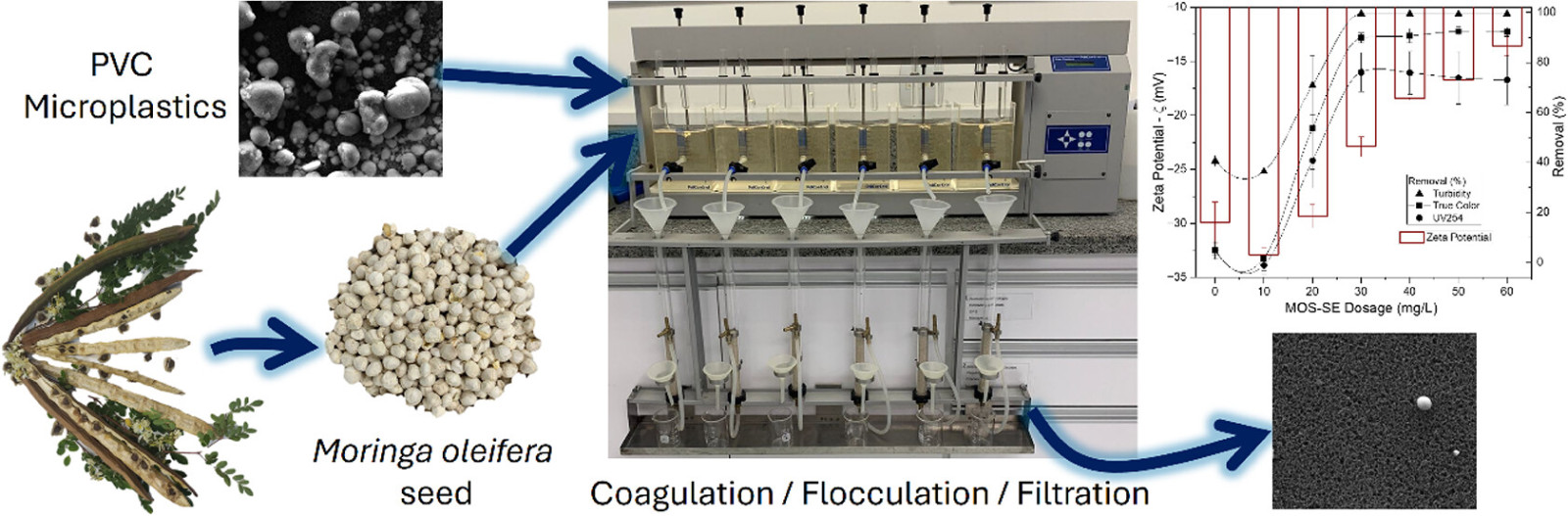
Enter moringa. A study published in April 2026 in ACS Omega by researchers at São Paulo State University (UNESP) revealed that moringa seed extracts can remove more than 98% of microplastic contaminants.
The proteins found in these seeds neutralize the microplastics’ negative charges, causing the particles to clump together into larger aggregates called flocs, which are then more easily filtered out.
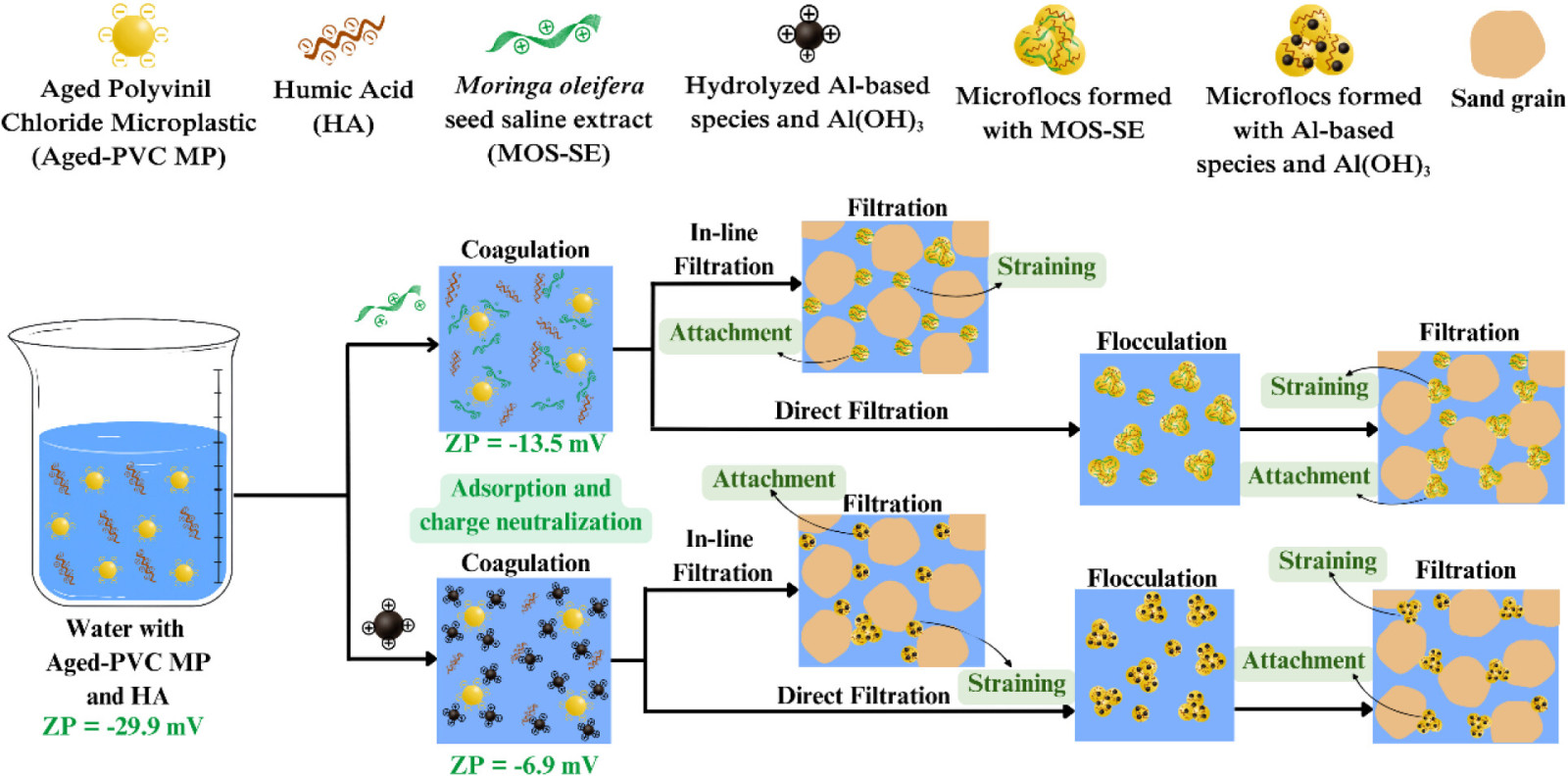
Trials with UV-exposed PVC particles confirmed nearly identical effectiveness compared to chemical treatments (98% vs. 98.7%). Remarkably, in alkaline water, the natural method even outperforms standard chemicals without leaving harmful residues or involving complex processes.
“We showed that the saline extract from the seeds performs similarly to aluminum sulfate, which is used in treatment plants to coagulate water containing microplastics. In more alkaline waters, it performed even better than the chemical product,” explained Gabrielle Batista, the study’s first author.
A Traditional Technique Finds Scientific Validation
Interestingly, using crushed moringa seeds for water purification is a long-standing tradition in regions such as Sudan. Current research explains this effectiveness. A study from Uppsala University, published in Colloids and Surfaces, highlights how seed proteins bind impurities tightly, allowing for denser flocculation than some conventional chemicals.
This method not only tackles microplastics but also clarifies water by removing between 98% and 99% of indicator bacteria, making it especially valuable where sophisticated treatment plants are unavailable. However, some concerns remain regarding the release of dissolved organic carbon during treatment, which may affect water quality if not managed carefully.
“There’s increasing regulatory scrutiny and health concerns regarding the use of aluminum- and iron-based coagulants, as they aren’t biodegradable, leave residual toxicity, and pose a risk of disease. For that reason, the search for sustainable alternatives has intensified,” noted Adriano Gonçalves dos Reis, a professor at ICT-UNESP and a member of the PPGECA at FEB-UNES.
Ongoing studies include testing moringa-based water treatments with samples from Brazil’s Paraíba do Sul River, aiming to confirm effectiveness beyond laboratory environments.
- Categories:
- Science









0 comments
Sign in to Comment