

Contrary to its reputation as a barren world, recent research reveals Mars once experienced several distinct periods marked by water presence, each leaving behind unique geochemical signatures. A new article in the Journal of Geophysical Research: Planets outlines evidence from Jezero Crater, where NASA’s Perseverance rover is exploring, showing the site went through multiple wet phases that may have provided environments capable of supporting microbial life.
Diverse Mineral Records Beneath Mars’ Surface
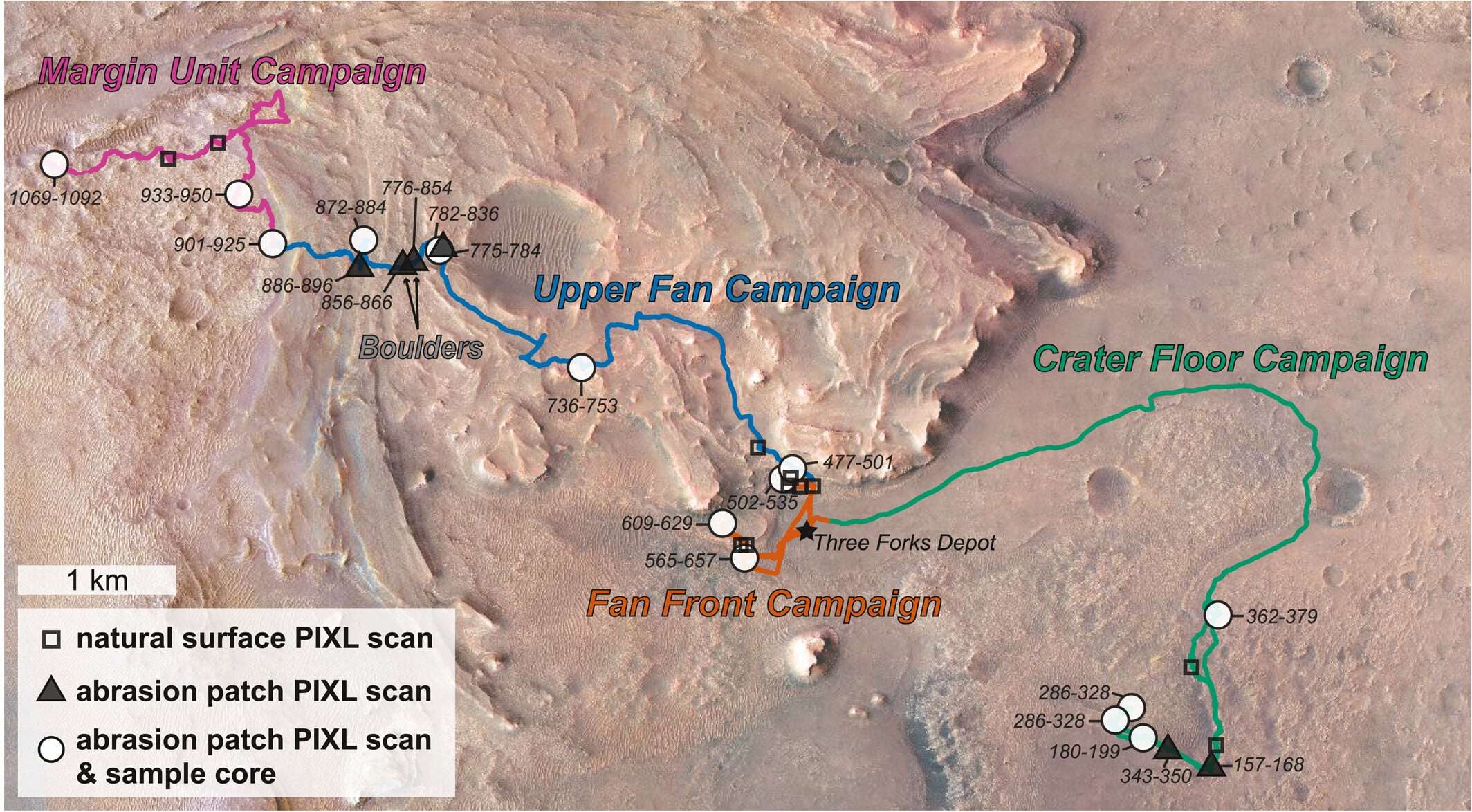
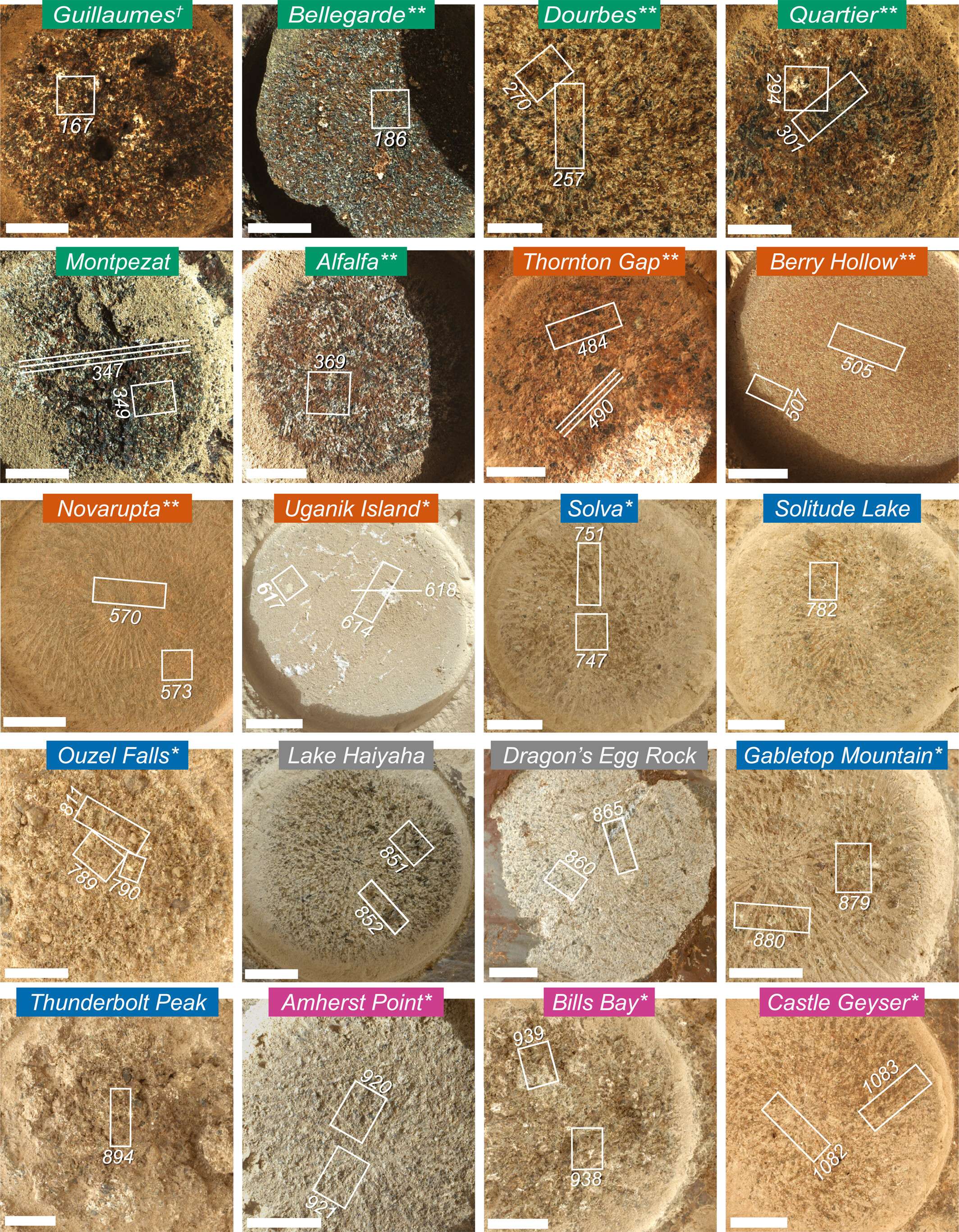
Although today Mars is an arid and inhospitable planet, its ancient landscape paints a far more intricate picture. Utilizing data collected from Perseverance’s Planetary Instrument for X-ray Lithochemistry (PIXL), researchers identified 24 distinct minerals embedded within the sediments of Jezero Crater. These mineral deposits offer a window into the planet’s past environmental conditions, including temperature fluctuations, pH ranges, and the chemistry of ancient waters.
Leading the investigation, Eleanor Moreland, a graduate student at Rice University, applied the advanced MIST algorithm (Mineral Identification by Stoichiometry) to interpret the detailed PIXL chemical data. Unlike conventional methods, MIST isolates meaningful mineral signatures from complex Martian rock compositions. Moreland explains:

“The minerals we find in Jezero using MIST support multiple, temporally distinct episodes of fluid alteration.”
From Bitter Acidity to More Hospitable Waters
The earliest phase of water interaction was characterized by chemically harsh, acidic environments. Perseverance detected minerals like greenalite, hisingerite, and ferroaluminoceladonite on the crater floor—each typically forming under hot, acidic conditions, hostile to most known life forms.
Kirsten Siebach, an assistant professor at Rice and co-author, notes:
“On Earth, life can persist even in extreme environments like the acidic pools of water at Yellowstone.” So, while it’s not the friendliest setting, it doesn’t automatically rule out the possibility that something could’ve adapted.
Subsequent water activity displayed a shift toward cooler, more neutral pH conditions, evidenced by minerals such as minnesotaite and clinoptilolite found in both the crater floor and adjacent deltaic deposits. This suggests that this second water phase was more widespread and possibly lasted for an extended period.
Alkaline Waters Raise Hope for Past Life
The final and most encouraging phase involved alkaline, low-temperature fluids—conditions that on Earth often favor microbial ecosystems. Minerals like sepiolite, a clay commonly linked to biological activity, were found throughout various sites sampled by Perseverance, reinforcing the case for increasingly hospitable conditions.
Moreland highlights that this progression represents “a shift from harsher, hot, acidic fluids to more neutral and alkaline ones over time – conditions we think of as increasingly supportive of life.”
Building a Detailed Martian Mineral Catalog
Since Mars exploration lacks extensive access to physical rock samples, scientists depend on innovative techniques such as statistical modeling to verify mineral identifications. This method generates ranges of probable mineral matches along with confidence levels, akin to how meteorologists use multiple models to predict weather patterns.
According to Moreland, creating this mineralogical record of Jezero Crater will be crucial if and when Martian samples return to Earth. Additionally, it guides mission operations, aiding Perseverance in selecting the most promising drilling targets in the ongoing search for evidence of ancient life.
Though this research did not analyze Sapphire Canyon, where a potential biosignature has been detected, the findings strengthen the overall understanding that habitable environments may have existed throughout various parts of Jezero.
- Categories:
- News









0 comments
Sign in to Comment