

More than ten years after first being recorded, bizarre radio signals emanating from beneath Antarctica continue to intrigue researchers. Recent investigations have discounted some of the most thrilling theories, yet the cause of these pulses remains a mystery.
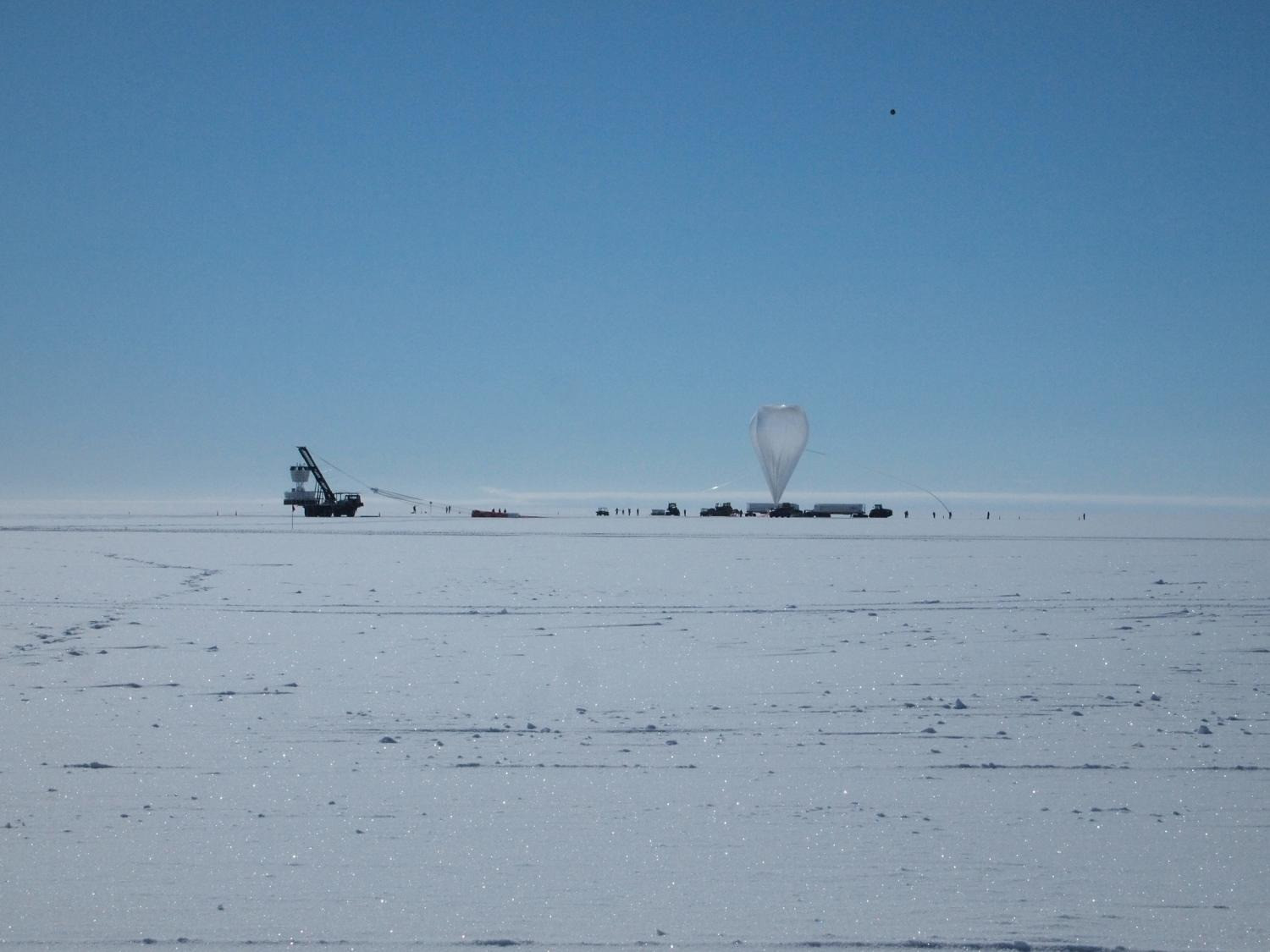
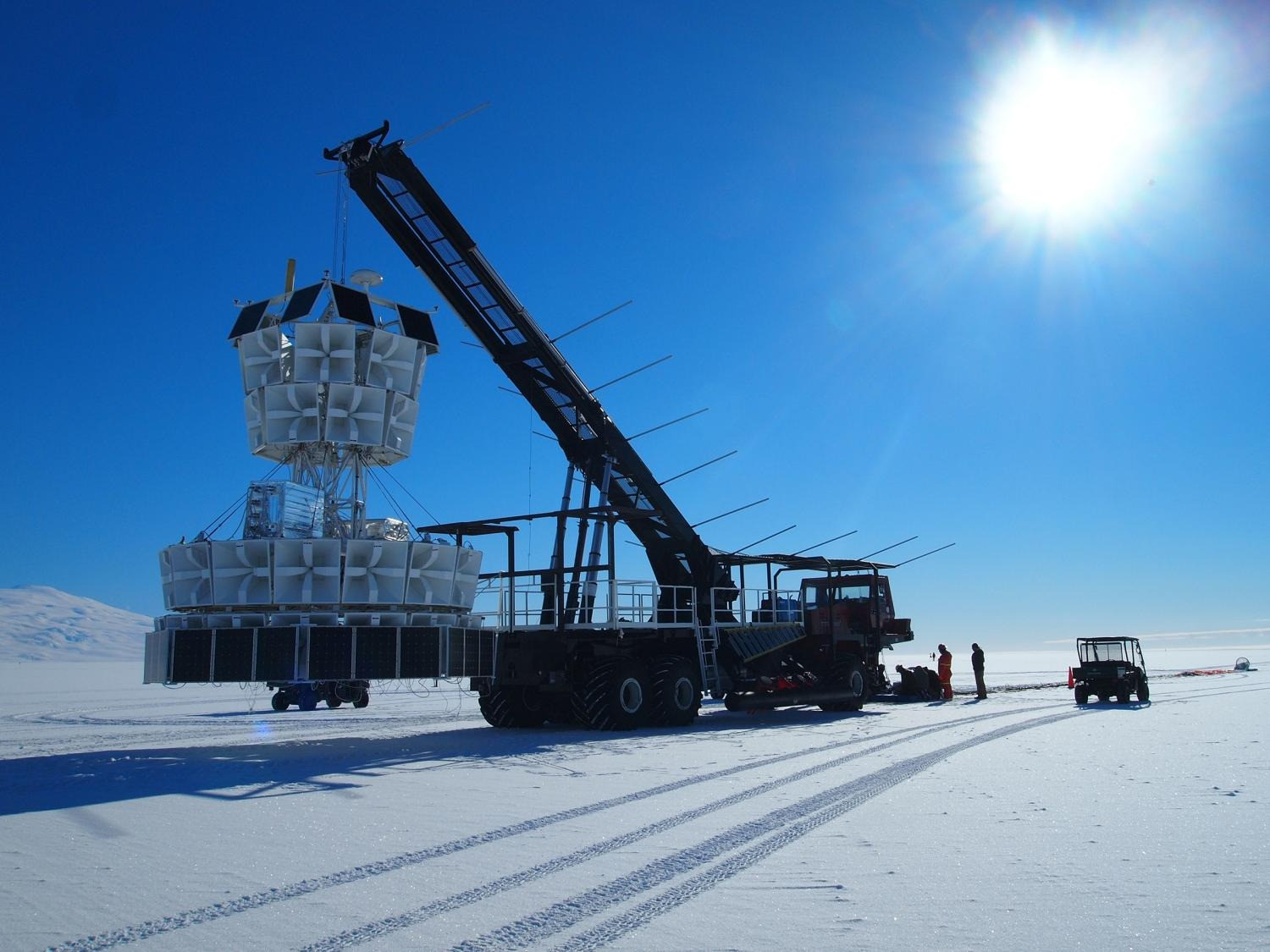
Captured between 2016 and 2018 by NASA’s ANITA (Antarctic Impulsive Transient Antenna) experiment, a balloon-based antenna aimed at detecting radio waves generated by ultra-high-energy cosmic particles, these signals defied expectations. Instead of observing reflections off the ice surface, the instrument detected waves appearing to originate from below the ice horizon—an observation inconsistent with current physical understanding.
This puzzling phenomenon has drawn considerable interest due to its potential to reveal unknown aspects of particle physics. Although it once hinted at revolutionary findings, recent data point towards a more nuanced explanation.

Unexpected Signals Defy Conventional Physics
The peculiar pulses recorded by ANITA arrived at steep trajectories about 30 degrees beneath the Antarctic ice sheet. Stephanie Wissel, a physicist at Penn State involved in the project, noted that for these signals to reach the detector, they would have had to pass through thousands of kilometers of solid rock—a journey expected to extinguish them. This paradox lies at the center of the mystery.
The ANITA system, situated roughly 40 kilometers above the surface, scans the polar ice for radio emissions produced when high-energy particles interact with the ice layer, as detailed in a release from Penn State.
“We point our antennas down at the ice and look for neutrinos that interact in the ice, producing radio emissions that we can then sense on our detectors,” Wissel noted.
These particle interactions generate so-called air showers, cascades of secondary particles that emit detectable signals in a predictable geometry. The “anomalous” signals break this expected pattern entirely, making their origin difficult to explain with current particle interaction models.

No Corroboration from Other Observatories
To probe these mysterious detections, scientists analyzed data from the Pierre Auger Observatory in Argentina, which has amassed a vast collection of cosmic-ray events over 15 years. The comparison, published in Physical Review Letters, provided crucial insight.
Researchers reported an absence of comparable upward-traveling events within Auger’s dataset. This finding is significant because novel particle interactions producing such signals would likely appear across multiple experiments. A further cross-examination with data from the IceCube neutrino observatory also yielded no matching detections.
This comprehensive vetting led scientists to categorize the ANITA events as “anomalous” — phenomena not explained by existing particle physics models. Moreover, the lack of independent confirmation casts doubt on interpretations involving new physics, refining the scope of plausible explanations.
Neutrinos Now Unlikely to Be the Culprit
Initial hypotheses centered on neutrinos, nearly massless particles known for traversing matter nearly unaffected. Originating from energetic cosmic events like supernova explosions or the primordial universe, neutrinos are notoriously elusive due to their scarce interactions. Wissel emphasized these attributes when considering neutrinos as possible sources for the odd signals.
However, theoretical calculations indicate a significant hurdle: for ANITA to capture such events, neutrinos would need to penetrate vast depths of Earth’s interior and yet produce a detectable interaction just beneath the ice. The study found this scenario extremely unlikely because the particles are expected to be absorbed before emergence.
Persistent Enigma Without Conclusive Explanation
As a result, scientists now see neutrinos as improbable explanations for the anomaly. Wissel acknowledged the origin remains elusive and noted a potential, yet unverified, alternative.
“My guess is that some interesting radio propagation effect occurs near ice and also near the horizon that I don’t fully understand, but we certainly explored several of those, and we haven’t been able to find any of those yet either,” she said.
Wissel described the signals as “one of these long-standing mysteries” and expressed hope for the upcoming PUEO project. This next-generation detector aims to offer enhanced sensitivity and precision, enabling researchers to unravel the nature of these puzzling events and improve neutrino detection capabilities in the future.
- Categories:
- Science










0 comments
Sign in to Comment