
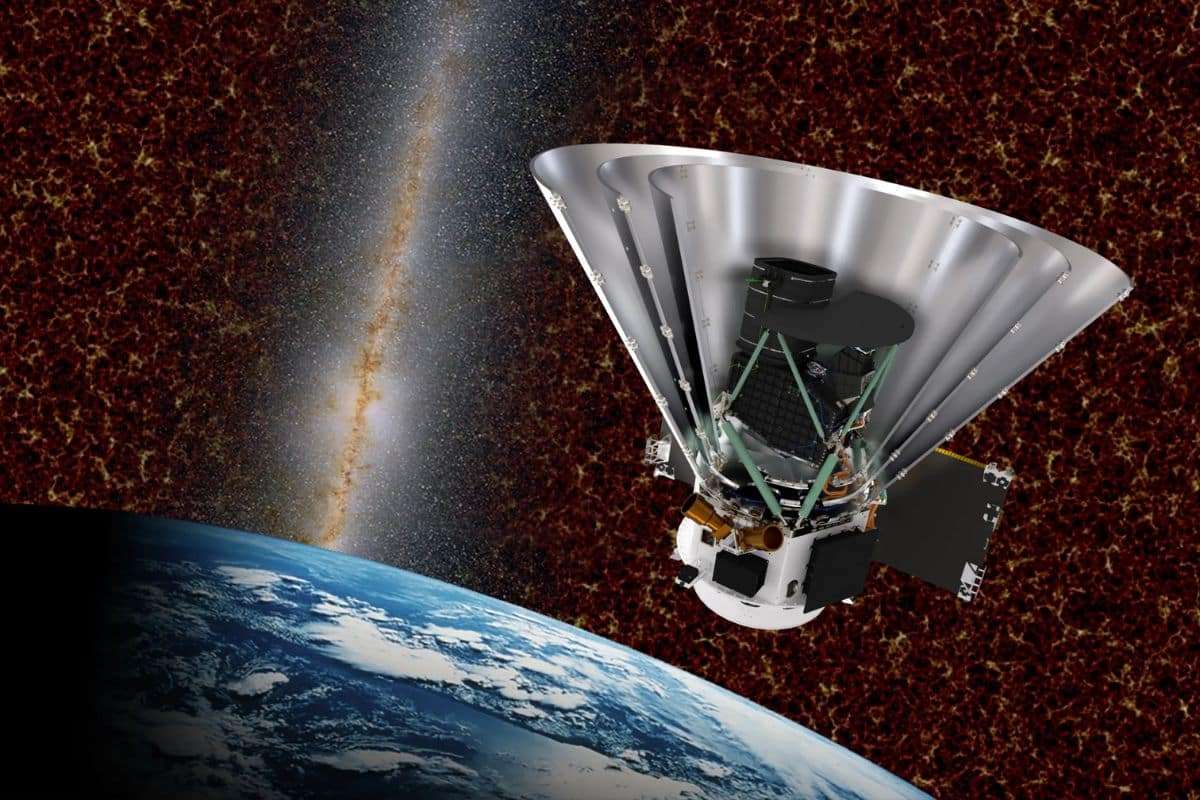
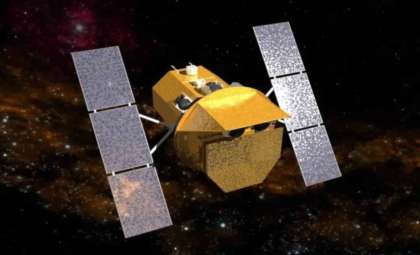
NASA’s latest space observatory, SPHEREx, recently embarked on its journey aboard a SpaceX Falcon 9 rocket, beginning a pioneering mission to create an all-encompassing infrared map of the universe.
The Spectro-Photometer for the History of the Universe, Epoch of Reionization and Ices Explorer (SPHEREx) aims to assemble an expansive 3D representation of the cosmos.
An Innovative Infrared Explorer
Deployed from Vandenberg Space Force Base via a SpaceX Falcon 9 rocket, SPHEREx is now orbiting Earth in a polar trajectory at about 420 miles (675 km) altitude. Over the coming 24 months, it will harness its infrared detectors to survey the entire celestial sphere four times, across 102 spectral channels.
“SPHEREx will generate a massive, detailed three-dimensional map of the entire night sky, enabling us to tackle some of astrophysics’ deepest questions,” said Phil Korngut, an astrophysicist based at the California Institute of Technology in Pasadena.

In contrast to observatories like the James Webb Space Telescope, which focus on specific distant objects, SPHEREx’s design allows it to capture the full sky at once, detecting faint signals that shed light on the universe’s history.
Probing the Universe’s Earliest Moments
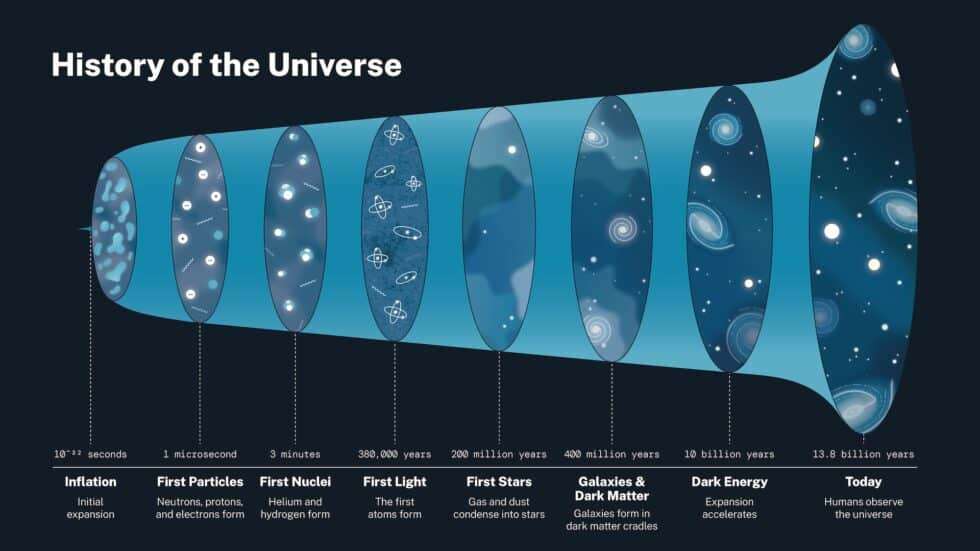
A primary goal of SPHEREx is to explore the theory of cosmic inflation, which proposes that the universe underwent an expansion exceeding the speed of light shortly after the Big Bang. This rapid growth likely left delicate traces within the large-scale cosmic structure, which SPHEREx will examine by charting millions of galaxies.
By analyzing how light is distributed among these galaxies over space and epochs, researchers hope to unravel the cosmic web—the immense framework sculpted by dark matter and gravity.
Collaborating With PUNCH to Study Solar Phenomena
SPHEREx shared its launch ride with NASA’s PUNCH (Polarimeter to Unify the Corona and Heliosphere) mission. This project, consisting of four small satellites, will focus on observing the Sun’s corona and the solar wind, which influence space weather and impact satellite operations on Earth.
NASA has emphasized that combining SPHEREx and PUNCH on one launch helped cut at least $15 million in costs, showcasing an efficient approach to maximizing scientific output within budget constraints.
A Milestone in Infrared Sky Surveys
Unlike precision-targeted telescopes such as JWST or Hubble, SPHEREx will compile a broad catalog of infrared sources throughout the universe. This treasure trove of data will inform upcoming missions and enable astronomers to complement detailed images from more focused observatories.
Thanks to its ability to detect wavelengths beyond visible light, SPHEREx could uncover cosmic secrets that have remained hidden for decades. Over its two-year mission, the extensive dataset it collects promises to fuel advancements in cosmology, exoplanet research, and our grasp of galactic development, profoundly influencing our comprehension of the cosmos.
- Categories:
- News







0 comments
Sign in to Comment