
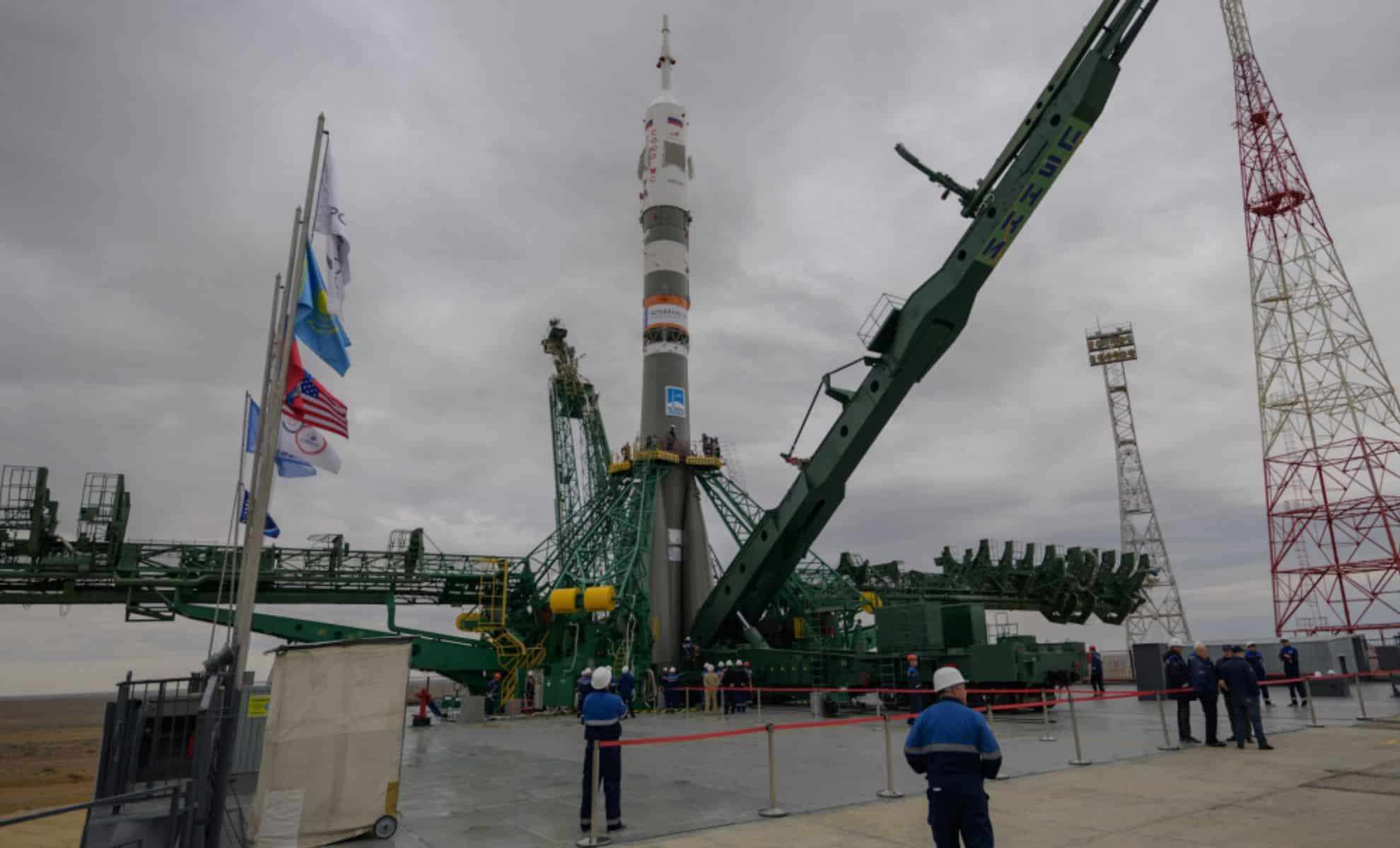
The Soyuz MS-26 spacecraft lifted off from Kazakhstan’s Baikonur Cosmodrome on September 11, 2024, ferrying an international crew to the International Space Station (ISS).
A joint effort between NASA and Roscosmos, this mission transports seasoned space travelers to the orbital outpost for an extended mission.
Mission Crew and ISS Journey
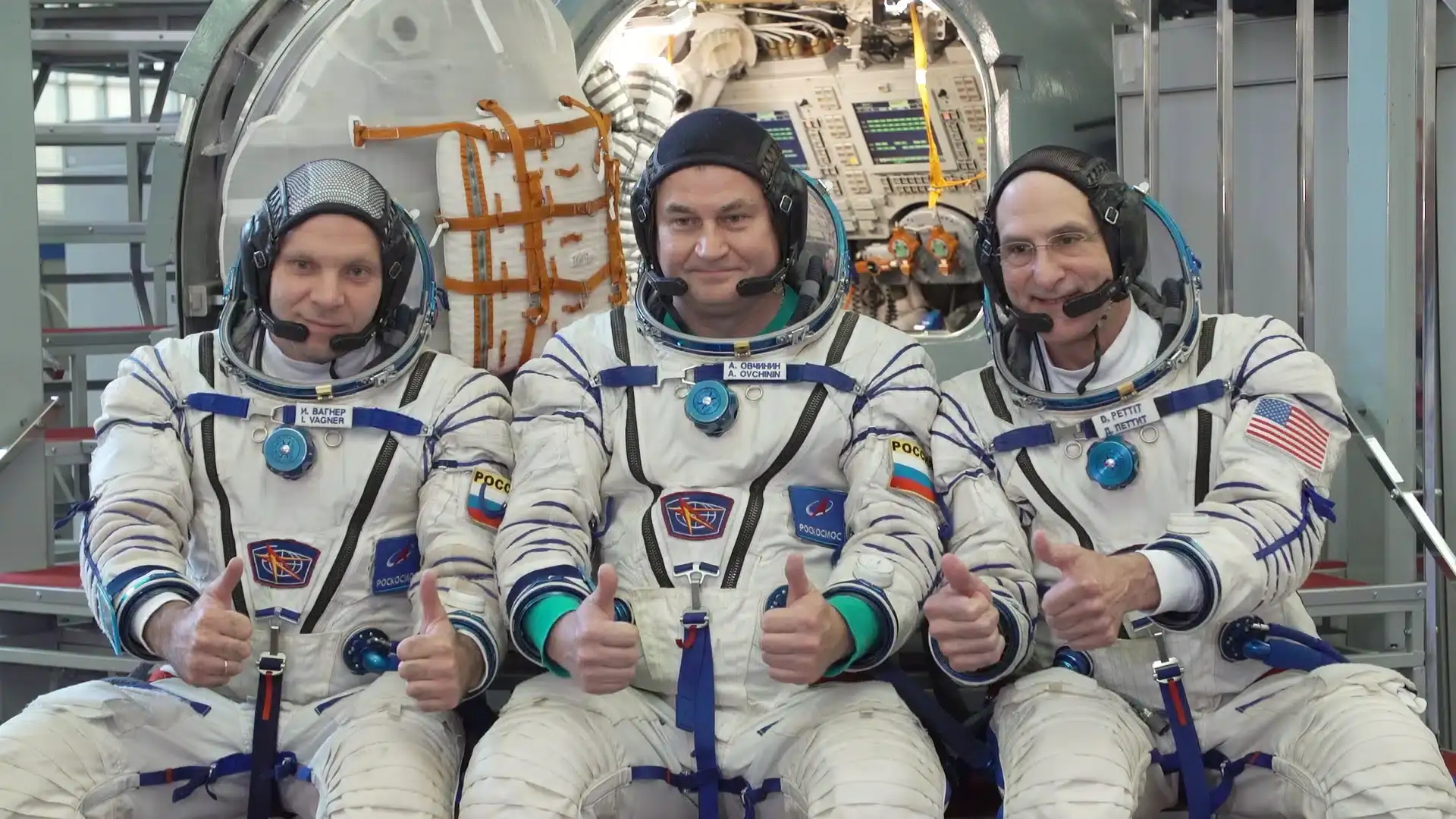
The Soyuz MS-26 team is led by Roscosmos astronaut Alexey Ovchinin, accompanied by cosmonaut Ivan Vagner and NASA’s Don Pettit, both acting as flight engineers. The crew launched aboard the dependable Soyuz 2.1a rocket at 12:23 p.m. EDT (1623 GMT) and is expected to dock with the ISS at the Rassvet module by 3:33 p.m. EDT (1933 GMT), joining Expedition 71.

Upon docking, Ovchinin, Vagner, and Pettit will undergo a handover with the Soyuz MS-25 astronauts — Oleg Kononenko, Nikolai Chub, and Tracy Caldwell-Dyson — facilitating the transition from Expedition 71 to Expedition 72.
Experienced Crew Members Headlining the Mission
Alexey Ovchinin embarks on his third space voyage, with prior missions aboard Soyuz TMA-20M and Soyuz MS-12. He is notable for his survival of the Soyuz MS-10 abort, where he and his crew made a safe emergency landing following a rocket malfunction.
Ivan Vagner flies for the second time, having previously participated in Expeditions 62/63 aboard Soyuz MS-16. Before becoming a cosmonaut, Vagner was an engineer at RSC Energia, bringing valuable technical knowledge to the mission.
Don Pettit, on his fourth mission, has accumulated over 369 days in space. He is recognized for his role during the inaugural SpaceX Dragon capsule docking in 2012, being the first astronaut to board a commercial spacecraft in orbit.
Key Goals and Research Aboard Soyuz MS-26
This expedition is vital for sustaining and expanding scientific endeavors on the International Space Station (ISS). Throughout their six-month mission, the astronauts will explore the effects of microgravity on human health, focusing on bone density reduction, muscle loss, and immune function. These investigations pave the way for longer missions, including planned journeys to Mars.
Aside from biological studies, the crew will advance materials science by examining phenomena like crystal formation, fluid behaviors, and combustion processes in a microgravity setting—research essential for developing new materials for space and Earth applications.
They will also conduct Earth observation tasks, monitoring environmental changes such as deforestation, melting glaciers, and worsening air pollution. The resulting data supports climate change understanding and related policy-making.
Maintenance aboard the ISS is another key focus, involving repairs and upgrades to systems including life support, power, and communications. The crew will prepare hardware for upcoming missions and may carry out spacewalks to install or fix equipment outside the station.
Furthermore, they will test innovative technologies destined for deep space exploration, including radiation shields and advanced life support — crucial steps in preparing for future missions beyond low Earth orbit to destinations like the Moon and Mars.
This mission exemplifies the strong partnership between NASA and Roscosmos, highlighting international collaboration in space despite challenges on Earth.
Record-Breaking Human Presence in Orbit
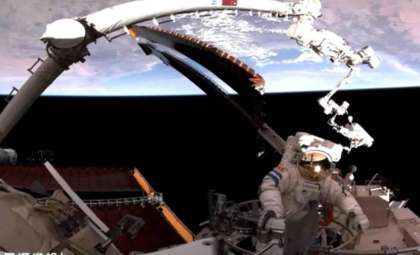
The Soyuz MS-26 launch marks a historic moment with 19 individuals orbiting Earth simultaneously, a new milestone. This total includes astronauts aboard the ISS, China’s Tiangong station, and the Polaris Dawn mission. This record reflects the growing momentum in global space exploration driven by international agencies and commercial enterprises.
This flight continues the successful cooperation between NASA and Roscosmos in operating and advancing the ISS and human spaceflight.
As Soyuz MS-26 nears the station, the world witnesses a crucial advancement in space exploration, confident that this skilled crew will significantly contribute to science and humanity’s journey beyond our planet.








0 comments
Sign in to Comment