
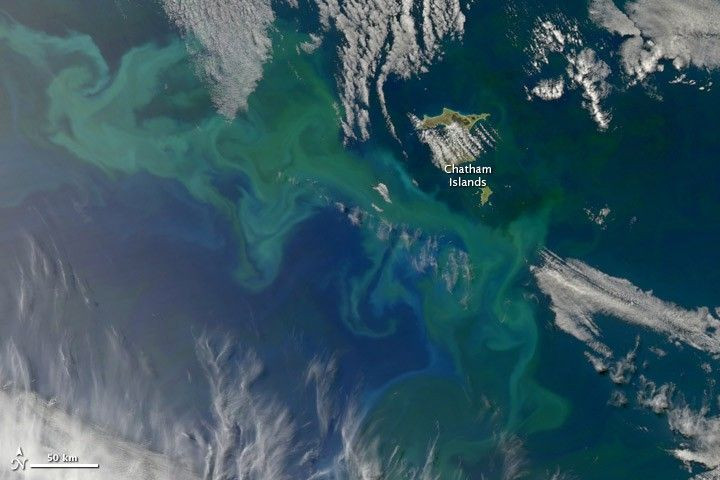
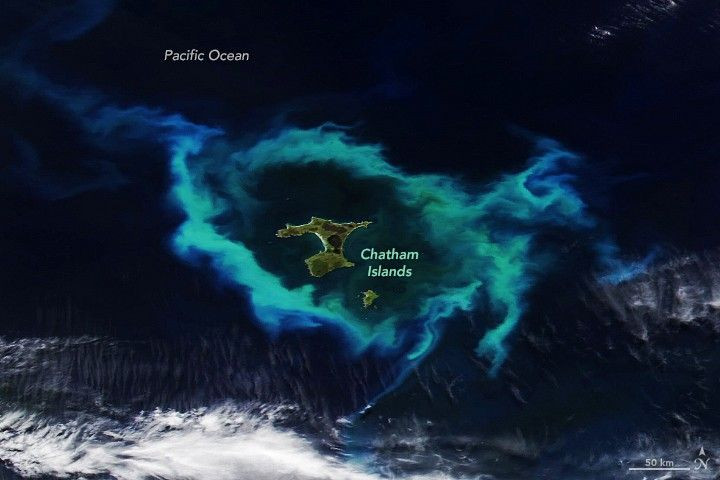
On January 10, 2026, NASA satellites captured an extraordinary display of oceanic hues around the Chatham Islands, located approximately 800 kilometers east of New Zealand’s South Island. The vibrant patterns of green and blue reflect a dynamic marine ecosystem undergoing seasonal transformation.
The Chatham Rise, an extensive underwater plateau extending east from New Zealand, significantly influences these spectacular blooms. According to NASA Earth Observatory, this region lies at the boundary where chilly Antarctic waters meet warmer subtropical currents. Together with extended daylight during the austral summer, these factors create ideal conditions for phytoplankton proliferation and movement.
Satellite Imagery Reveals Intricate Bloom Patterns
Thanks to the VIIRS sensor aboard the NOAA-20 satellite, NASA documented the bloom's intricate, ring-shaped arrangement encircling the islands. As highlighted by NASA Earth Observatory, swirling wisps and currents sculpted the formation visible in the January 10 images.

Though microscopic, these phytoplankton become prominent when blooming extensively, as their chlorophyll reflects sunlight detectable by satellites. This seasonal phenomenon is recurrent but has exhibited remarkable intensity and clarity in this instance. The observations stem from data provided by the Joint Polar Satellite System (JPSS) and NASA EOSDIS LANCE.
Nutrient-Rich Upwelling Drives Ocean Productivity
The bloom’s prominence over the Chatham Rise correlates with the underwater plateau’s ability to stimulate nutrient upwelling by funneling cold, nutrient-rich waters upward. This supports rapid phytoplankton growth, forming the foundation of the marine food chain.
According to Murphy et al., as detailed in the New Zealand Journal of Marine and Freshwater Research, satellite monitoring consistently reveals substantial phytoplankton activity throughout New Zealand’s marine zones, with the Chatham Rise as a known hotspot. This biologically rich environment supports fisheries targeting species such as pāua, rock lobster, and blue cod, all reliant on this essential marine resource either directly or through the food chain.
Mass Marine Mammal Strandings Puzzle Scientists
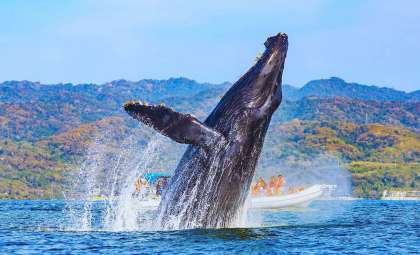
Marine biodiversity around the Chatham Islands is impressive, featuring at least five seal species and 25 kinds of whales and dolphins. The same environmental factors spurring biological productivity also attract large numbers of these marine mammals, as noted in studies linked to marine mammal populations.
However, this area also experiences frequent large-scale strandings, sometimes involving hundreds of individuals. Scientists are investigating whether the unique oceanographic characteristics of the region may contribute to these perplexing events, though definitive causes remain elusive.
- Categories:
- Science




0 comments
Sign in to Comment