

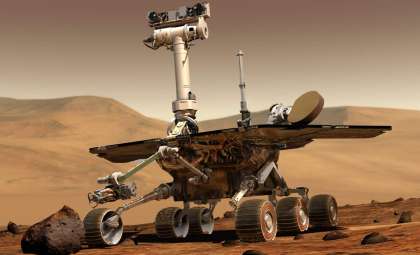
Since touching down on Mars in August 2012, Curiosity has been tirelessly investigating the planet’s environment to find clues about ancient microbial life. Its core mission involves studying Mars’ geology and atmosphere, laying a foundation for potential future human missions. Over its 12 years on the surface, Curiosity has journeyed roughly 32 kilometers (20 miles), navigating the planet’s difficult landscape.
Moving at an average speed of about 4 centimeters per second (144 meters per hour), the rover prioritizes detailed scientific inquiry over speed. This careful approach enables it to extensively study various features, including:
- Examining rocks and soil samples
- Measuring atmospheric gases
- Tracking radiation levels
- Documenting geological structures
Curiosity began its expedition in Gale Crater, a massive 154-kilometer-wide impact basin selected for its potential habitability records. At its current rate, the rover would take nearly 60 years to cross the crater’s full width, illustrating the enormous area it continues to explore.


Signs of Wear: How Mars’ Rough Terrain Impacts Curiosity
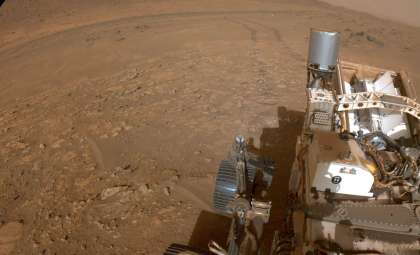
Recent snapshots from Curiosity’s Mars Hand Lens Imager (MAHLI), taken on September 22, 2024, expose considerable damage to the rover’s wheels. This deterioration highlights the challenging Martian environment, filled with jagged rocks and gritty sand that relentlessly test the rover’s durability.
Damage appeared surprisingly early; as soon as 2013, just one year after landing, wheel wear became evident. This illustrates the harshness of Mars’ surface and the tough engineering requirements for long-duration space missions.
The rover’s size contributes to the stress experienced by its parts:
DimensionMeasurementLength3 metersWidth2.8 metersHeight2.1 metersMass899 kg
Its weight combined with uneven ground accelerates wheel wear. Nevertheless, NASA engineers continue to devise innovative fixes to slow further damage and keep Curiosity’s mission moving forward.
Overcoming Obstacles: NASA’s Remote Engineering Ingenuity
Although wear is visible, Curiosity remains fully operational. Scientists at NASA’s Jet Propulsion Laboratory (JPL) have shown extraordinary skill in remotely tackling the conditions on Mars. From more than 62 million kilometers away, they have rolled out software enhancements to improve the rover’s maneuverability and durability.
A key upgrade includes new algorithms enabling independent speed control for each of the six wheels. This advancement redistributes stress more evenly, helping to protect the wheels from jagged terrain and prolong their usefulness.
The steadfastness of both the rover and its mission team embodies the essence of space exploration. As NASA broadens our cosmic knowledge, these adaptive strategies bode well for upcoming endeavors such as the NEO Surveyor spacecraft, which promises to transform our ability to detect asteroids based on lessons learned from Curiosity.
Continuing the Quest: Curiosity’s Scientific Achievements Persist
While the condition of its wheels captures attention, Curiosity’s core scientific instruments remain highly functional. The rover still harnesses its 17 cameras and an array of tools to collect vital information about Mars’ environment past and present.
Current scientific goals include:
- Investigating the chemical makeup of Martian rocks and soil
- Understanding the planet’s geological evolution through sediment layers
- Observing changes in the atmosphere and weather
- Searching for organic chemicals that could indicate former or current life
Curiosity’s ongoing efforts reflect the dedication of scientists worldwide in unraveling Mars’ secrets. Each breakthrough brings us closer to discerning the planet’s habitability and its role within our solar system’s history.
- Categories:
- Nasa





0 comments
Sign in to Comment