
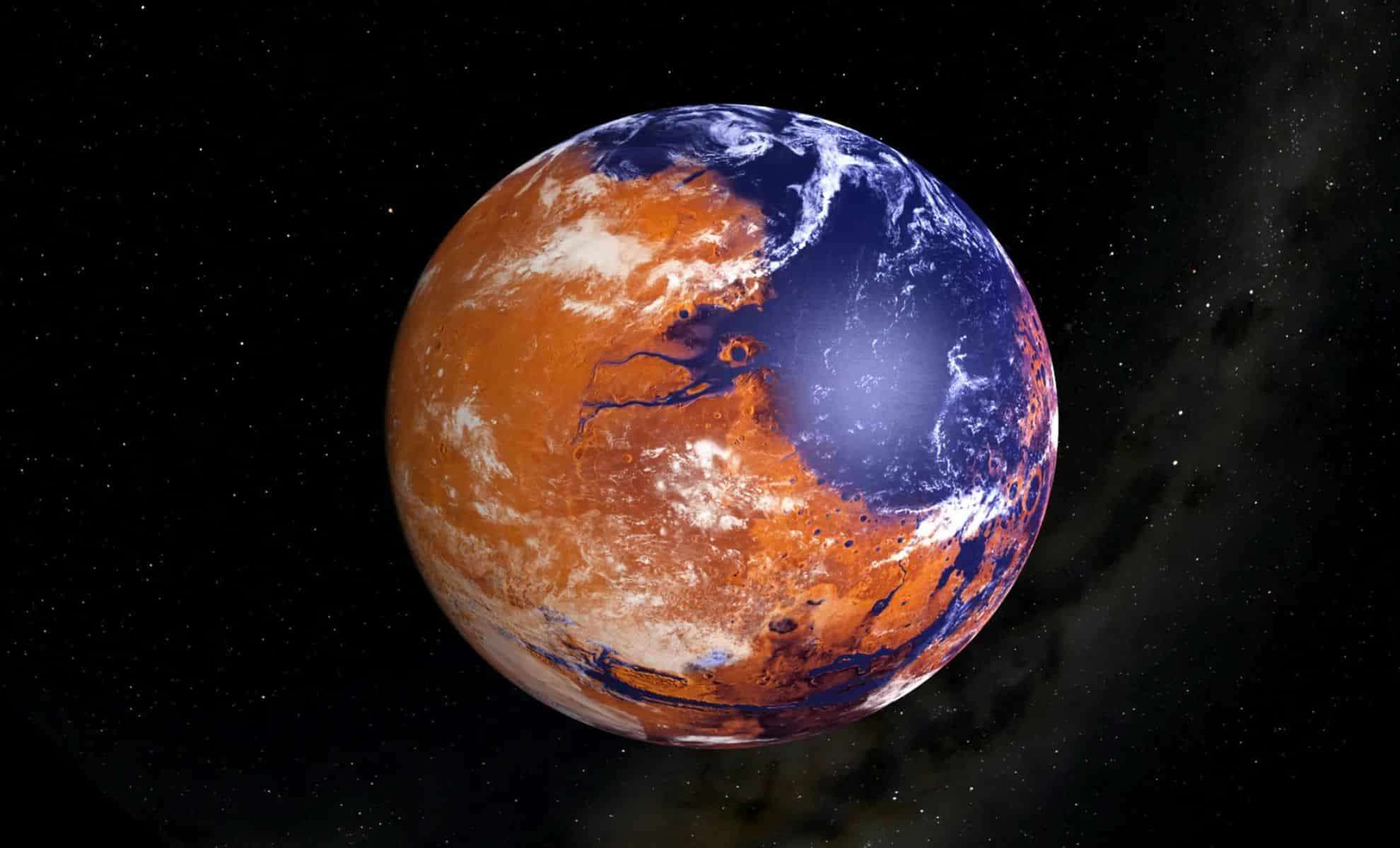
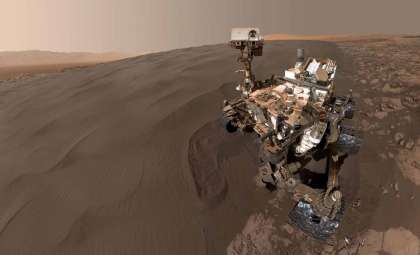
NASA's Curiosity rover has uncovered vital clues explaining Mars' shift from a potentially life-supporting planet with ample liquid water to the barren, frigid landscape observed today.
Long ago, Mars is believed to have harbored a climate warm enough to sustain rivers, lakes, and perhaps vast oceans. However, recent research conducted in Gale Crater, the rover’s exploration site, points to dramatic environmental changes that transformed Mars into the desiccated world we now recognize. These insights challenge established ideas and illuminate the processes behind Mars’ loss of habitability.
The Transformation of Mars: From Aquatic to Arid
Evidence suggests Mars once had extensive water bodies. Ancient geological formations such as river valleys, deltas, and water-altered minerals indicate that a thick atmosphere may have existed, warm enough to allow liquid water on the surface. Gradually, though, Mars’ global magnetic field disappeared, exposing the atmosphere to the stripping effects of solar wind and cosmic radiation. This atmospheric erosion led to rapid cooling, resulting in the stark, dry environment that prevails.

Curiosity’s recent measurements in Gale Crater offer new details on this climatic evolution. David Burtt of NASA’s Goddard Space Flight Center spearheaded investigations on the isotopic makeup of carbonate minerals found in the crater. These carbon-rich deposits provide critical information on Mars’ ancient weather conditions. Burtt explains, “The isotope values of these carbonates point toward extreme amounts of evaporation, suggesting that these carbonates likely formed in a climate that could only support transient liquid water.” This indicates that Mars experienced increasingly hostile conditions where water rapidly evaporated as the atmosphere thinned.

Insights from Gale Crater’s Ancient Lakebed
Gale Crater contains sedimentary rock formations that hold a detailed record of Mars’ climatic past. Using instruments like Curiosity’s Sample Analysis at Mars (SAM) and Tunable Laser Spectrometer (TLS), scientists have analyzed carbonate layers to better understand environmental fluctuations on the planet.
The findings propose two main possible origins for the carbonates, each pointing to distinct climate settings. The first involves alternating wet and dry periods, with water periodically filling and evaporating from the crater’s basin, leaving behind mineral-rich deposits. This cycle could have resulted in intermittent habitable phases. The alternate scenario suggests carbonate formation under freezing, highly saline conditions where briny pools froze and slowly accumulated minerals. Jennifer Stern, co-author from NASA Goddard, notes, “Wet-dry cycling would indicate alternation between more-habitable and less-habitable environments, while cryogenic temperatures in the mid-latitudes of Mars would indicate a less-habitable environment where most water is locked up in ice.”
These scenarios underscore Mars’ early climate variability, suggesting that liquid water presence was often brief and conditions challenging for sustaining life.
Understanding Mars’ Loss of Habitability
This research deepens our understanding of Mars’ past, but also raises questions about its potential for ancient life. The isotope analysis reveals that surface water was likely transient and extremely salty, creating a hostile setting for prolonged life. Still, as Burtt states, “our samples are not consistent with an ancient environment with life (biosphere) on the surface of Mars, although this does not rule out the possibility of an underground biosphere or a surface biosphere that began and ended before these carbonates formed.”
Elevated levels of heavy carbon and oxygen isotopes in Martian carbonates, much higher than those on Earth, evidence intense evaporation processes. These isotopic signatures record Mars’ harsh climate shifts that contributed to turning the planet inhospitable. Burtt adds, “The fact that these carbon and oxygen isotope values are higher than anything else measured on Earth or Mars points towards a process (or processes) being taken to an extreme.”
Future Directions for Mars Research
These discoveries expand our knowledge of Mars’ environmental changes and provide vital context for understanding planetary habitability. Mars’ drastic atmospheric loss offers crucial lessons for life sustainability on other worlds, including Earth.
As Curiosity advances up Mount Sharp at Gale Crater’s center, it will explore sediment layers representing different climatic periods, potentially revealing when Mars lost its life-supporting capabilities. Upcoming missions, such as NASA’s Perseverance rover, plan to gather additional samples that could shed more light on Mars’ potential past life and habitability.
Though Mars’ surface is now inhospitable, the possibility of ancient underground ecosystems or ephemeral surface habitats remains an intriguing target. Each new finding brings us closer to answering one of space exploration's greatest questions: Did life ever thrive on Mars?
- Categories:
- Astronomy ,
- News ,
- Science ,
- Nasa








0 comments
Sign in to Comment