
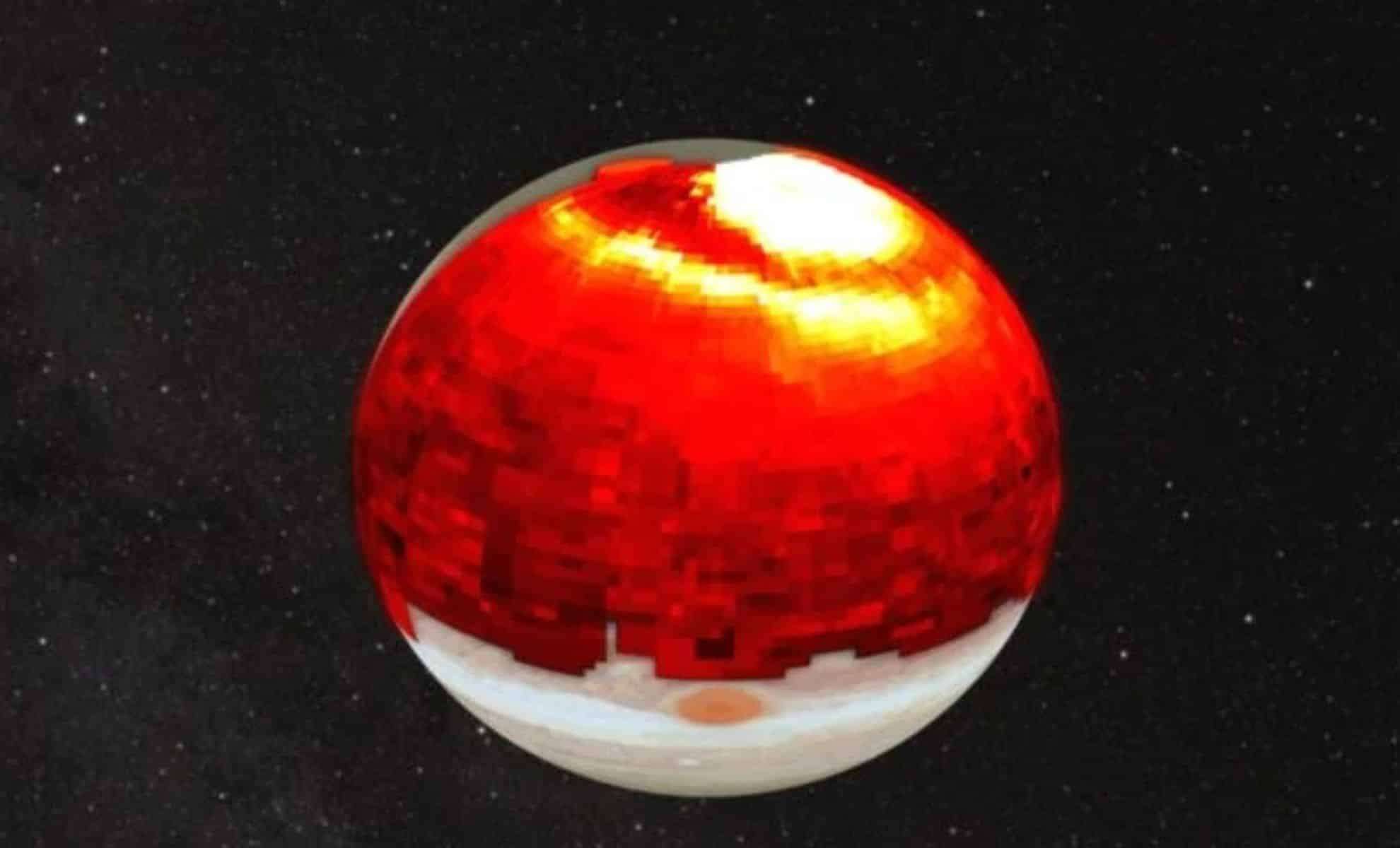
An intense solar storm recently battered Jupiter’s magnetosphere, exposing vulnerabilities in the gas giant’s protective magnetic shield. According to a recent publication on April 3, 2025, in Geophysical Research Letters, scientists observed a dramatic temperature spike in Jupiter’s upper atmosphere, soaring up to an astonishing 500°C, triggered by the solar wind overwhelming the planet’s magnetosphere. These observations challenge prior beliefs about the durability of giant planets against solar events and shed light on potential impacts such phenomena could have on Earth’s atmosphere and technological systems.
Massive Solar Wind Strikes Gas Giant
The incident studied occurred in 2017, when a dense burst of solar wind collided directly with Jupiter, compressing its expansive magnetic environment—the magnetosphere—that typically protects the planet from charged particles. This event represents the first opportunity for researchers to observe and examine such a large-scale atmospheric reaction on an outer planet.
By integrating measurements from NASA’s Juno mission, the Keck Observatory, and comprehensive solar wind simulations, the team connected the magnetospheric squeeze with a widespread thermal anomaly. The solar storm generated a superheated region stretching across half of Jupiter’s circumference, boosting the upper atmosphere’s temperature from roughly 350°C to beyond 500°C—a remarkable 150-degree increase.

“The solar wind compressed Jupiter’s magnetic shield much like pressing a massive squash ball,” explained Dr. James O’Donoghue, the principal investigator of the study. “This formed a hugely heated zone covering half the planet’s vast diameter, which is about eleven times larger than Earth.”
Reevaluating Giant Planets’ Magnetic Defense
Until now, scientists believed Jupiter’s powerful magnetic field and fast rotation limited most auroral heat to polar areas. However, the newly discovered heating pattern reveals a more complex picture. Increased solar wind pressure intensified auroral heating in the poles while simultaneously driving hot atmospheric gases toward the equatorial regions, triggering extensive global changes.
“This phenomenon has never before been documented on any outer planet,” said O’Donoghue. The research suggests that Jupiter and possibly other giant planets like Saturn and Uranus may be more susceptible to solar influence than previously assumed.
Broader Consequences for Earth and Space Weather Prediction
Although Jupiter orbits nearly five times farther from the Sun than Earth, this study holds valuable implications for our planet. The capability to forecast how solar wind alters planetary atmospheres, especially with models as employed here, enhances space weather prediction that is crucial for Earth.
“Our solar wind simulations successfully anticipated the timing of disturbance to Jupiter’s atmosphere,” stated Professor Mathew Owens, study co-author from the University of Reading. “This advances our confidence in forecasting tools vital to shielding Earth from hazardous space weather events.”
Solar storms can disrupt GPS, communication, satellites, and electrical grids on Earth. Leveraging gas giants as natural testing grounds helps scientists refine predictions and develop strategies to reduce risks posed by intense solar activity in our own cosmic neighborhood.
- Categories:
- News







0 comments
Sign in to Comment