
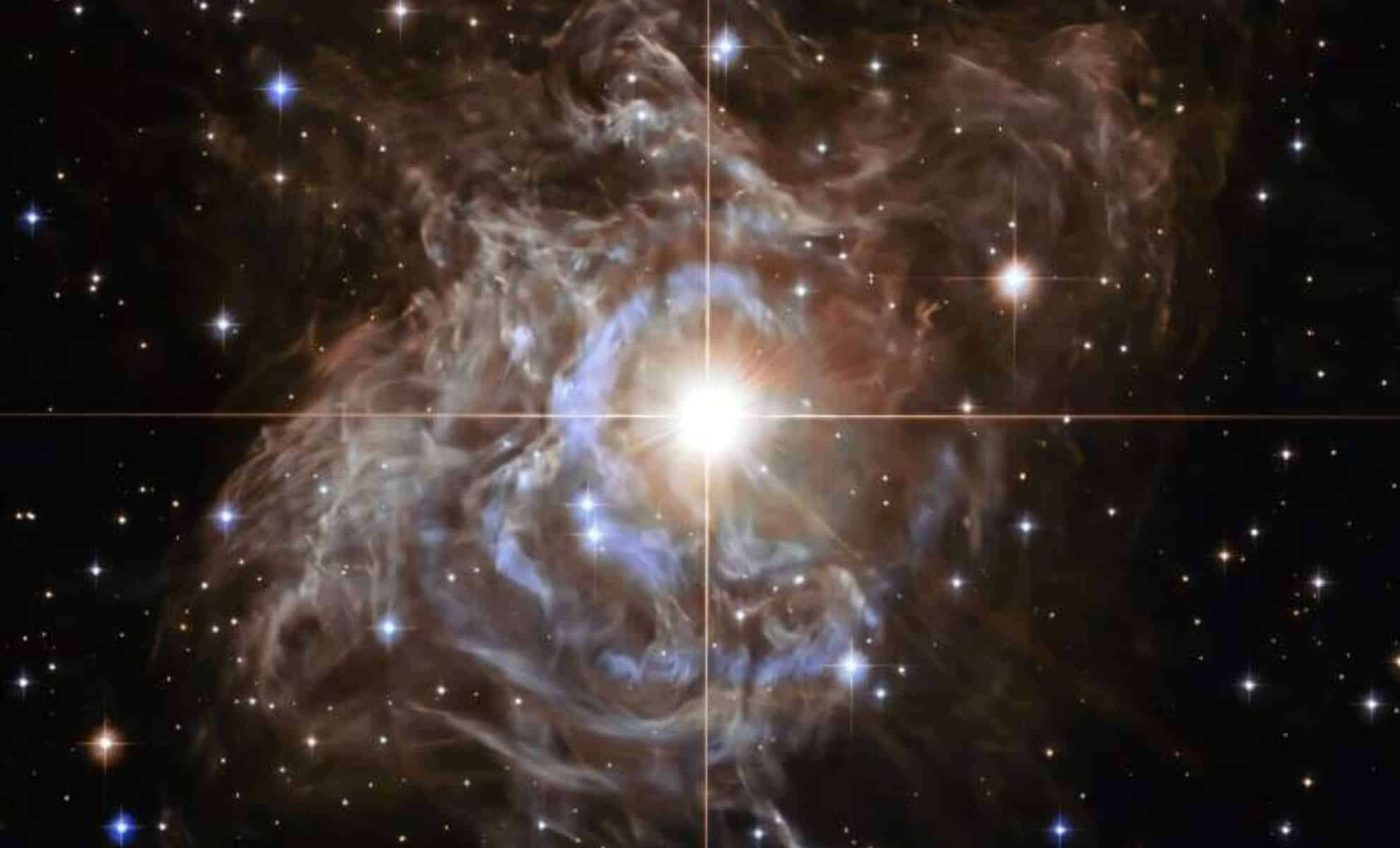
A pioneering research effort led by Dr. Sukanya Chakrabarti in partnership with Dr. Peter Craig introduces an unprecedentedly precise depiction of the Milky Way’s outer gas disk. Published in The Astrophysical Journal and accessible via arXiv, this work employs a fresh methodology to sidestep limitations of previous approaches, offering novel insights into the galaxy’s structure. The findings, revealed at the 246th American Astronomical Society meeting in Anchorage, Alaska, uncover the true character of the galaxy’s atomic hydrogen layer—displaying a distinctly "flocculent," patchy configuration.
Decoding the Patchy Pattern in the Milky Way’s Gas Layer
Mapping the expansive gas disk of the Milky Way has presented challenges owing to the intricate gas properties. Earlier techniques depended on kinematic distance estimates, which assumed a uniform rotation velocity across the galaxy. These assumptions often faltered, especially near the spiral arms and central bulge, where velocity variations are notable.
The current study innovates by integrating measurements of Cepheid variable stars, whose distances are well-established, alongside atomic hydrogen clumps. This novel “pattern matching” strategy bypasses dependency on velocity-based calculations, enabling a highly accurate depiction of gas distributions. As Dr. Chakrabarti emphasizes, “Measuring distance is foundational in astronomy since without it, mapping becomes impossible.” This approach has unveiled the Milky Way’s gas disk with exceptional clarity, exposing its markedly uneven and agitated nature.

Advancements in Gas Disk Mapping Utilizing Cepheid Stars
A major obstacle in previous gas mapping was relying on kinematic distances, which translate observed gas velocities into distance under the premise of a smooth rotational profile. Chakrabarti notes, “While distances to stars can be accurately derived by various methods, gas lacks reliable direct distance measures.” This shortfall caused errors, particularly in dynamically complex regions like the spiral arms and central bulge.
The breakthrough involves exploiting Cepheid variable stars—pulsating stars with precisely known distances due to their periodic brightness changes. By correlating these stellar positions with adjacent gas clumps, researchers anchored distance measurements for the gas more securely. This method paints a more authentic picture of the Milky Way’s gas disk, revealing it as far more irregular and unsettled than the smooth stellar distributions. Dr. Chakrabarti remarks, “Star distributions appear smoother, but the gas looks fluffier and more perturbed.”
Revealing a More Complex Gas Distribution in Our Galaxy
The newly derived map contradicts earlier assumptions of a smoothly flowing gas disk. Instead, the outer Milky Way gas exhibits a turbulent, fragmented “flocculent” pattern with clumps and chaotic motion. This discovery revises our understanding of the galactic disk’s structure, highlighting its dynamic and multifaceted nature.
For the first time, the outer gas disk has been charted accurately without depending on traditional kinematic distance models. This novel technique holds promise for refining our grasp of the Milky Way’s spiral structure and may illuminate large-scale processes like dark matter distributions and interactions with dwarf galaxies. Lead author Dr. Peter Craig reflects, “Our maps reveal gas features that are often overlooked when assuming a smooth rotational model of the galaxy.”
- Categories:
- News




0 comments
Sign in to Comment