
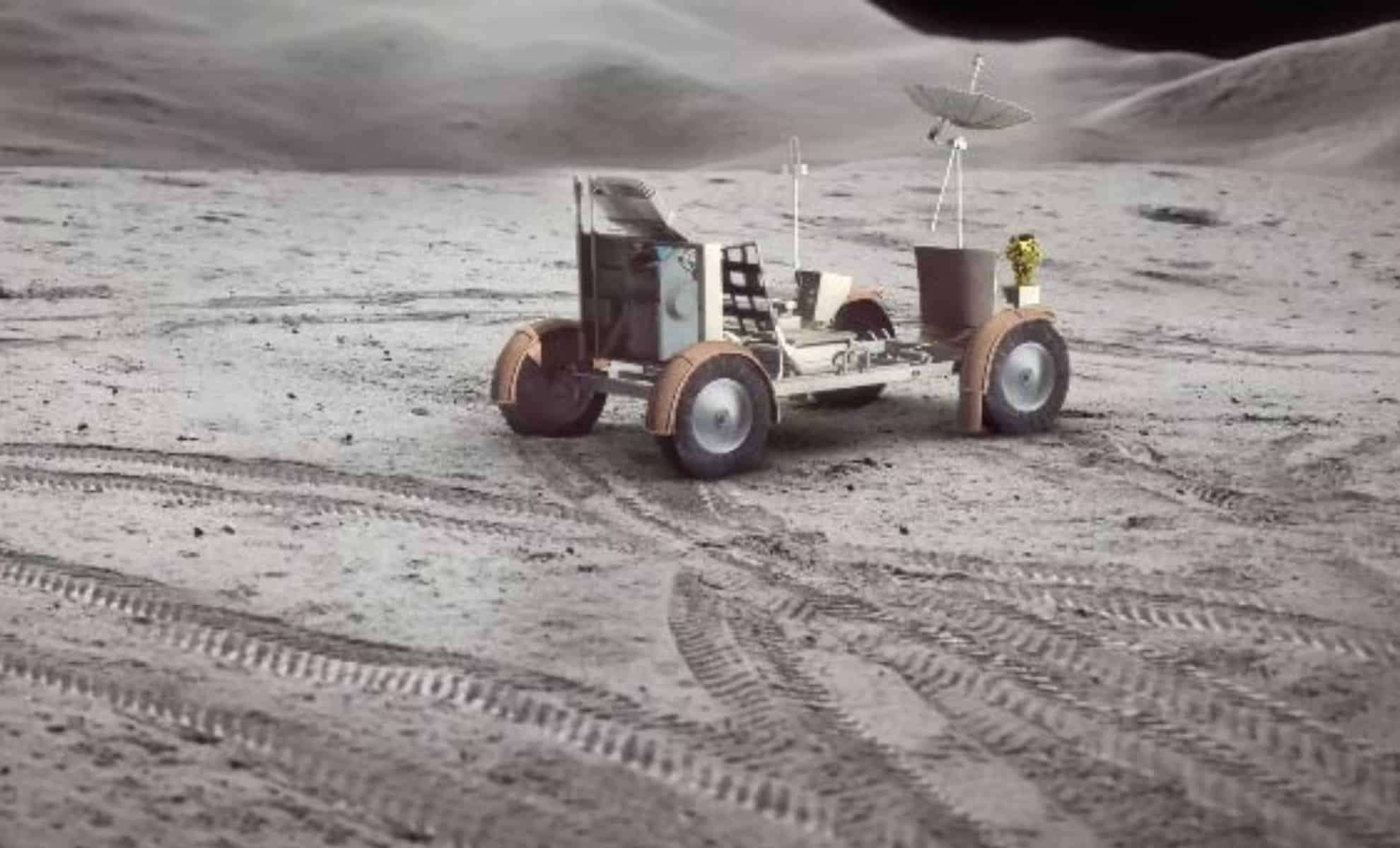
NASA scientists have provided definitive proof that the solar wind—a continuous flow of charged particles emitted by the Sun—can generate water molecules on the Moon's surface. This discovery, published on March 17 in JGR Planets, reveals new mechanisms behind the natural formation of water on the Moon, carrying significant weight for NASA’s ongoing Artemis missions planned for the lunar South Pole.
Solar Wind-Induced Water Generation on the Moon Explained
In contrast to Earth, the Moon lacks both a magnetic shield and atmosphere, leaving its surface directly exposed to the steady influx of solar wind, mainly composed of hydrogen ions. When these ions strike the Moon’s regolith—a layer of fine, fragmented rock—they react with oxygen atoms embedded in lunar minerals like silica, producing hydroxyl (OH) groups and, occasionally, complete water (H₂O) molecules.
“It’s fascinating that with just lunar soil interacting with hydrogen particles emitted by the Sun, there’s potential for water creation,” remarked Li Hsia Yeo, the study’s lead scientist at NASA’s Goddard Space Flight Center. “It’s truly remarkable to consider the implications.”

Although past missions detected hints of water and hydroxyl on the surface, this study is the first to successfully replicate the entire water-formation mechanism under controlled laboratory settings, offering tangible proof of the solar wind’s role in creating water on the Moon.
Laboratory Simulation Equivalent to 80,000 Years on the Moon
Yeo and colleagues constructed an innovative experimental setup that closely mimicked lunar conditions. Their design incorporated a solar particle generator, a vacuum chamber, and an infrared spectrometer to analyze chemical changes while eliminating Earth's atmospheric contamination.
“Crafting an apparatus where all parts fit perfectly without any contamination took substantial effort,” explained Jason McLain, co-researcher at Goddard. “But the payoff was immense, confirming that the hypothesis about solar wind-induced water synthesis stands the test of time.”
Using lunar soil samples from Apollo 17, carefully heated to evaporate any terrestrial moisture, the team exposed them to intense solar wind particle radiation simulating about 80,000 years of lunar surface exposure.
Analysis revealed a dip in light absorption around 3 microns, a key indicator of water and hydroxyl presence. The signal characteristics confirmed that both hydroxyl and water molecules were generated during the experiment.
Impact on Upcoming Lunar Missions
This breakthrough carries major consequences for explorers destined for the Moon. Continuous generation of small quantities of water by the solar wind—even under sunlit conditions—could substantially influence strategies for in-situ resource utilization (ISRU), a process critical for extracting water and other materials directly from the lunar environment to support life and fuel production.
Specifically, NASA’s Artemis initiative aims to establish sustained human operations at the lunar South Pole, where ice deposits exist in permanently shadowed craters. The realization that solar wind-induced water formation occurs across broader regions of the Moon could expand resource availability beyond these cold traps.
Interestingly, the study also identified a daily pattern in water-related spectral signals, stronger in the cool morning and weaker during the heat of lunar midday, implying a dynamic cycle where water and hydrogen are lost and replenished continuously by solar wind interactions.
Broader Implications in Solar System Science
While lunar impacts from micrometeorites and other sources contribute to water deposits, this research establishes the solar wind as a primary mechanism. Beyond our Moon, these findings provoke new questions about similar processes on other airless bodies, such as asteroids and Mercury, where the solar wind could similarly foster surface water formation.
By successfully recreating this interaction with authentic lunar dust in Earth’s labs, NASA’s team fills a crucial knowledge gap regarding the chemical interactions shaping airless planetary bodies. Future research will investigate the practicality of harvesting this water for human utilization in space missions.
- Categories:
- News








0 comments
Sign in to Comment