
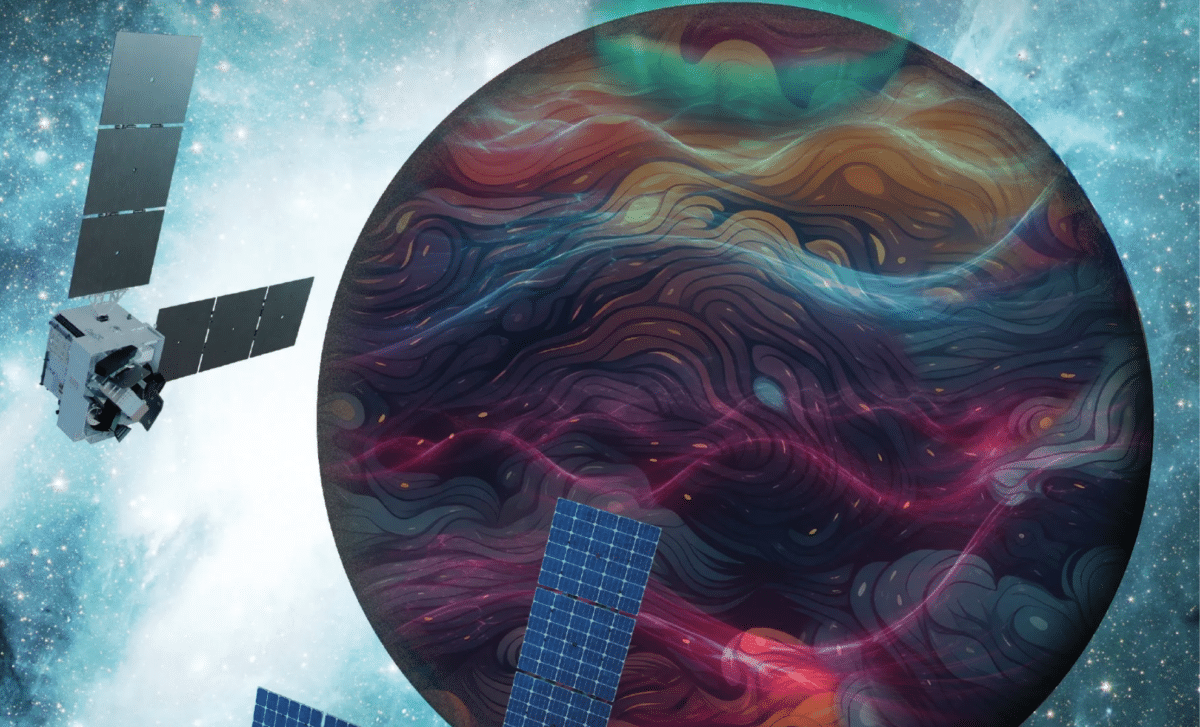
NASA has greenlit an innovative mission concept poised to enhance our ability to forecast space weather and safeguard vital technologies integral to daily life. The Dynamic Atmosphere-Ionosphere Explorer (DAPHNE) will explore how variations in Earth's lower atmosphere affect space weather conditions in the higher layers, impacting satellites, communication networks, navigation systems, and astronauts.
Exploring Earth’s Upper Atmosphere to Unravel Space Weather Mysteries
Traditionally, space weather has been primarily attributed to solar phenomena such as solar flares, charged particle streams, and solar wind fluctuations. However, scientists are increasingly aware that the atmospheric layers closer to Earth also influence space weather dynamics. The transitional region where Earth's atmosphere meets the plasma-rich environment of space is shaped not only by solar activity but also by atmospheric processes occurring closer to the surface.
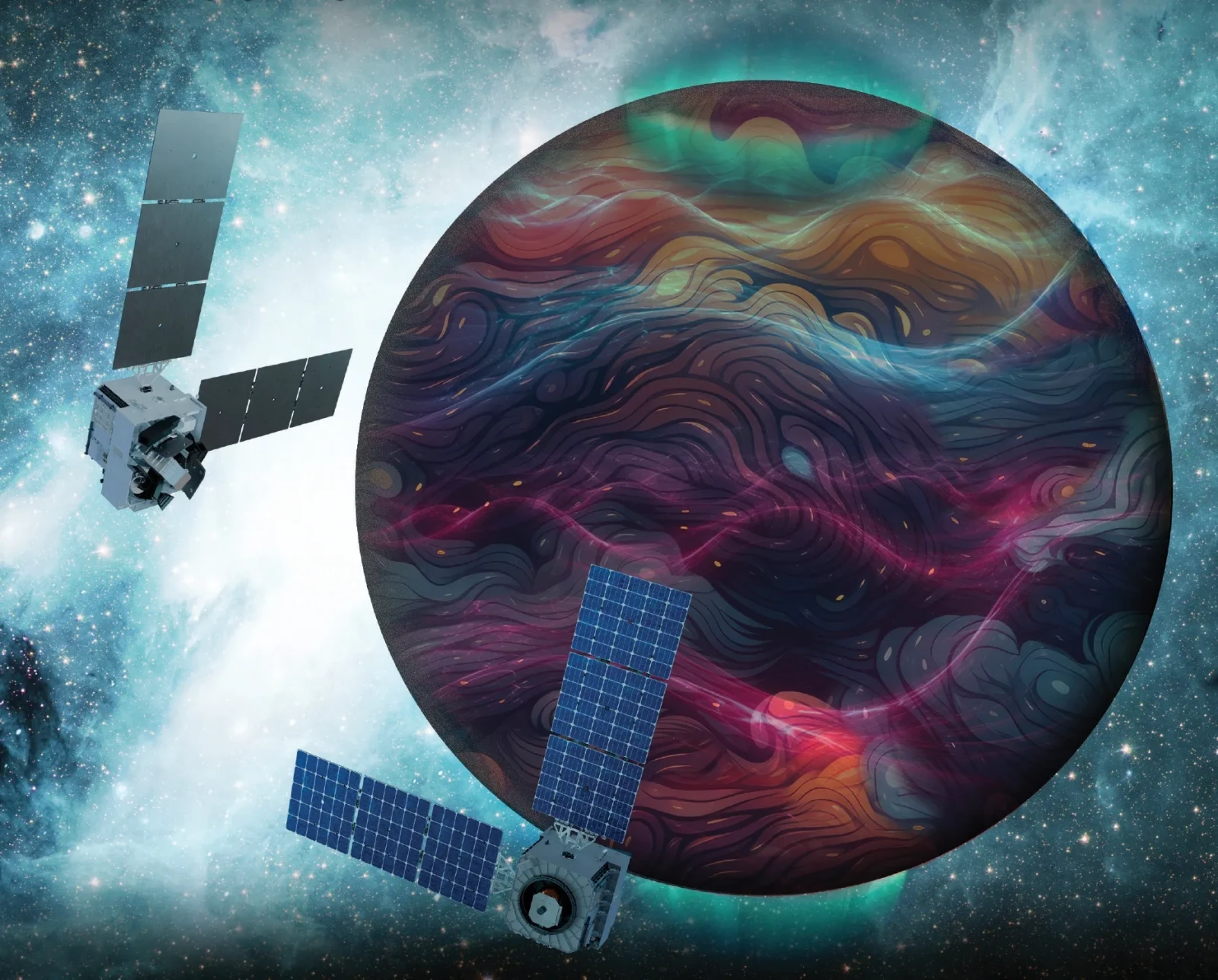
DAPHNE aims to unpack this intricate interplay by deploying twin satellites to measure neutral wind patterns, temperature shifts, and atmospheric composition within the thermosphere. These simultaneous observations from distinct vantage points will help researchers trace how energy and motion propagate through Earth’s atmosphere to affect the ionosphere — a crucial zone for radio transmission, GPS navigation, and satellite functionality.

The mission’s implications extend beyond scientific interest; it holds significant promise for protecting technologies upon which society depends. GPS facilitates global logistics, satellites provide critical communication and weather data, and crewed spacecraft travel beyond Earth's protective shell. Minor atmospheric disturbances can disrupt satellite orbits and signal integrity, so understanding these processes is vital for developing advanced space weather warnings.
A Mission Focused on Enhancing Forecast Accuracy
DAPHNE’s standout feature lies in its goal to improve prediction capabilities. Current forecasting heavily relies on solar observations but lacks comprehensive knowledge of how Earth’s atmosphere modifies and intensifies these inputs. This mission will enrich models with lower atmospheric data to close that knowledge gap.
NASA regards DAPHNE as an optimal mission choice, combining low risk with high scientific and practical impact. By deepening our grasp of atmospheric influences on the ionosphere and thermosphere, it could significantly refine forecasts affecting low Earth orbit satellites, navigation systems, communications, and crewed space missions.
As human excursions extend to lunar and Martian destinations, the demand for precise space weather forecasting intensifies. Enhanced predictive tools will assist mission managers in safeguarding spacecraft, scheduling tasks, and minimizing risks from solar and cosmic radiation.
NASA’s Science Mission Directorate Associate Administrator, Nicky Fox, underscored the mission’s importance:
“NASA is advancing the United States’ leadership as a space weather-ready nation, and by providing new insights into Earth’s atmosphere we can better predict and prepare for impacts in our daily lives on Earth and in space.”
Fox further highlighted how DAPHNE supports future space exploration initiatives:
“As NASA sends astronauts beyond Earth’s magnetic protection to the Moon, Mars, and beyond, DAPHNE will join the NASA science fleet strategically located across the solar system to provide data that will help mission planners predict and mitigate the effects of space weather for the benefit of all.”
Led by Aimee Merkel at the University of Colorado Boulder, the DAPHNE mission is a key step toward protecting astronauts on their journeys to the Moon, Mars, and beyond while improving space weather forecasting here on Earth. pic.twitter.com/TSSCf64IKB
— NASA Science (@NASAScience_) June 18, 2026
Unlocking Atmospheric Secrets with Twin Satellites
The use of two identical satellites is central to DAPHNE’s methodology. Atmospheric phenomena extend over large areas and fluctuate over time, making it difficult for a single spacecraft to tell if changes are spatial or temporal. Operating twin satellites concurrently allows scientists to cross-reference data, offering a clearer, multi-dimensional view of atmospheric processes.
These instruments will probe the thermosphere and ionosphere — transitional zones where the neutral atmosphere blends into charged plasma. This interface dynamically responds to solar forces and internal atmospheric waves and tides originating from lower altitudes.
Researchers anticipate that DAPHNE will uncover how disturbances starting near Earth’s surface propagate upward, altering conditions hundreds of kilometers overhead. Such findings could transform current models of atmospheric coupling and become an essential data resource for the space weather community.
Upcoming Steps for the DAPHNE Mission
DAPHNE will proceed to Phase B, emphasizing detailed design, mission planning, and flight readiness activities. This progression marks a crucial step from concept to potential reality.
The mission faces a confirmation review planned for 2027, where NASA will assess technological development, readiness, and funding. Should the mission clear this milestone, its budget—excluding launch expenses—is expected to stay under $250 million (FY 2023 dollars).
Led by Aimee Merkel of the Laboratory for Atmospheric and Space Physics at the University of Colorado Boulder, this project is funded and managed through NASA’s Solar Terrestrial Probes Program at the agency’s Goddard Space Flight Center in Maryland. Launch is anticipated no earlier than 2029 if development proceeds smoothly.
- Categories:
- Nasa







0 comments
Sign in to Comment