
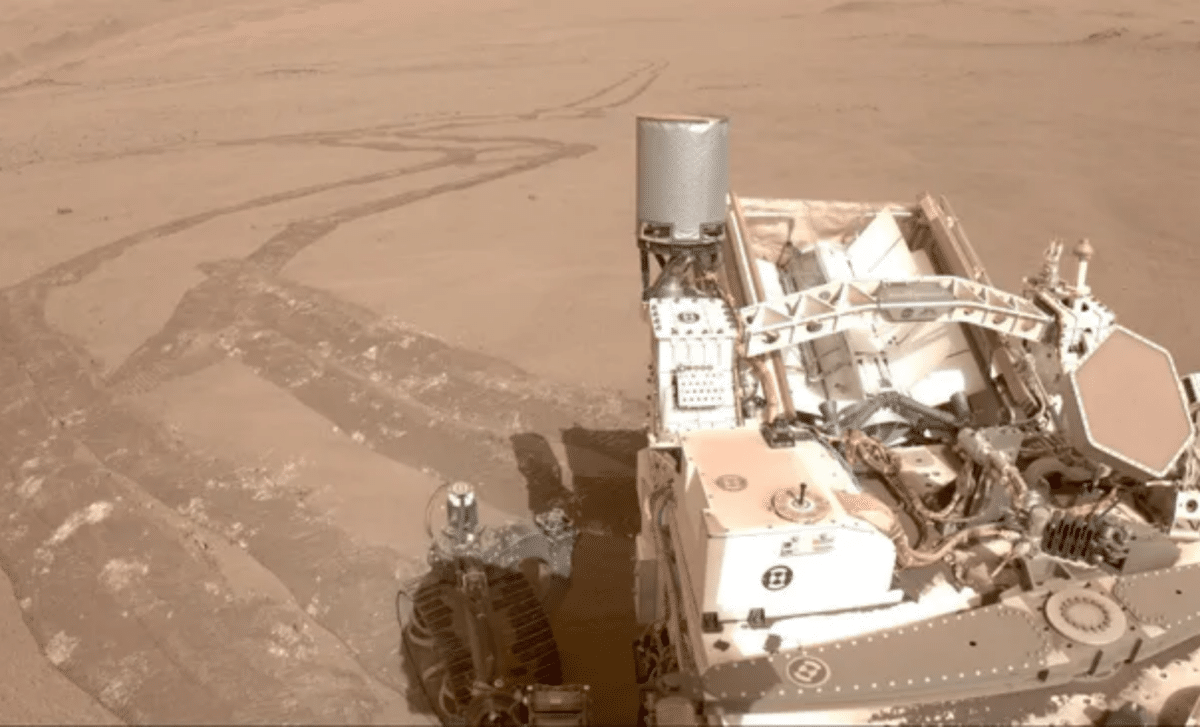
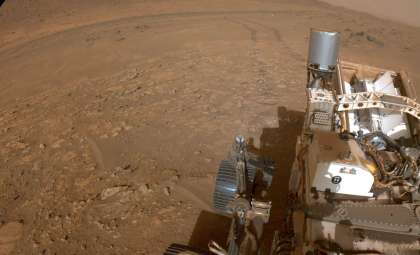
NASA's Perseverance rover has crossed a significant threshold by traveling over 42.2 kilometers on the surface of Mars, matching the distance of a marathon. This major feat, announced just before the mission reached its fifth anniversary, was detailed by NASA’s Jet Propulsion Laboratory (JPL). The rover exploring the Jezero Crater continues to demonstrate remarkable endurance and is positioning itself to be the longest-operating rover in Martian history.
Designed for an Extended Mission
Engineers from NASA’s Jet Propulsion Laboratory (JPL) have confirmed that Perseverance is fully prepared for long-term exploration on the Red Planet. During the American Geophysical Union’s annual meeting, JPL shared an update on how the rover’s systems successfully passed extensive testing to guarantee ongoing mobility and scientific capabilities.
“These tests show the rover is in excellent shape,” said Perseverance’s deputy project manager, Steve Lee of JPL, who presented the results at the conference. “All the systems are fully capable of supporting a very long-term mission to extensively explore this fascinating region of Mars.”
Add Cosmo Herald as a Preferred Source

Equipped with upgraded hardware and advanced software, Perseverance has already covered 26.3 miles (42.32 km). Its rotary wheel actuators remain rated for an additional 60 kilometers, ensuring plenty more exploration ahead. This accomplishment highlights the rover’s durability and growing autonomy, setting a precedent for future planetary missions.
An Autonomous Trailblazer on Mars
A key innovation of the Perseverance mission is its capability to independently navigate the challenging Martian terrain. Utilizing advanced terrain mapping and hazard avoidance algorithms, the rover can traverse lengthy distances with minimal input from mission controllers, which is crucial given the communication delay between Earth and Mars.
“More than 90% of Perseverance’s journey has relied on autonomous driving, making it possible to quickly collect a diverse range of samples,” said Hiro Ono, a JPL autonomy researcher and lead author of the recent paper. “As humans go to the Moon and even Mars in the future, long-range autonomous driving will become more critical to exploring these worlds.”
This self-driving technology allows scientists to efficiently gather samples from multiple key sites within reduced timeframes without compromising safety. The success of Perseverance’s autonomous system is paving the way for future robotic explorers and human expeditions.
Chasing Opportunity’s Distance Record
The current record for the farthest distance driven on another planet is held by Opportunity, which traversed 28.06 miles (45.16 km) during its nearly 15-year mission. With its steady progress, Perseverance is poised to surpass this milestone in the near future. Beyond the distance, the journey brings the rover closer to ancient river delta regions and other geologically interesting formations that might hold vital signs of past life.
During its peak traversing phase, the rover covered an impressive 5 kilometers over 24 Martian days, demonstrating the effective coordination between Earth-based teams and onboard navigation systems. Balancing swift travel with pauses for scientific investigations, Perseverance exemplifies a new standard for mobile exploration on Mars.
Engineered for Endurance and Discovery
NASA engineers at JPL are confident that the rover can eventually reach a total distance of at least 100 kilometers (61 miles). Tests on crucial components, including the rotary wheel actuators, indicate continued reliability despite Mars’ tough terrain and temperature extremes.
Experience from earlier Mars missions such as Spirit, Opportunity, and Curiosity has shaped JPL’s approach to rover maintenance and longevity. Even when certain parts have failed in the past, NASA has successfully adapted mission plans to extend operational lifetimes. The team is actively preparing new routes informed by the latest satellite data and surface scans, ensuring Perseverance remains a vital explorer for years to come.
- Categories:
- Nasa






0 comments
Sign in to Comment