
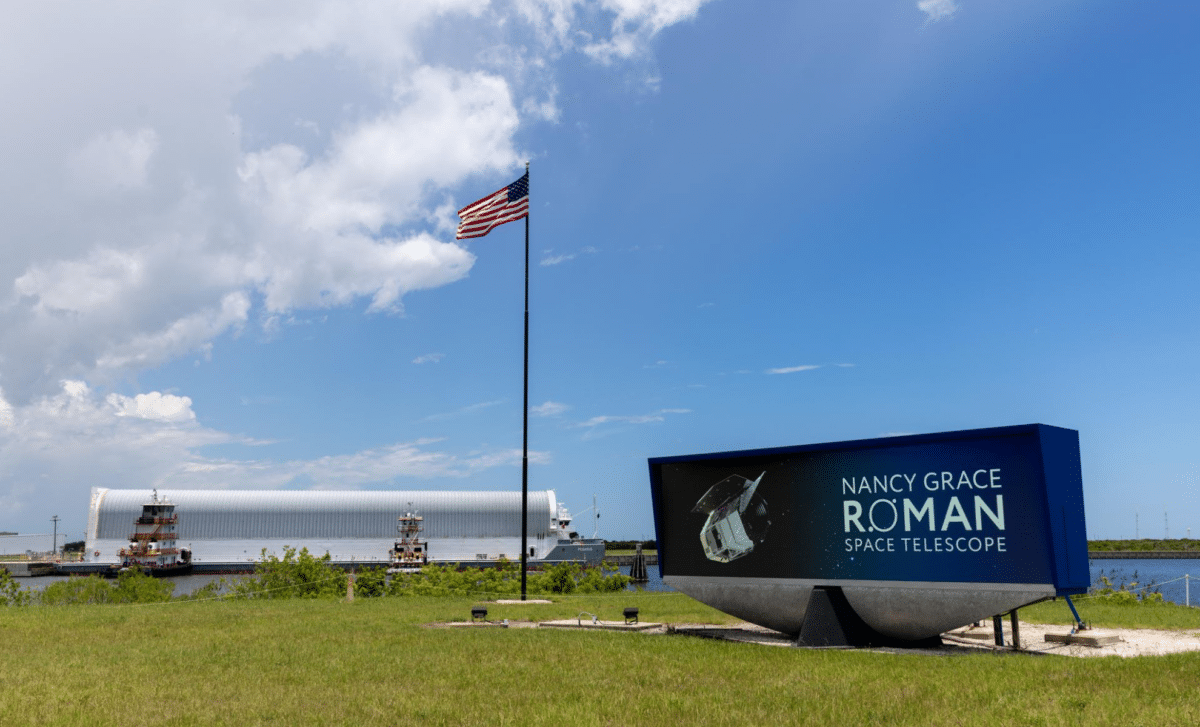
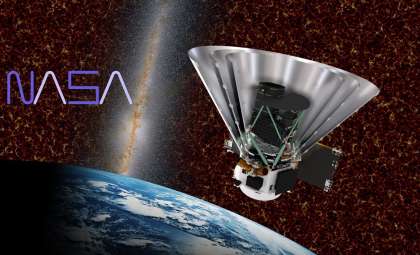
NASA's upcoming flagship space observatory has arrived in Florida, marking a significant step towards its scheduled launch. The Nancy Grace Roman Space Telescope reached the Kennedy Space Center on June 21, where engineers will finalize preparations ahead of liftoff planned for later this summer. This event signifies the shift from development phases to the final countdown of a mission poised to transform our comprehension of galaxies, exoplanets, black holes, and the enigmatic forces accelerating the universe's expansion.
Long-Distance Transport of a Pivotal NASA Observatory
The delivery of the Roman Space Telescope to Florida followed an extensively coordinated transport journey originating at NASA’s Goddard Space Flight Center in Maryland. After completing integration and rigorous testing, the nearly 18,000-pound spacecraft was sealed inside a climate-controlled container and moved to the Port of Baltimore. From there, it embarked on a coastal voyage aboard NASA’s Pegasus barge, a key vehicle in transporting some of the agency’s most significant and sensitive equipment.
Once it arrived at the Kennedy Space Center, the telescope was carefully transferred from the barge to a specialized transport truck that carried it to the Payload Hazardous Servicing Facility. Here, final prelaunch checks and preparations will be conducted. Every stage of this transit was meticulously planned to shield the delicate observatory from contamination, vibrations, and environmental shifts. As the mission nears launch, these thorough inspections and validations become vital to ensuring everything is mission-ready, especially for this spacecraft destined to operate millions of miles from Earth.

The Nancy Grace Roman Space Telescope has arrived at the Space Coast! Carried inside NASA's Pegasus barge, this new telescope is set to launch on Falcon Heavy later this year. pic.twitter.com/D3KSl1LWTD
— Jerry Pike (@JerryPikePhoto) June 20, 2026
Final Preparations Underway Before Launch
In the weeks ahead, teams at the Kennedy Space Center will conduct detailed inspections and preparations within highly controlled clean room environments. Prior to entering these clean areas, the telescope will undergo several cleaning steps to eliminate any contaminants collected during transit. The facility’s air filtration will maintain pristine conditions as technicians ready the observatory for spaceflight.
Inside the processing bay, the observatory will be positioned vertically for a series of system tests. The telescope’s six solar panels will be thoroughly examined along with thermal insulation materials that will safeguard Roman in the deep space environment. A critical step will also involve loading around 290 gallons of hydrazine propellant into the spacecraft’s tanks. This fuel is essential for trajectory adjustments, maintaining position, and operational maneuvering. Each procedure adheres to strict safety and reliability standards to ensure readiness for launch and extended space mission operations.
Mission Objectives Highlight NASA’s Ambitious Science Goals
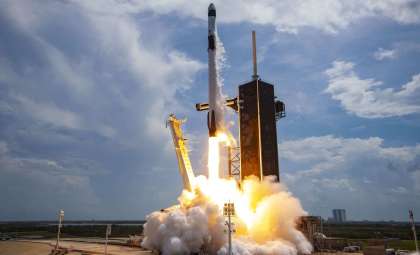
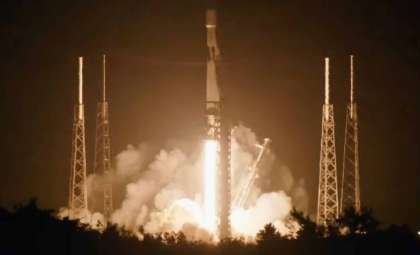
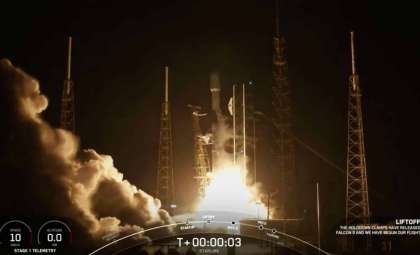
NASA anticipates that the Nancy Grace Roman Space Telescope will become one of the most impactful astronomical observatories ever deployed. After launching aboard a SpaceX Falcon Heavy rocket, currently scheduled for no earlier than August 30, the observatory will journey to the Sun-Earth L2 Lagrange Point, situated roughly one million miles from Earth, where gravitational forces create a stable orbit.
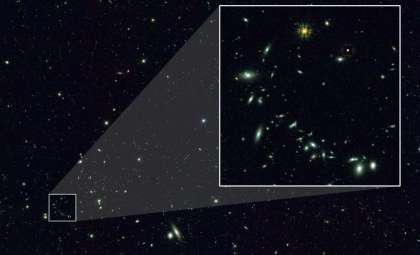
From this unique perspective, Roman will perform massive wide-field surveys. Its sophisticated instruments are designed to capture data on billions of galaxies spanning cosmic history, shedding light on the universe's evolution. The mission aims to reveal insights into dark energy, a mysterious force thought to drive the universe's accelerating expansion. Roman will also enhance the understanding of dark matter, galaxy formation, and the universe's large-scale structure. Its combination of sensitivity and survey speed offers astronomers unprecedented data-gathering capabilities that would otherwise require years to collect.
An Advanced Instrument for Exoplanet Discovery
According to NASA, one of the telescope’s key missions includes discovering planets beyond our solar system. Roman is expected to detect hundreds of thousands of new exoplanets, greatly expanding the known population of planetary bodies within the Milky Way. These observations will aid scientists in exploring planetary formation and evolution, as well as the prevalence of different planet types across our galaxy.
The observatory features a highly advanced 300-megapixel camera capable of imaging extensive sky areas in a single exposure. Alongside this main instrument, Roman will test an innovative starlight-blocking device called a coronagraph. This technology suppresses stellar glare, enabling the direct observation of nearby exoplanets and circumstellar disks where planets form. While the coronagraph is a technology demonstration, its success could lead to future missions designed to image Earth-like exoplanets orbiting distant stars. For astronomers aiming to explore worlds beyond our solar system, Roman marks a significant technological breakthrough.
- Categories:
- News





0 comments
Sign in to Comment