
The forthcoming Nancy Grace Roman Space Telescope from NASA is poised to transform our cosmic knowledge. Its High-Latitude Time-Domain Survey is designed to observe as many as 100,000 energetic celestial events, encompassing some of the universe’s most enigmatic phenomena. From supernova explosions to tidal disruptions triggered by black holes, this mission will address pivotal questions about dark energy and stellar life cycles.
Unveiling the Universe’s Fiery Displays
The Roman Telescope’s expedition surpasses a simple celestial cataloging—it aims to decode the cosmos’ deeper secrets. Through its advanced surveys, Roman will concentrate on type Ia supernovae, pivotal stellar events that serve as precise indicators for measuring great cosmic distances. These explosions act as reliable cosmic benchmarks, enabling astronomers to gauge the expansion rate of the universe and explore the elusive phenomenon of dark energy.
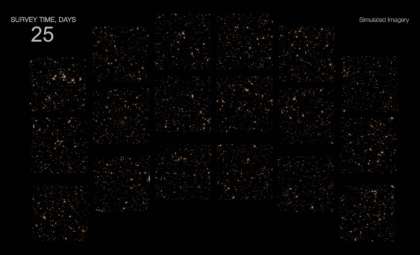
By repeatedly observing a single patch of sky every five days over two years, the High-Latitude Time-Domain Survey will assemble comprehensive time-lapse sequences of cosmic occurrences. Researchers anticipate Roman will detect approximately 27,000 type Ia supernovae, a tenfold increase over prior observations. This abundance offers a unique window into monitoring the universe’s accelerating expansion across epochs.

Extending Our Cosmic Timeline
A standout capability of the Roman Space Telescope is its potential to peer deeper into cosmic history. Type Ia supernovae, originating from binary systems containing a white dwarf, are essential for exploring the universe’s distant past. While many known supernovae have been observed within roughly 8 billion years, Roman is expected to reach back further in time, identifying over a thousand such events from beyond 10 billion years ago and possibly dozens dating as far back as 11.5 billion years.
This endeavor means the Roman Space Telescope will deliver the most profound glimpse into the universe’s formative periods, broadening our understanding of how cosmic phenomena have evolved. As noted by Benjamin Rose, an assistant professor at Baylor University, “Filling these data gaps could also fill in gaps in our understanding of dark energy,” potentially illuminating the changes in this mysterious force over time.
Uncovering the Universe’s Rarest Phenomena
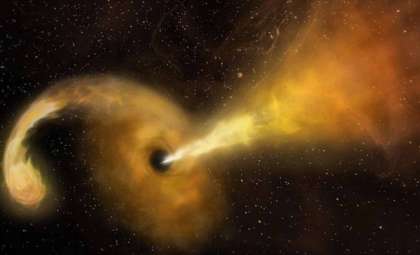
Beyond familiar explosions, the Roman telescope will enable detection of some of the cosmos’ most extraordinary and powerful occurrences. These include tidal disruption events, where stars are torn apart by a black hole’s immense gravitational forces, as well as superluminous supernovae that shine up to 100 times more intensely than typical supernovae. The mechanisms behind such intense luminosity remain unclear, and Roman’s observations could be key to solving this mystery.
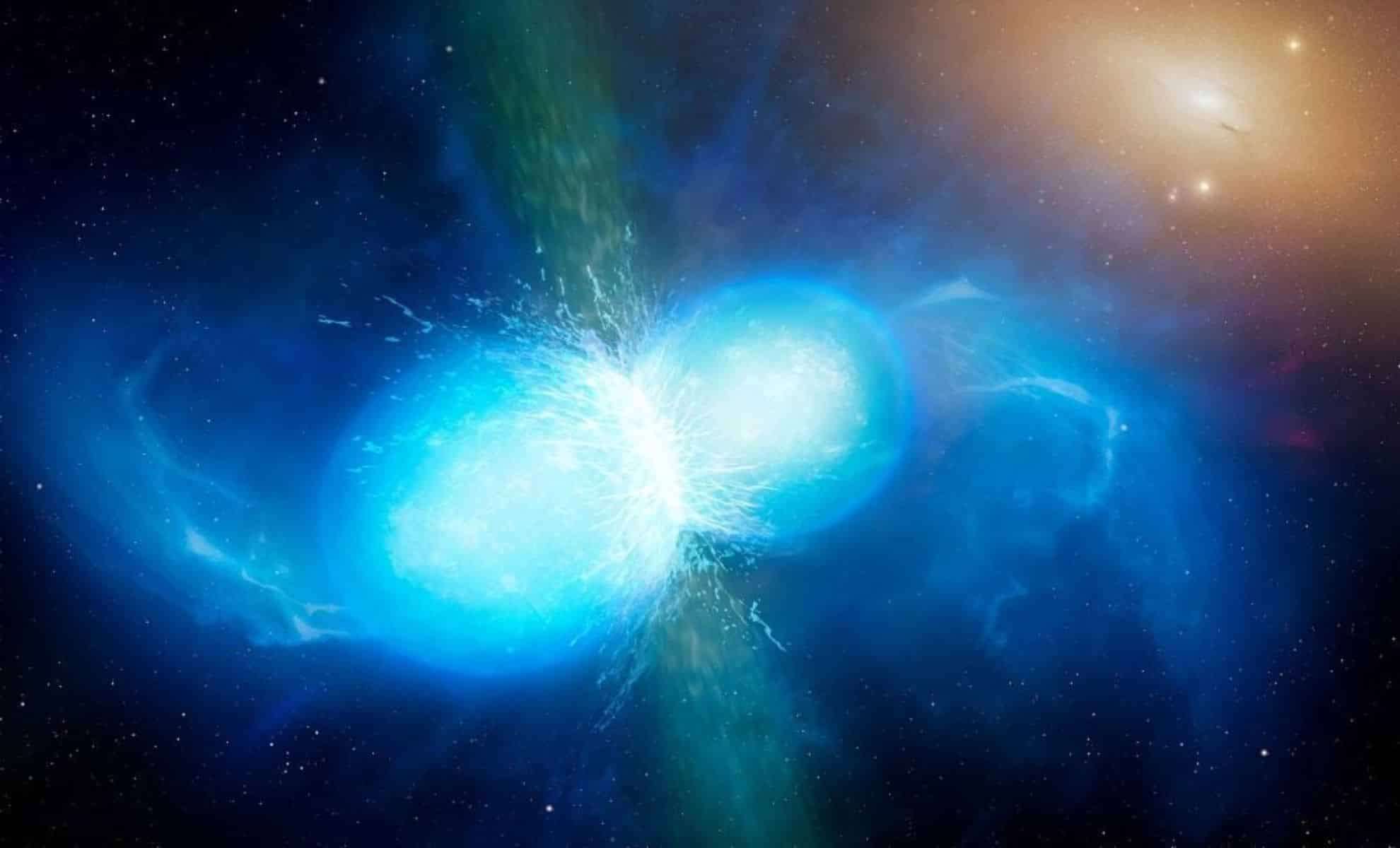
Roman is also set to identify kilonovae — explosions triggered by collisions of two neutron stars. This rare class of events has only been spotted once previously, with expectations to find up to five additional occurrences. These discoveries will offer crucial insights into neutron star dynamics and the eventual fates of stellar leftovers following supernova explosions.
Furthermore, the mission may reveal the universe’s very first generation of stars. These primordial stars were likely much more massive than those we see today and ended in spectacular explosions leaving no remnants. These rare pair-instability supernovae have never been confirmed, but Roman is positioned to achieve the first confirmed detections, potentially uncovering more than ten such events.
- Categories:
- News




0 comments
Sign in to Comment