
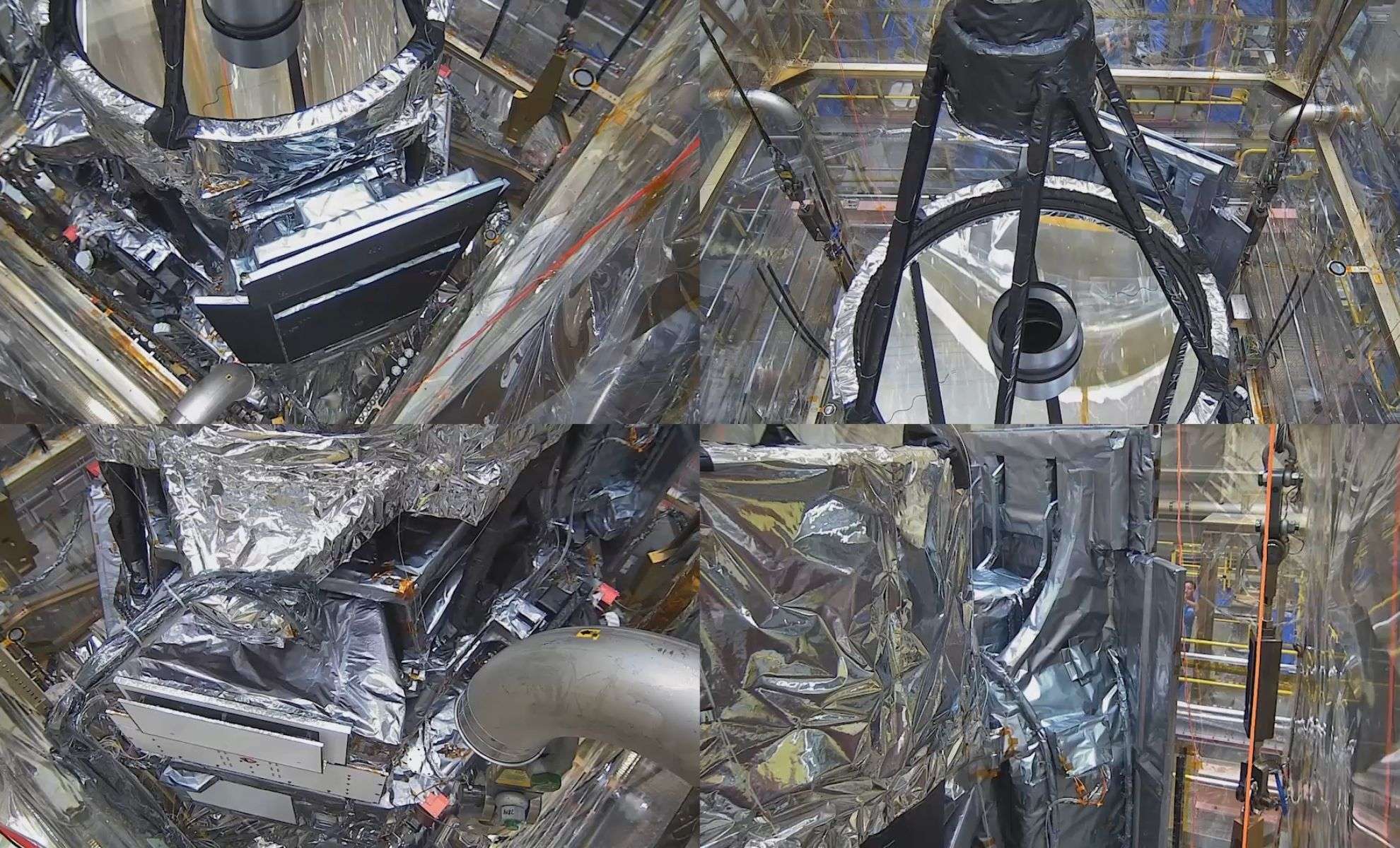
NASA’s upcoming flagship observatory, the Nancy Grace Roman Space Telescope, has cleared a pivotal vibration certification that mimics the intense shaking it will face during its launch. This achievement was confirmed by NASA’s Goddard Space Flight Center. Successfully passing this test assures that the spacecraft’s main systems are robust enough to endure the rigorous mechanical stresses of liftoff. The Roman mission aims to unravel the mysteries of dark energy, hunt for exoplanets, and examine the cosmic structure, thereby addressing some of the most fundamental questions in modern astrophysics.
Simulating Launch Conditions Through Rigorous Vibration Testing
Engineers at NASA Goddard performed an intense vibration test designed to ensure that the Roman telescope’s internal mechanisms remain fully operational and undamaged under lifelike launch stresses. The procedure involved subjecting the observatory to gradually escalating shaking across various frequencies. “The test could be considered as powerful as a pretty severe earthquake, but there are key differences,” explained Cory Powell, lead structural analyst for the mission. “Unlike an earthquake, we sweep through our frequencies one at a time, starting with very low-level amplitudes and gradually increasing them while we check everything along the way. It’s a very complicated process that takes extraordinary effort to do safely and efficiently.” This carefully controlled test is essential to confirm that the telescope can withstand the multidirectional forces of launch without compromising its mechanical structure or alignment.
Creating Launch Realism in Testing Procedures
To accurately replicate launch conditions, the team conducted the test with the spacecraft powered on and simulated its full launch mass. “We performed the test in a flight-powered configuration and filled the propulsion tanks with approximately 295 gallons of deionized water to simulate the propellant loading on the spacecraft during launch,” stated Joel Proebstle, who led the testing effort. This evaluation is part of a series of assessments applying stress loads up to 125% of those expected during actual launch. The successful structural endurance demonstrated here paves the way for post-test inspections aimed at verifying that the high-gain antenna and other critical components remain perfectly aligned and ready for use.

Moving Forward to Final Assembly Milestones
Having completed the vibration trials, the Roman team is now progressing to subsequent testing phases. These include thorough post-vibration inspections and a thermal vacuum test designed to expose the telescope to the extreme temperatures and vacuum of space. Concurrently, technicians are assembling the spacecraft’s outer elements such as the solar array sun shield and deployable aperture cover. The sun shield has already passed its thermal vacuum test, and solar panel installation is ongoing. NASA anticipates connecting the telescope’s internal science module with the external structure by November 2025. The full observatory assembly is slated for completion by the end of that year, maintaining the plan for a launch window starting as early as fall 2026 and no later than May 2027.
A Breakthrough Observatory to Investigate the Universe
Upon deployment, the Nancy Grace Roman Space Telescope will conduct vast sky surveys using sharp imaging and spectroscopic techniques. It will explore the enigmatic dark energy propelling cosmic acceleration and conduct a comprehensive census of exoplanets using microlensing. Managed by NASA’s Goddard Space Flight Center alongside partners like the Jet Propulsion Laboratory, Caltech/IPAC, and the Space Telescope Science Institute, the mission also features major industry roles from BAE Systems, L3Harris Technologies, and Teledyne Scientific & Imaging. Completing the scientific legacy begun by Hubble and extending capabilities beyond the James Webb Space Telescope, Roman will provide astronomers with unmatched tools to probe cosmic evolution and fate.
- Categories:
- News




0 comments
Sign in to Comment