
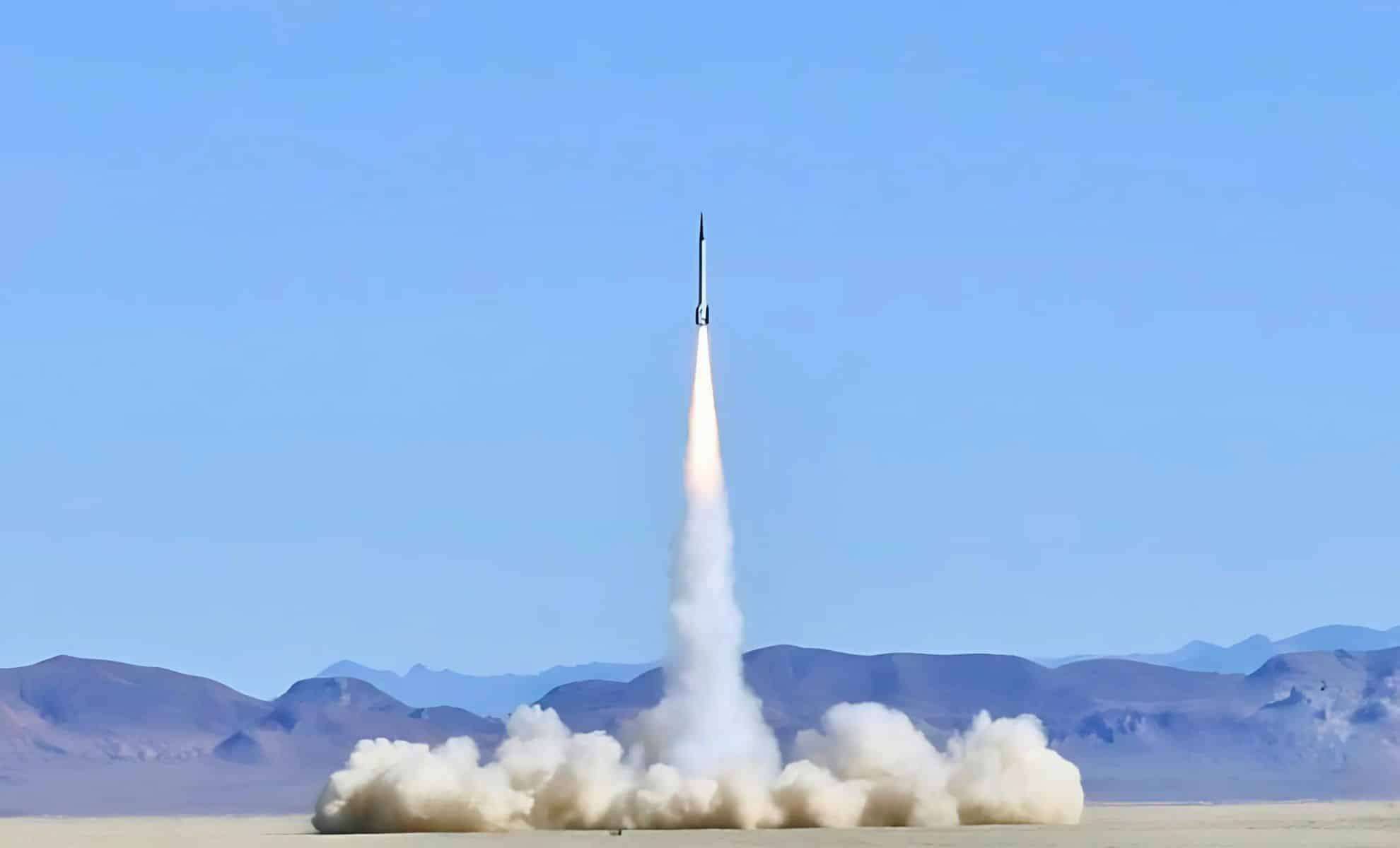
A group of dedicated students has made a significant mark in aerospace innovation through their remarkable project. Their rocket, named Aftershock II, surpassed all expectations, breaking longstanding records and showcasing impressive student-led engineering capabilities.
On October 20, the Rocket Propulsion Lab at USC Viterbi School of Engineering revealed their latest breakthrough in Nevada's Black Rock Desert. Aftershock II soared to an incredible altitude of 90,000 feet (about 143.2 kilometers), exceeding the prior altitude benchmark for student-built rockets by a staggering 27 kilometers (90,000 feet).
“This flight marks several historic firsts in student-engineered technology,” explained Ryan Kraemer, project’s executive engineer and mechanical engineering undergraduate. “Aftershock II features the most powerful solid-fuel motor created by a student team and the toughest composite casing built by non-professional engineers.”

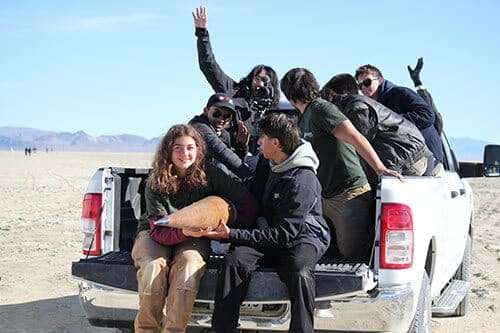
Aftershock II Hits Mach 5.5 Velocity
Measuring 4 meters in height and weighing 150 kilograms, Aftershock II embodies sophisticated design and technical expertise. Its solid-propellant engine, a crowning achievement for the student creators, propelled the rocket to hypersonic velocities reaching Mach 5.5 (around 5,797 km/h). Despite its slim frame—only 20 centimeters wide—the rocket delivered outstanding performance and advanced technological features.
The engineering team developed custom avionics systems that enabled live tracking of the rocket's trajectory, gathered critical telemetry data, and facilitated safe recovery operations. These avionics, including bespoke circuit boards and onboard processors, were entirely student-designed, ensuring accurate flight monitoring and control throughout its mission.
Thermal management was a major hurdle due to the intense heat generated during the rapid ascent. The group engineered a special heat-resistant coating and implemented titanium-clad fins to maintain stability, minimize aerodynamic drag, and preserve structural integrity under extreme flight conditions.

Advancing Student Aerospace Innovation
The USC Rocket Propulsion Lab has a tradition of pushing technological frontiers. Their 2019 rocket, Traveler IV, was the first student-crafted craft to reach outer space, touching 103.6 kilometers in altitude. Building on this foundation, Aftershock II introduced enhanced avionics, sophisticated telemetry, and innovative propulsion technologies that expanded the possibilities for non-professional aerospace engineering.
“This is a highly ambitious initiative,” commented Dan Erwin, head of USC’s astronautical engineering department. “It exemplifies the high caliber of expertise we foster in our students, equipping them to become future leaders in the aerospace field.”
The success of Aftershock II underscores the power of student ingenuity and lays groundwork for upcoming aerospace innovators. This accomplishment powerfully illustrates that revolutionary advancements can originate right from academic environments.
The boundaries of the sky have shifted—it’s merely a starting point now.
- Categories:
- News ,
- News ,
- Aircraft ,
- Aircraft









0 comments
Sign in to Comment