

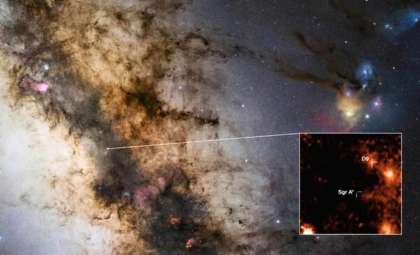
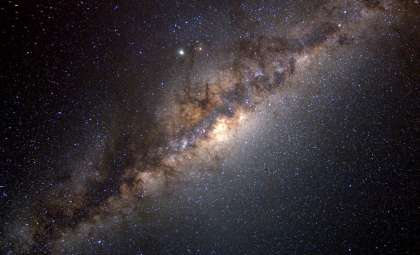
Researchers have identified a remarkable star system nestled near the center of the Milky Way, moving at extraordinary velocity. Situated roughly 24,000 light-years from Earth, this system appears to host a hypervelocity star along with a possible exoplanet.
Should the presence of the planet be confirmed, it would represent the fastest planetary system known to date, rocketing through space at an astonishing 1.2 million miles per hour (540 km/s)—over twice the speed of our Sun’s orbit around the galaxy.
An Astounding Celestial Speedster
While stars generally travel at several hundred thousand miles per hour within the galaxy, our solar system moves at about 450,000 mph (200 km/s) along the Orion Arm. This newly found system, however, surpasses that by more than a factor of two, prompting intriguing questions about the forces behind its rapid motion.

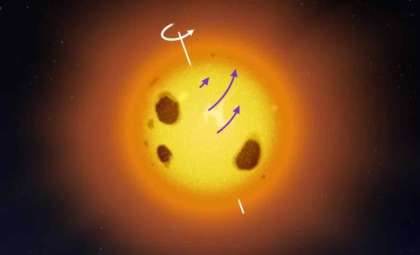
Scientists propose the system could include a low-mass star orbited by a super-Neptune-sized planet. Confirming this would mark the first discovery of a planet orbiting a hypervelocity star, a stellar type known for ejection at extreme speeds due to gravitational disturbances caused by massive cosmic objects.
Tracing the Origins of the Discovery
The initial findings date back to 2011 when astronomers recorded a distinctive gravitational microlensing event while examining data from the Microlensing Observations in Astrophysics (MOA) project. Gravitational microlensing happens when a massive object bends and boosts the brightness of a background star, providing a rare chance to explore distant celestial phenomena.
Early analyses suggested one object in the system outweighed the other by roughly 2,300 times, but the exact dimensions and distances were uncertain. Two main interpretations emerged:
- A star accompanied by a planet, where the star is somewhat smaller than our Sun and the planet possesses about 29 times Earth’s mass.
- A free-floating super-Jupiter with a smaller exomoon orbiting it.
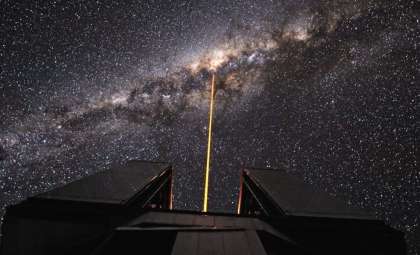
To distinguish between these theories, observations from the Keck Observatory in Hawaii and data from the European Space Agency's Gaia satellite were incorporated. The refined measurements placed the system at 24,000 light-years away, confirming its remarkable velocity.
Is the Star Escaping the Milky Way?
A captivating possibility is that this star might be on a path to exit the Milky Way galaxy. Scientists estimate the galaxy’s escape velocity—the minimum speed needed to break free from its gravitational grip—to range between 550 and 600 km/s. Should the star’s motion include an unseen directional component towards or away from us, it may be traveling fast enough to leave the galaxy entirely.
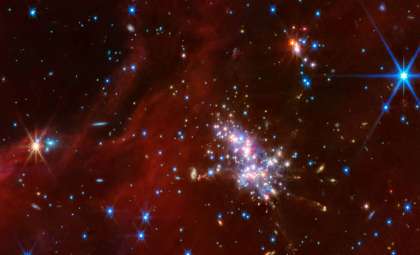
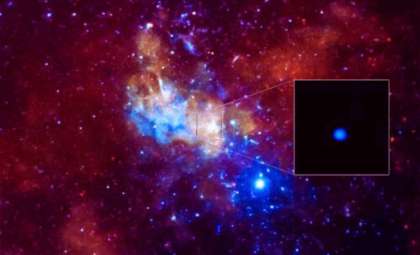
Even if the star is on an escape route, this journey would span millions of years. Presently, it remains within the dense galactic core, where intense gravitational forces likely propelled it to such exceptional speeds.
Future Investigations
Astronomers intend to revisit this star next year to verify whether it aligns with the 2011 microlensing event. If its motion matches predictions, the star-plus-planet model will gain support. Conversely, if the star shows little movement, the rogue planet and exomoon hypothesis would become more probable.
This discovery challenges conventional ideas about planetary formation and survival under extreme conditions. If confirmed as a planet revolving around a hypervelocity star, it will transform our understanding of planetary dynamics amid intense cosmic environments.
The rapid journey of this extraordinary star system offers scientists a rare chance to study planetary endurance in the harshest settings.
- Categories:
- Space





0 comments
Sign in to Comment