
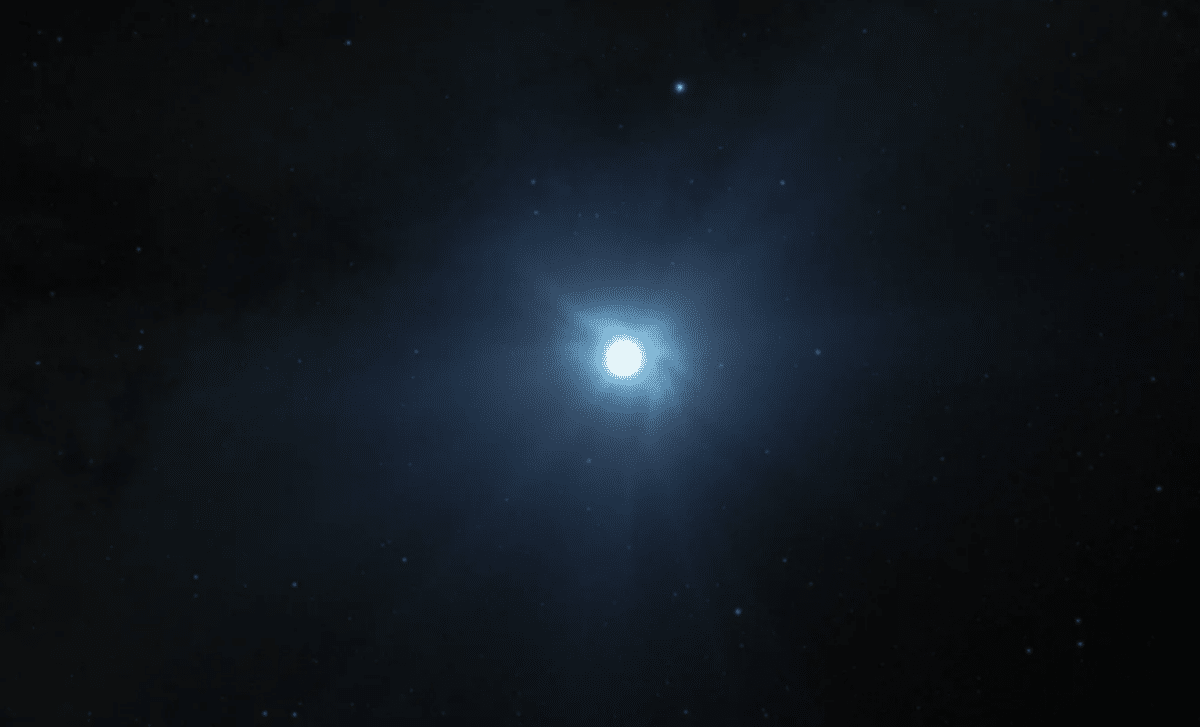
Scientists are approaching a significant breakthrough that could alter our cosmic perspective. Recent research indicates that NASA’s forthcoming Nancy Grace Roman Space Telescope might detect elusive neutron stars—dense stellar remnants left behind after massive stars explode. These mysterious objects, often invisible to conventional telescopes, could be identified through gravitational microlensing, a phenomenon Roman is designed to observe with exceptional sensitivity.
Harnessing Gravitational Microlensing to Detect the Invisible
Neutron stars are extraordinarily compact corpses of stars that have undergone supernovae. Containing more mass than the Sun within a radius smaller than a typical city, these stars remain mostly undetectable because of their faintness and isolation in space. “Most neutron stars drift alone and emit very little light,” explained Zofia Kaczmarek, the study's lead researcher from Heidelberg University. “Spotting them is challenging without indirect methods.”
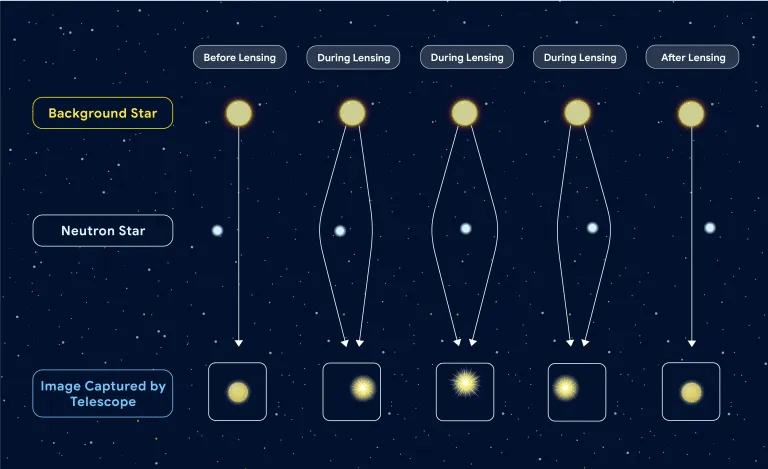
The new study, featured in Astronomy and Astrophysics, suggests that the Nancy Grace Roman Telescope’s innovative use of gravitational microlensing may unveil these elusive bodies. This effect occurs when a massive object’s gravitational field bends and magnifies the light from a background star, making otherwise hidden objects visible.

During gravitational microlensing, a neutron star passing between Earth and a distant star warps that star’s light, causing a temporary increase in brightness. Roman’s advanced instrumentation can track both the brightening of the star (photometry) and minute shifts in its apparent position (astrometry). Combining these measurements offers a more accurate identification and analysis of neutron stars.
Unlocking Secrets of Stellar Remnants
Roman’s high-precision microlensing observations hold promise not only for detecting neutron stars but also for measuring their masses directly. “Microlensing gives us a rare way to measure mass precisely,” said Peter McGill from Lawrence Livermore National Laboratory, a co-author on the study. “While photometry reveals that something passed in front of a star, the astrometric shift specifies the object’s mass.”
NASA notes that this new mass measuring technique could resolve longstanding puzzles, such as the mass ranges of neutron stars and black holes and the transition between these types of objects. Roman’s data may clarify how these remnants differ in size and weight, as well as their velocities after birth kicks within the galaxy.
McGill highlighted the significance of these findings:
“We don’t know the mass distribution of neutron stars, black holes, or where one ends and the other begins with any certainty. Roman will really be a breakthrough in that.”
Surveying the Milky Way for Hidden Neutron Stars
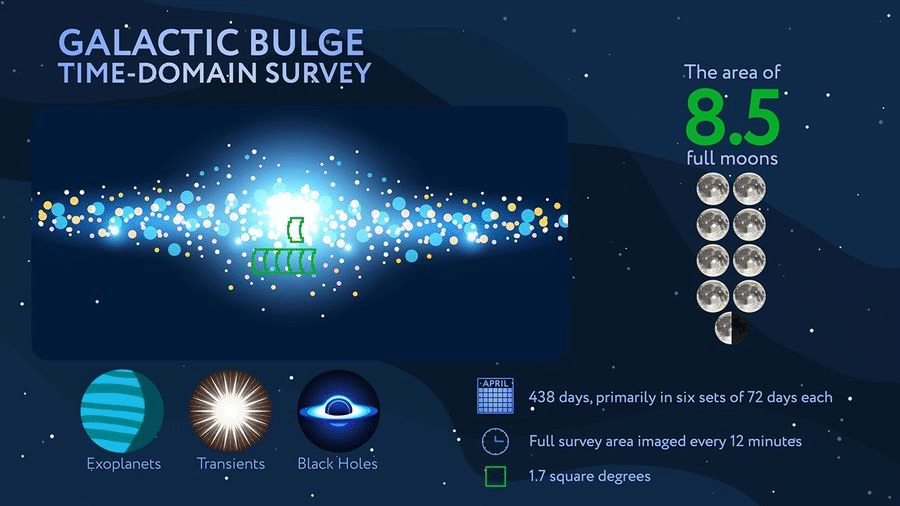
The researchers plan to leverage Roman’s Galactic Bulge Time Domain Survey, an extensive program observing millions of stars frequently across wide sky areas. Although primarily designed to detect exoplanets via photometric microlensing, Roman’s newly recognized astrometric capabilities now open fresh avenues for astrophysical study.
This vast coverage enables the detection of solitary neutron stars scattered through our galaxy—objects that have previously defied observation. “Current samples are small and unrepresentative,” said Kaczmarek. “Even a single definitive mass measurement would be highly valuable. Discovering just one isolated neutron star would greatly advance our knowledge.”
Roman's detections could provide astronomers with an unprecedented dataset of isolated neutron stars, unveiling a population that has remained hidden to date.
Expanding the Frontier of Cosmic Exploration
Roman’s combined photometric and astrometric technology empowers the telescope to address multiple scientific targets simultaneously. McGill pointed out that the identification of neutron stars and black holes via microlensing was not originally planned but has become one of Roman’s most promising research roles. “This capability emerged unexpectedly,” he said, “and now adds exciting new dimensions to Roman’s scientific missions.”
The insights anticipated from these discoveries have the potential to revolutionize our understanding of stellar remains and galactic behavior. By uncovering previously invisible neutron stars, Roman is set to initiate a groundbreaking chapter in astrophysical research, bringing to light a population that has eluded detection for decades.
- Categories:
- Nasa









0 comments
Sign in to Comment