
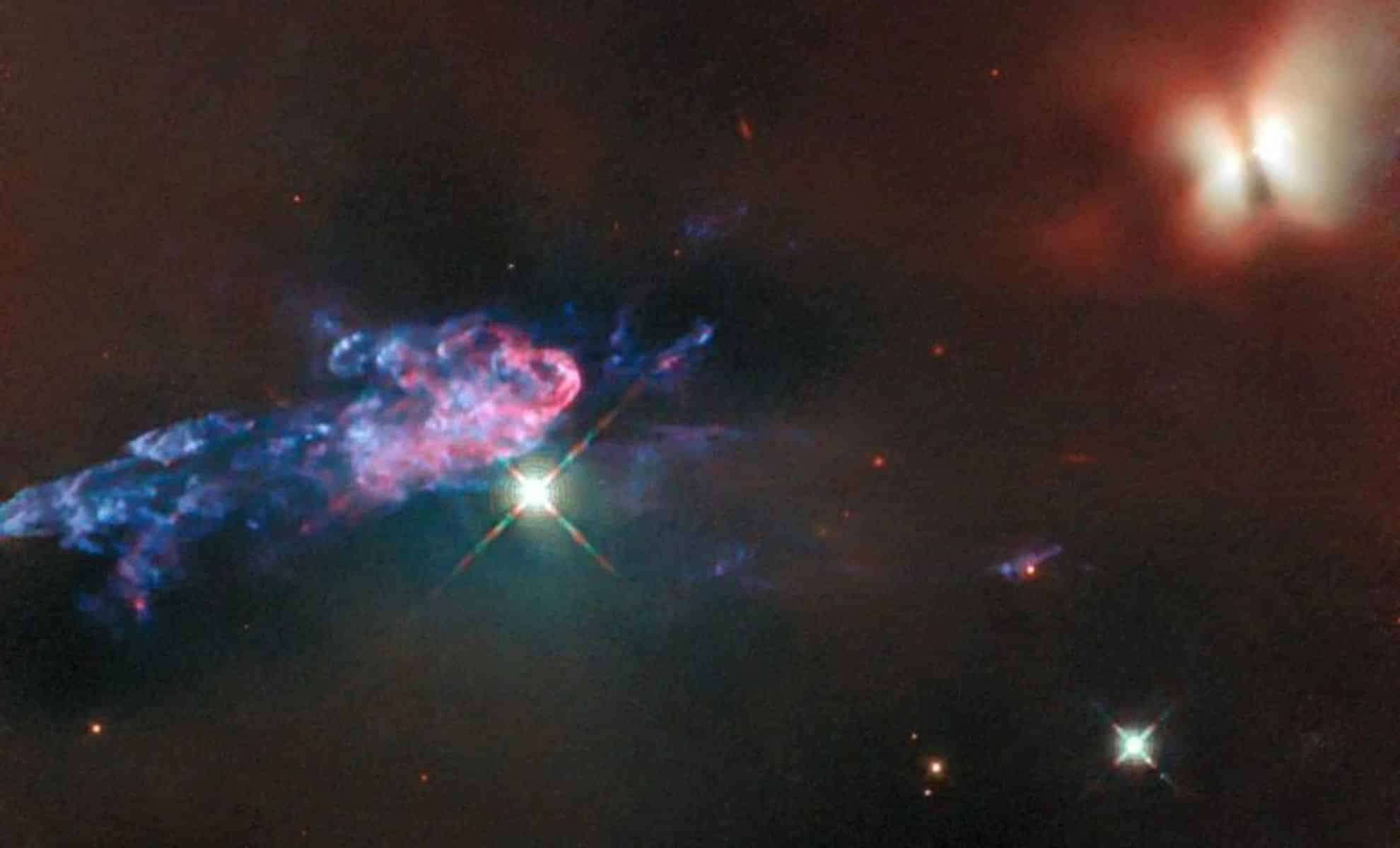
The Orion Nebula, located approximately 1,300 light-years from Earth, remains one of the most accessible and vivid sites of star formation in our cosmic neighborhood. Recently, the Hubble Space Telescope delivered breathtaking imagery that reveals the intricate early phases of star birth. Positioned just below the trio of bright lights known as Orion’s Belt, this nebula hosts dense clouds where infant stars take shape. Among these newfound objects are the protostars HOPS 150 and HOPS 153, whose detailed views shed new light on how stars develop from cradle to maturity.
Examining the Binary System of HOPS 150
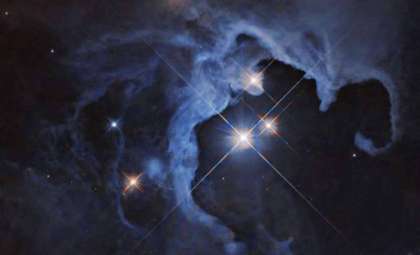
Central to Hubble’s recent observations is HOPS 150, a binary star system featuring two growing protostars encased in thick disks of gas and dust. Initially identified through the Herschel Orion Protostar Survey, these stars are actively accreting material, feeding their growth as they journey toward becoming full-fledged stars.
A prominent dark nebula stretching over 2,000 astronomical units obscures part of this radiant region, underscoring the turbulent environment shaping these stars. The heated gas emits radiation across multiple wavelengths, enabling astronomers to pinpoint the protostars’ maturation stages. This snapshot highlights the complex interplay of forces governing stellar formation in such dense cosmic nurseries.

Striking Jets from the Younger HOPS 153
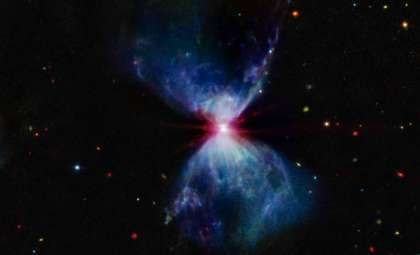
In contrast, HOPS 153 is an even younger protostar, deeply embedded within cold, dense material. While the star itself is beyond direct observation by Hubble, its energetic jets are clearly visible. These powerful streams extend across the nebula, carving paths and igniting the surrounding clouds through shock interactions.
These outflows are essential markers of star formation stages, demonstrating how infant stars impact their nearby material. By ejecting energy and matter, protostars like HOPS 153 affect both their own growth and the surrounding star-forming environment, contributing to the nebula’s ever-changing structure.
A Center of Vigorous Stellar Birth
As a prominent feature in the night sky, the Orion Nebula serves as an observational hotspot for astronomers investigating how stars and planetary systems emerge. Its closeness to Earth allows instruments such as Hubble to capture high-definition images of its complex formations, from dense gas pockets to stellar jets and luminous ionized regions energized by young stars.
The most recent Hubble images vividly portray the dynamic balance within the nebula: shadows cast by thick gas clouds juxtapose with bright streaks produced by energetic jets. This visual interplay reveals how gravity, radiation, and stellar winds collaborate to sculpt the formation environment.
Why Star Formation Research Matters
Unraveling the mechanisms inside star-forming regions like Orion helps scientists address fundamental astronomical questions: How do stars take shape from clouds of molecular gas? What importance do jets and outflows have in guiding their evolution? How might these phenomena affect the creation of associated planetary bodies?
Through studying HOPS 150 and HOPS 153, astronomers gain crucial perspectives that refine theoretical models of stellar development. These findings also provide hints about the early history of our Sun and the formation processes that led to the solar system.
The Road Ahead for Stellar Studies
While Hubble’s contributions have been pivotal, upcoming missions like the James Webb Space Telescope (JWST) promise to deepen our knowledge of star formation. JWST’s superior infrared sensitivity will enable astronomers to penetrate dense nebular clouds, unveiling details of the youngest protostars hidden from current telescopes.
Continued exploration of the Orion Nebula not only enhances our cosmic comprehension but also fuels the imagination of future scientists eager to unravel the mysteries of the stars.



0 comments
Sign in to Comment