
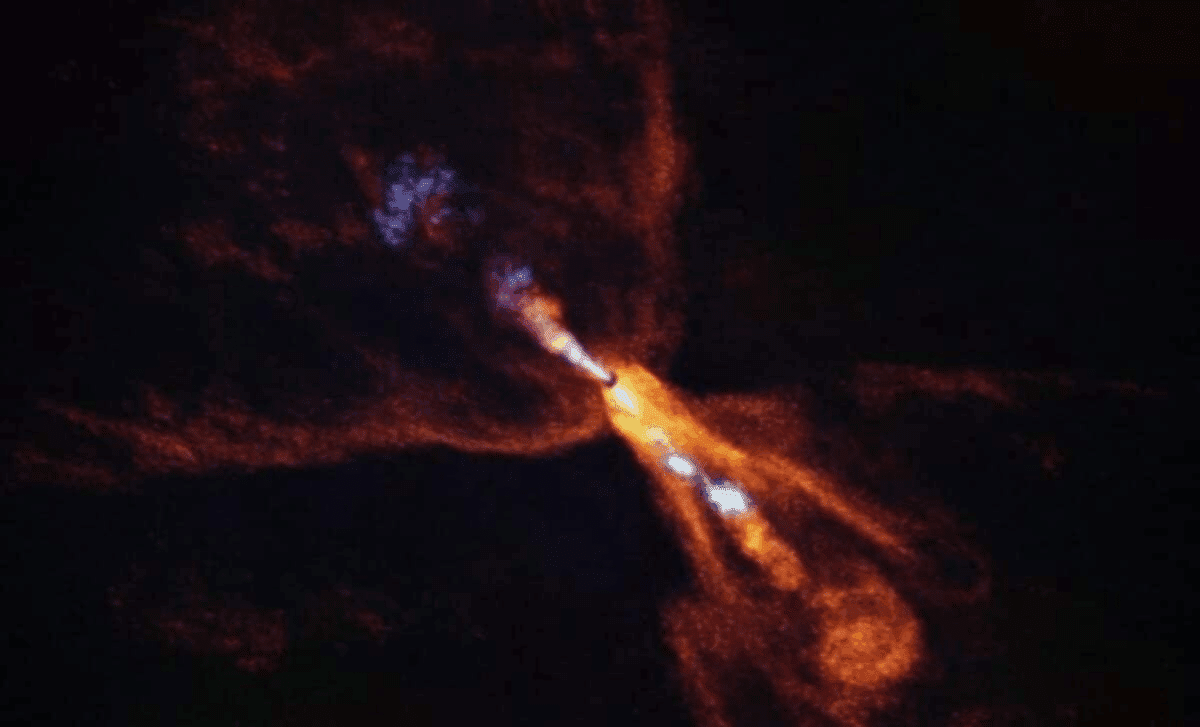
Astronomers have, for the first time, observed the initial stages of planet formation orbiting a distant youthful star known as HOPS-315, thanks to pioneering data collected by the James Webb Space Telescope (JWST) in conjunction with the Atacama Large Millimeter/submillimeter Array (ALMA). This milestone discovery provides invaluable insight into how rocky planets akin to Earth may originate elsewhere in the cosmos. It not only advances our understanding of planetary evolution but also links theoretical predictions with actual empirical evidence.
Revolutionizing the Study of Planet Birth
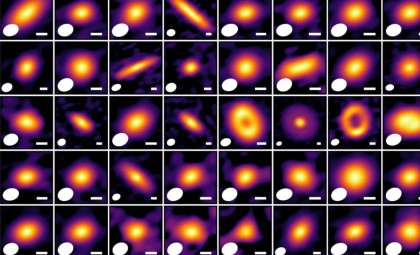
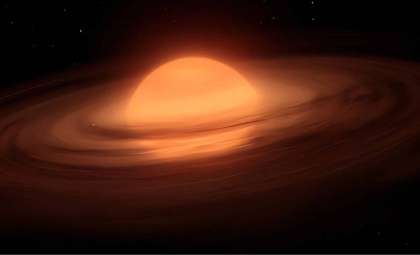
The process of planet formation has intrigued scientists for decades, yet direct visualization of its earliest occurrences remained out of reach—until this breakthrough. Situated roughly 1,300 light years from Earth, HOPS-315 is surrounded by a dense, rotating cloud of gas and dust that creates the ideal conditions for planets to emerge. Previously, research primarily focused on planet-forming discs after planetesimals had already developed. This new observation allows a glimpse into the initial condensation of solid minerals that will eventually assemble into planets.
“For the first time, we have identified the earliest moment when planet formation is initiated around a star other than our Sun,” said Melissa McClure, professor at Leiden University and the lead author of the study.
Add Cosmo Herald as a Preferred Source

Published in Nature, the research marks the inaugural detection of the primordial components of rocky planets, including silicate crystals forming in the cooler sections near the star. This observation offers crucial clues about the origins of Earth-like worlds, a process long theorized yet never before witnessed with such clarity.
The Synergy of JWST and ALMA in Unveiling Planet Formation
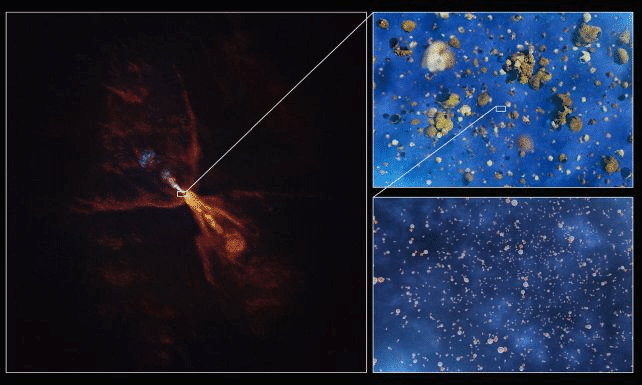
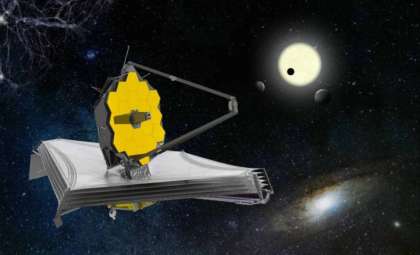
This landmark discovery was made possible by utilizing two of the most sophisticated observatories in astronomy: the James Webb Space Telescope and the Atacama Large Millimeter/submillimeter Array (ALMA). The Webb telescope's infrared sensors captured spectral evidence of mineral formation, such as silicon monoxide and silicate crystals, while ALMA accurately located these signals within the star's inner disc, differentiating them from other outflow phenomena.
Their combined observations grant an unparalleled perspective on planetesimal genesis—the small rocky bodies that pave the way for planet development. Data reveals that these earliest solid materials start forming approximately 2.2 astronomical units from HOPS-315, roughly the same distance as Earth orbits the Sun.
Advancing Our Grasp of Planetary Origins
This detection is pivotal because it captures the moment when dust and gas begin crystallizing into minerals destined to build planets. Prior studies mostly targeted already established structures, leaving a critical gap in understanding the transition from dust grains to rocky planets.
This work represents the first highly detailed observation of such an early stage, bridging the divide between models and tangible data. The spatial scale around HOPS-315 mirrors that of our Solar System’s inner region, where temperatures allow mineral solidification. Observing these processes firsthand enables scientists to directly assess and refine theoretical frameworks describing protoplanetary disc evolution.
Impacts on the Hunt for Earth-like Worlds
These findings significantly influence ongoing efforts to identify planets comparable to Earth beyond our Solar System. Because the minerals surrounding HOPS-315 closely resemble those present in our own asteroid belt, it implies that early planet formation stages might follow universal patterns across young stellar systems. This strengthens the idea that rocky, potentially habitable planets could be widespread throughout the galaxy.
Researchers can now delve more deeply into the environmental conditions fostering planet creation. Understanding the chemical makeup and formation mechanisms of initial solids sheds light on the future development and habitability prospects of exoplanets. Tracing how these materials accumulate and interact offers a valuable window into the formation of planetary surfaces and atmospheres.
- Categories:
- News




0 comments
Sign in to Comment