
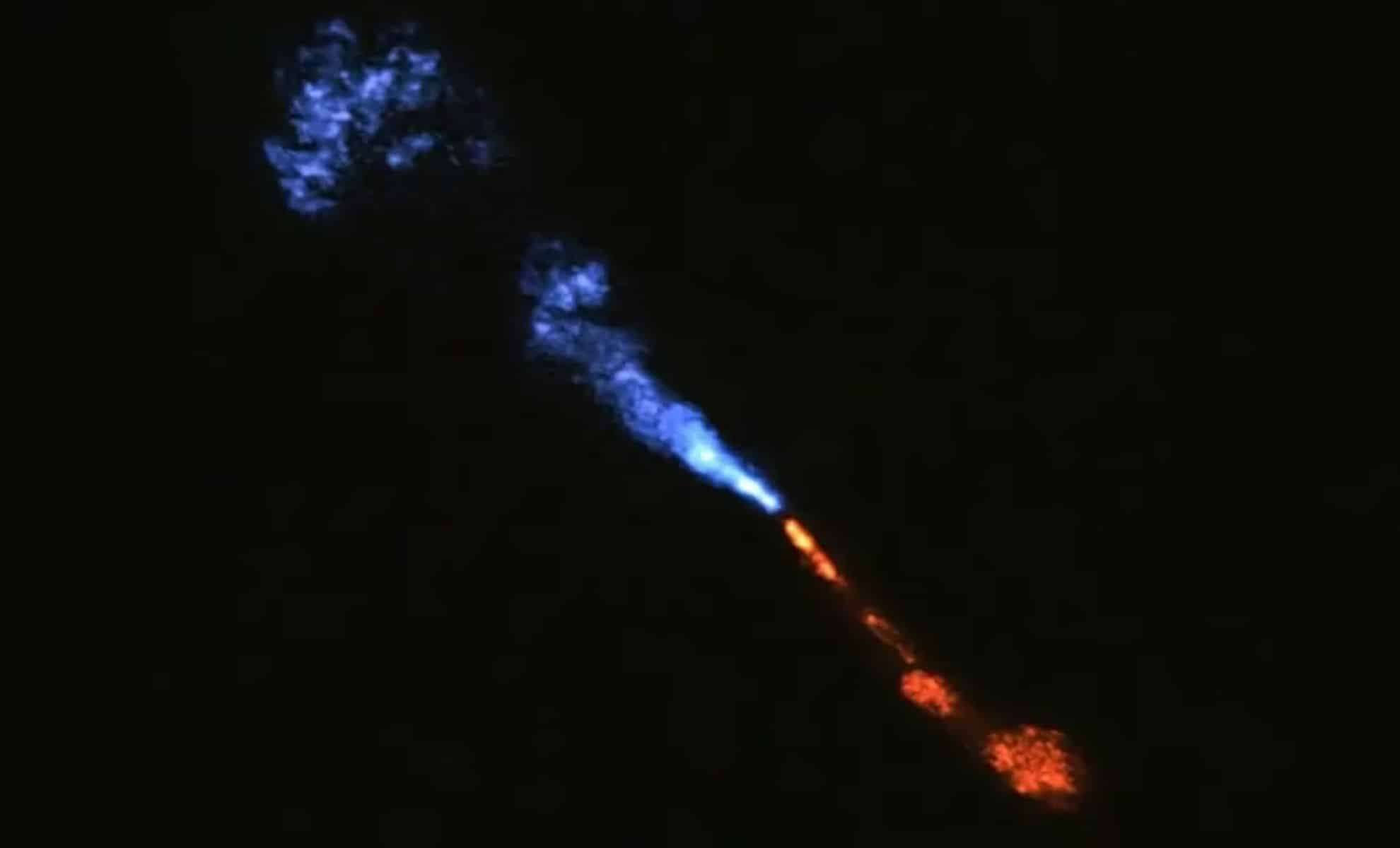
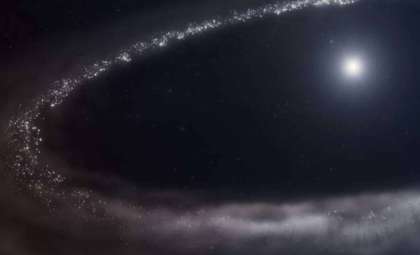
For the first time, scientists have observed the initial stages of rocky planet formation encircling a newborn star. Utilizing cutting-edge data from NASA's James Webb Space Telescope alongside ALMA (Atacama Large Millimeter/submillimeter Array) in Chile, the team identified the youngest known evidence of planet-building components surrounding the protostar HOPS-315.
A Stellar Infant Comparable to Our Sun?
HOPS-315, estimated to be between 100,000 and 200,000 years old, is an extraordinarily young star by cosmic standards. Researchers predict it will evolve into a yellow dwarf, much like our own Sun. Due to a favorable angle of its surrounding gas disk and a discernible gap in the outer layers, astronomers were able to peer into the inner disk where rocky planets begin to take shape.
Melissa McClure from Leiden Observatory, the study’s lead, explained, "We have directly observed the heated zone where Earth-like planets start to emerge around budding protostars." This breakthrough substantiates long-held theories that planets originate soon after stars ignite within swirling clouds of gas and dust.

The findings revealed the presence of silicate minerals and silicon monoxide gas condensing within the disk—materials akin to those that formed Earth and other rocky planets over 4.5 billion years ago. Prior to this, such early solid materials had never been detected in such an infant stellar system.
Mineral Signatures and the Birthplace of Planets
Images captured by the ALMA array reveal carbon monoxide jets emanating from the star, with glowing blue specks of silicon monoxide highlighting regions of intense activity. These signals suggest a dynamic environment rich with the potential for planet formation.
The area hosting these materials aligns with the zone in our Solar System known as the asteroid belt—the region located between Mars and Jupiter. This correlation is crucial, indicating that planetary building processes similar to those that shaped Earth might be widespread. Researchers have long pondered whether Earth’s developmental story is unique or a cosmic norm, and the HOPS-315 findings hint at the latter.
Published in the journal Nature, the study suggests the surrounding gas disk around HOPS-315 is sufficiently large to form up to eight planets. Although it’s too early to know how many planets will ultimately emerge or their potential likeness to Earth, the system clearly possesses the necessary materials and environmental conditions. Complete planetary assembly could take a million years or longer, but these observations reveal the earliest phases.
A Milestone in Understanding Planet Formation
The astronomical community has welcomed this revelation with enthusiasm. Fred Ciesla of the University of Chicago, not involved in the research, called it a “long-awaited breakthrough.” He emphasized the discovery offers a “rich opportunity” to deepen knowledge of how planets form.
Co-author Merel van’t Hoff, from Purdue University, highlighted a fundamental question: “Are there Earth-like planets beyond our solar system, or is our planet an exceptional case?” These new results indicate rocky planet formation might be far more prevalent than previously thought, perhaps a common process in young systems like HOPS-315.
These insights provide astronomers with a rare glimpse into early cosmic history, showcasing star systems mid-formation. It’s an extraordinary moment capturing the genesis of worlds, potentially altering our perspective on our own cosmic origins.
- Categories:
- News

0 comments
Sign in to Comment