
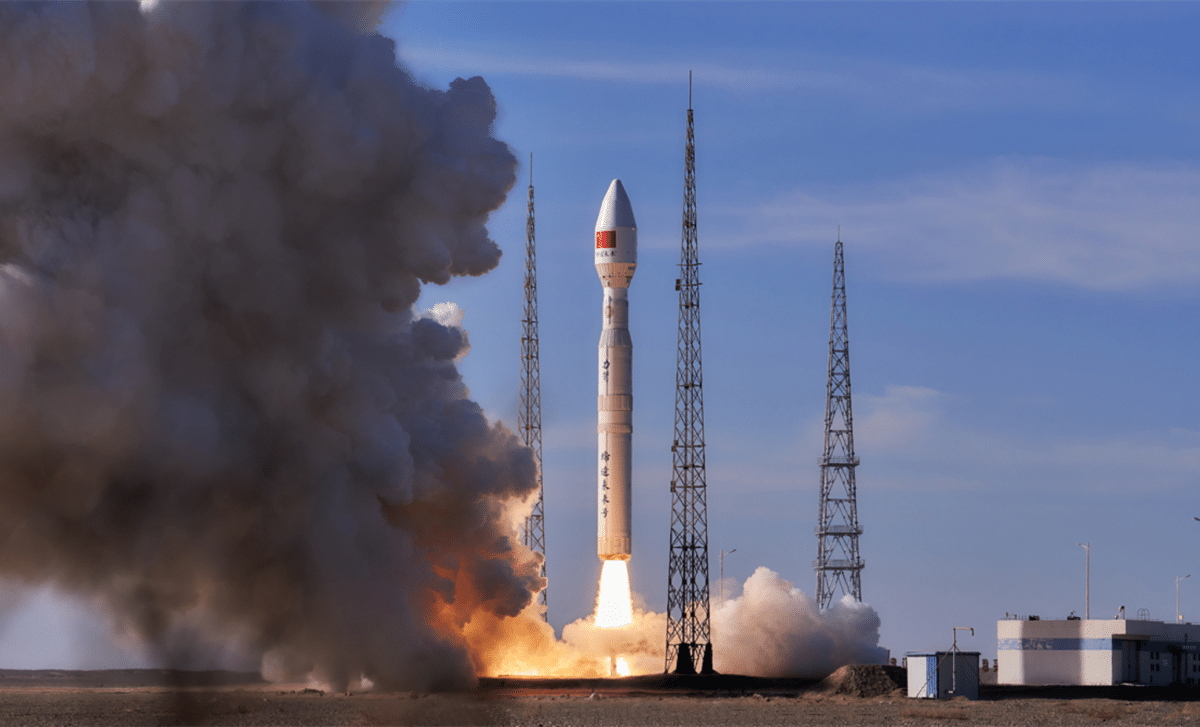
A recent close encounter between a Chinese orbital vehicle and a Starlink satellite illustrates the escalating issues related to space traffic safety. On December 9, 2025, a satellite launched by the Kinetica 1 rocket narrowly avoided colliding with SpaceX’s Starlink-6079, underscoring the urgent demand for enhanced communication among satellite operators to protect Earth’s increasingly congested orbit.
Escalating Hazard: A Narrow Escape in Orbit
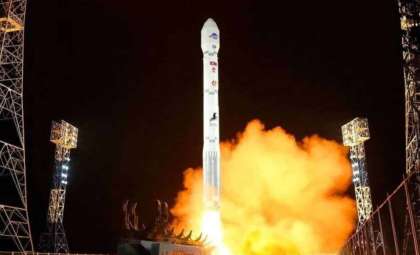
During the December 9 launch from China’s Jiuquan Satellite Launch Center, several satellites were deployed atop a Kinetica 1 rocket. One of these spacecraft approached dangerously close to a Starlink satellite, triggering concern within SpaceX. Reported by Space.com, the Starlink-6079 satellite, orbiting at roughly 560 kilometers altitude, had a near approach of just 200 meters with the new Chinese satellite. This perilous proximity raised significant concerns about orbit safety and coordination.
Michael Nicolls, Vice President of Starlink Engineering at SpaceX, highlighted the risks involved in operating satellites in a congested environment, stating,

“As far as we know, no coordination or deconfliction with existing satellites operating in space was performed, resulting in a 200-meter close approach between one of the deployed satellites and STARLINK-6079 (56120) at 560 km altitude.”
Nicolls further expressed his concerns about the broader implications for orbital safety:
“Most of the risk of operating in space comes from the lack of coordination between satellite operators — this needs to change.”
Response from CAS Space and the Need for Improved Collaboration
CAS Space, the Chinese organization behind the Kinetica 1 rocket launch, responded to SpaceX’s concerns by asserting that strict protocols are followed. They rely on ground-based space awareness systems to track satellites and debris, selecting launch windows carefully to avoid potential collisions.
“Our team is currently in contact for more details. All CAS Space launches select their launch windows using the ground-based space awareness system to avoid collisions with known satellites/debris. This is a mandatory procedure. We will work on identifying the exact details and provide assistance as the LSP,” CAS Space said in a statement.
This exchange reveals a rift in approaches to space safety. While SpaceX advocates for greater transparency and joint management of satellite paths, some operators continue to depend solely on their internal tracking systems. As satellite numbers surge, it becomes clear that greater cooperation is essential to prevent potential orbital disasters.
Managing Orbital Congestion: Challenges Ahead
The close shave between the Chinese satellite and Starlink-6079 spotlights the crucial question of how best to handle the mounting traffic in Earth orbit. As of 2025, there are around 13,000 active satellites orbiting our planet, with SpaceX’s Starlink constellation alone comprising nearly 9,300 satellites. Each new launch intensifies collision risks, despite Starlink’s autonomous avoidance systems which many other operators lack.
Tracking the ever-growing number of satellites becomes increasingly complex. No current space situational awareness technology can foresee every potential close approach. Smaller satellites, such as those deployed by CAS Space, may not be equipped to take timely evasive action. This heightens fears of a chain reaction collision phenomenon known as the Kessler syndrome, which could exponentially increase space debris.
Autonomous Avoidance Provides Starlink With a Safety Advantage
A key factor in Starlink’s ability to avoid collisions is its suite of autonomous maneuvering capabilities. Satellites like Starlink-6079 are fitted with thrusters that enable them to alter their orbits when a threat is detected. Impressively, Starlink satellites executed about 145,000 avoidance maneuvers in the first half of 2025, averaging around four adjustments per satellite monthly. This agility is pivotal to safeguarding SpaceX’s constellation amid crowded space lanes.
Nevertheless, the incident involving the Kinetica 1 launch exposes that not every spacecraft is equipped with similar technologies. Many operators, especially newer or smaller space programs, cannot afford collision avoidance systems. As more nations and companies launch satellites, establishing standardized rules and cooperative monitoring practices will be indispensable to maintaining orbital safety for all.
- Categories:
- News








0 comments
Sign in to Comment