
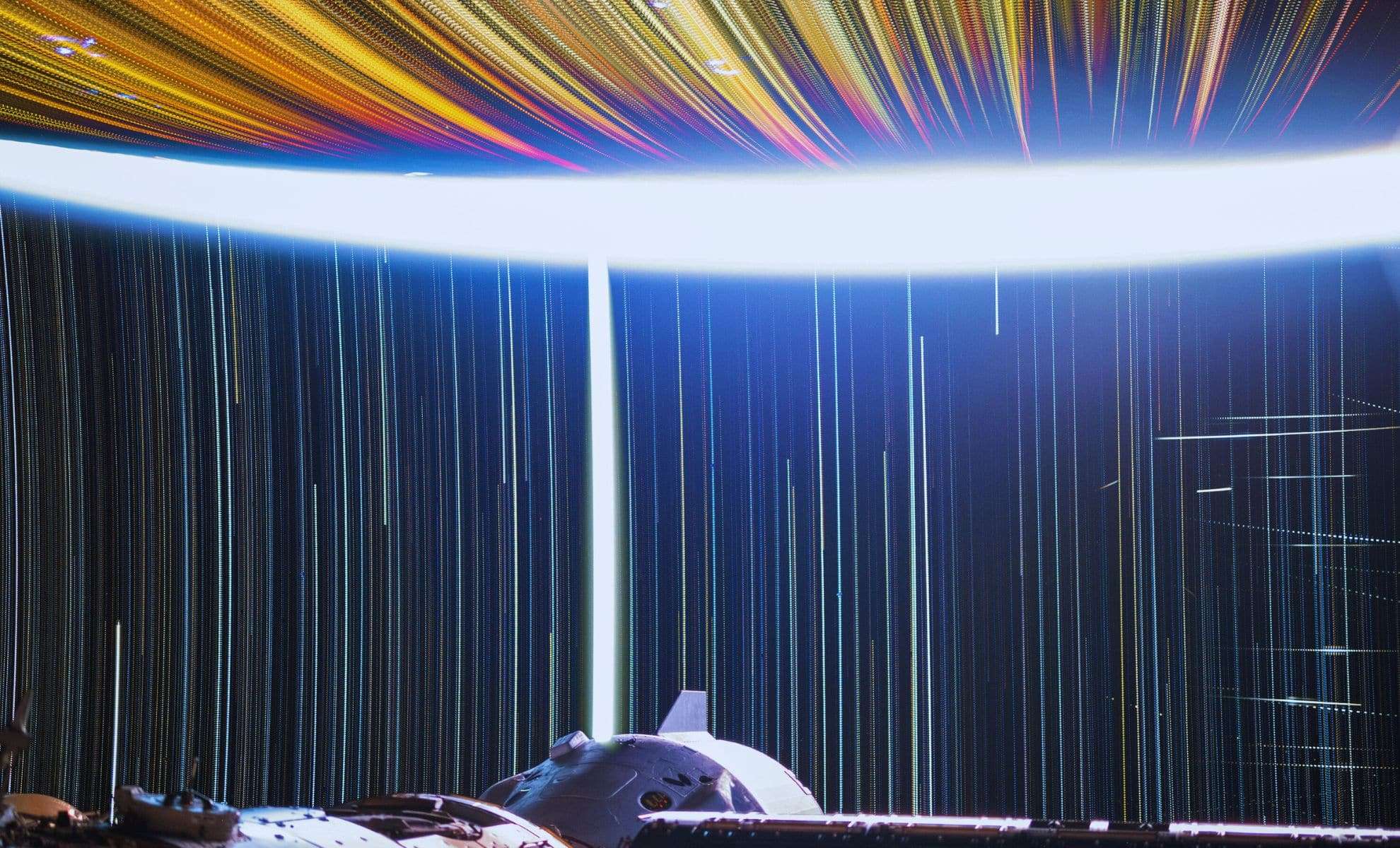
At an altitude of roughly 400 kilometers above Earth, NASA astronaut Don Pettit unveiled an extraordinary long-exposure photograph taken aboard the International Space Station (ISS), captivating both astronomers and space fans alike. Shared on X on August 5, 2025, this image beautifully layers elements of the night sky in a single shot: radiant city lights, sweeping star arcs, and the slender streaks of passing Starlink satellites.
A Unified Scene of Urban Glow, Stellar Paths, and Satellite Trails
A seasoned ISS crew member, Pettit utilized a long-exposure photography technique while the station orbited Earth at a high velocity of around 28,000 km/h. This method captured intricate patterns unseen in ordinary time-lapse. The lower portion of the photo showcases golden arcs illustrating continents brightened by city illumination.
Above these, white, curved streaks represent the movement of stars, appearing bent due to the ISS's swift orbit. Crossing through these celestial trails are thin and straight lines marking the trajectory of Starlink satellites, reflecting sunlight as they traverse the nighttime sky.

Referencing publicly accessible data from SpaceX, there were over 8,000 Starlink satellites orbiting low Earth as of August 1, 2025—accounting for nearly 70% of all operational spacecraft in that altitude. Pettit’s photograph offers a striking visual representation of just how prominent these satellites have become in Earth's orbital environment.
A Breathtaking View With a Message for the Future
Beyond its visual impact, the photo highlights increasing worries about the effect of satellite megaconstellations on ground-based astronomical observations. According to a 2025 peer-reviewed paper published in Nature Astronomy, bright satellites pose challenges to telescope imagery by introducing contamination that requires added effort to remove.
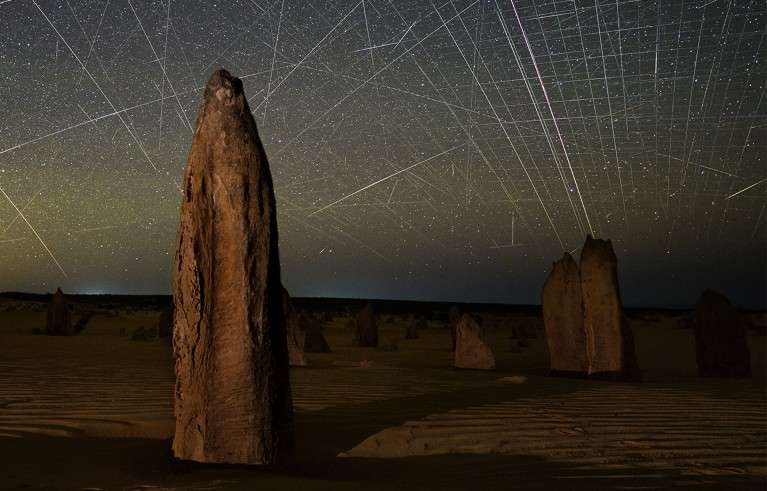
Pettit’s image serves as a vivid reminder of humanity's expanding presence in orbit — a stunning scene that simultaneously inspires awe and prompts reflection on the rapid transformation taking place above our heads.
How the ISS Perspective Unveils Our Shifting Sky
Such images owe their existence to the ISS vantage point, where high orbital speed converts slow star movement into dynamic arcs and streaks. Viewed from this platform, Earth’s surface radiates motion rather than static illumination, while the celestial bodies and satellites follow distinct, recognizable courses.
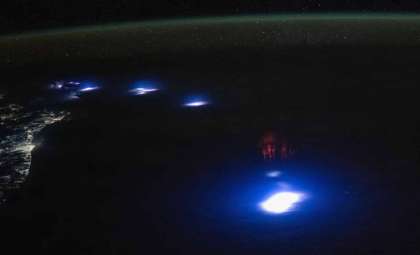
Known for experimenting with photography in zero gravity, Pettit frequently applies long exposures to reveal patterns invisible without this technique. His portfolio includes lightning seen from orbit, vibrant auroral glows, and meteors ablaze in the upper atmosphere. This latest capture continues his artistic legacy, while underscoring urgent issues related to space environment preservation.
- Categories:
- News








0 comments
Sign in to Comment