
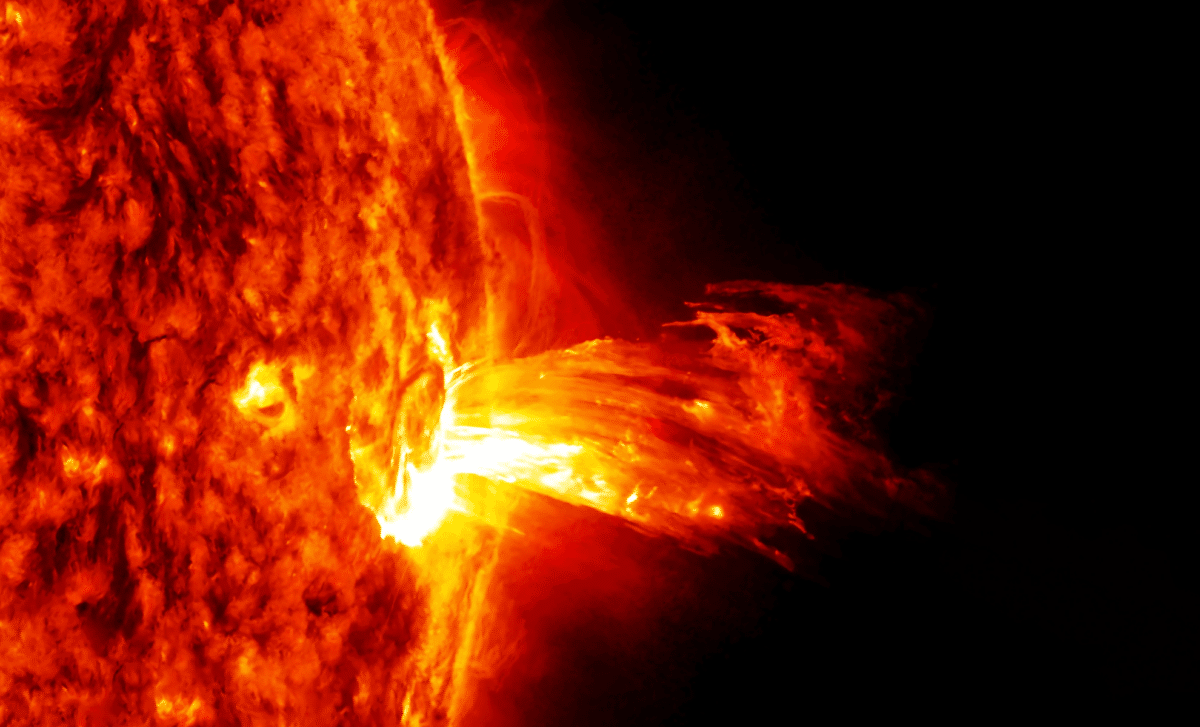
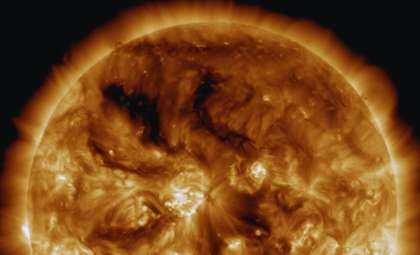
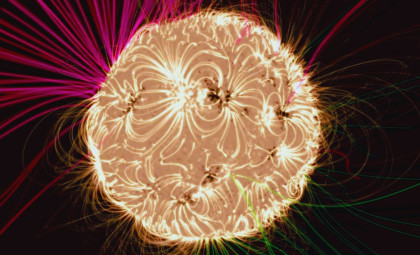
Researchers have created an unprecedented three-dimensional representation of the Sun’s internal magnetic field by integrating satellite observations, providing fresh insights into solar phenomena. This groundbreaking study, featured in The Astrophysical Journal Letters, represents a significant leap forward in decoding solar mechanics and enhancing predictions of space weather events that can affect Earth-based technologies.
Uncovering the Sun’s Magnetic Machinery
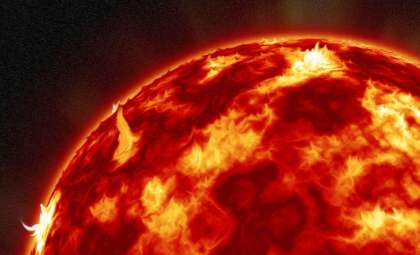
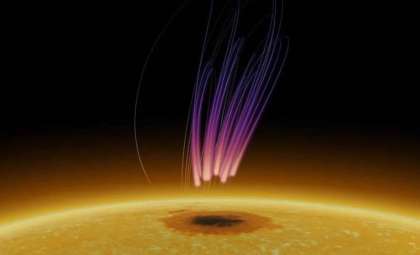
The Sun is not simply a burning ball of plasma; it is a magnetic dynamo at its core. Beneath its agitated surface lies a complex network of magnetic currents and forces that cannot be observed directly but drive every solar flare, spot on the solar surface, and massive coronal ejection we witness. Historically, scientists have relied on simplified theoretical frameworks to grasp this subsurface engine, yet those lacked the depth brought by empirical data.
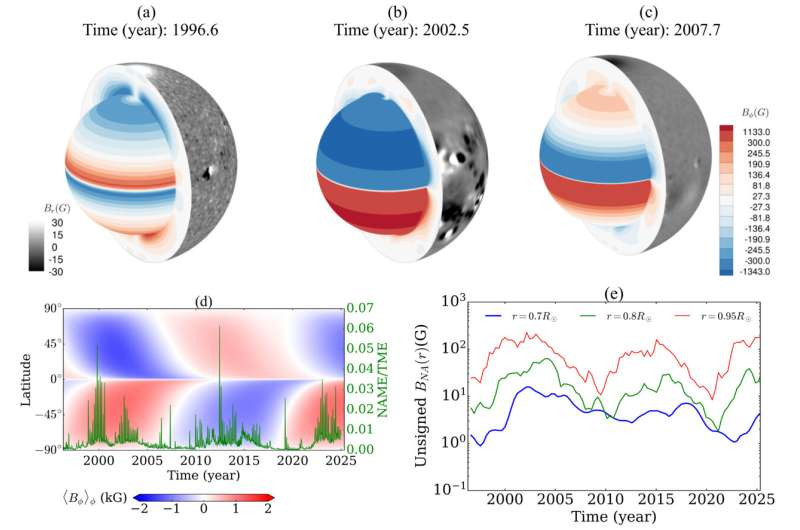
An innovative team from India has now combined three decades’ worth of magnetic satellite observations, dating from 1996 through 2025, to fuel a sophisticated 3D simulation of the solar dynamo process, responsible for the Sun’s magnetic field generation and maintenance. This approach delivers the most comprehensive visualization to date of how magnetic fields shift and evolve deep inside the Sun.

The model’s strength lies not only in its intricate design but also in its fidelity. When tasked with reproducing previous solar cycles, it closely duplicated recorded solar behavior, notably capturing the latitude shifts of sunspots, an important signal indicating the solar cycle’s progression.
Advancing Solar Cycle Forecasting
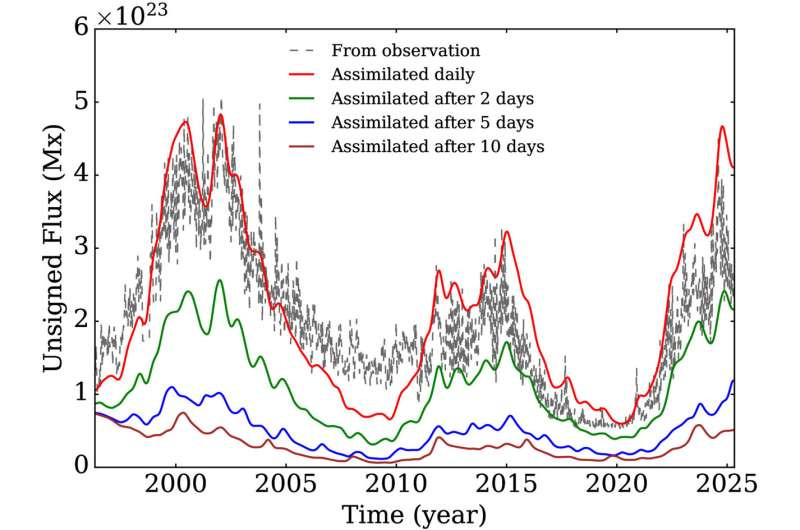
This new modeling doesn’t just excel at historical reconstruction. Scientists tested its predictive power by stopping input data at a given time and asking the model to anticipate forthcoming solar activity. Remarkably, it successfully forecast major solar cycle events three to four years before they occurred, indicating its potential as a vital tool for space weather forecasting.
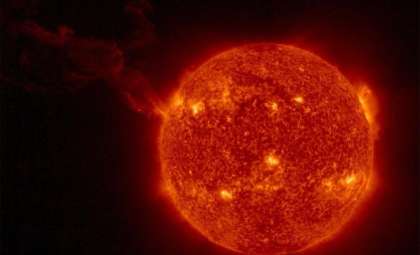
Such predictions have critical implications: solar flares and geomagnetic disturbances can severely impact Earth, from interrupting satellites to crippling power infrastructures. Methods that provide early warnings could revolutionize preparedness across high-tech sectors.
The researchers explain that their data-driven computational technique enables predictions of not only timing but also the latitude and intensity of magnetic activity on the Sun’s surface, paving the way for highly accurate, real-time solar weather alerts.
The study, appearing in The Astrophysical Journal Letters, exemplifies the power of combining long-term observations with robust modeling to deepen understanding of intricate cosmic systems.
The Significance for Planet Earth
As societies depend increasingly on satellite technology, navigation aids, and communication networks, space weather has become a tangible hazard. Solar storms can disrupt GPS signals, complicate airline communication systems, and cause wide-scale electrical blackouts. Having a clear, real-time understanding of the Sun’s inner workings equips us to respond efficiently and mitigate financial damages from solar disturbances.
The innovative model offers utility beyond the scientific realm, potentially supporting national space weather centers, defense agencies, and global aviation operations. Its capability to pinpoint high-risk solar periods years ahead could influence satellite deployment schedules, optimize flight routes, and assist in policy formulation.
Given rising concerns over climate resilience and critical infrastructure security, this advancement comes at a crucial time. Though solar eruptions are unstoppable, this technology marks progress in safeguarding Earth from their most severe consequences.
- Categories:
- Space




0 comments
Sign in to Comment