
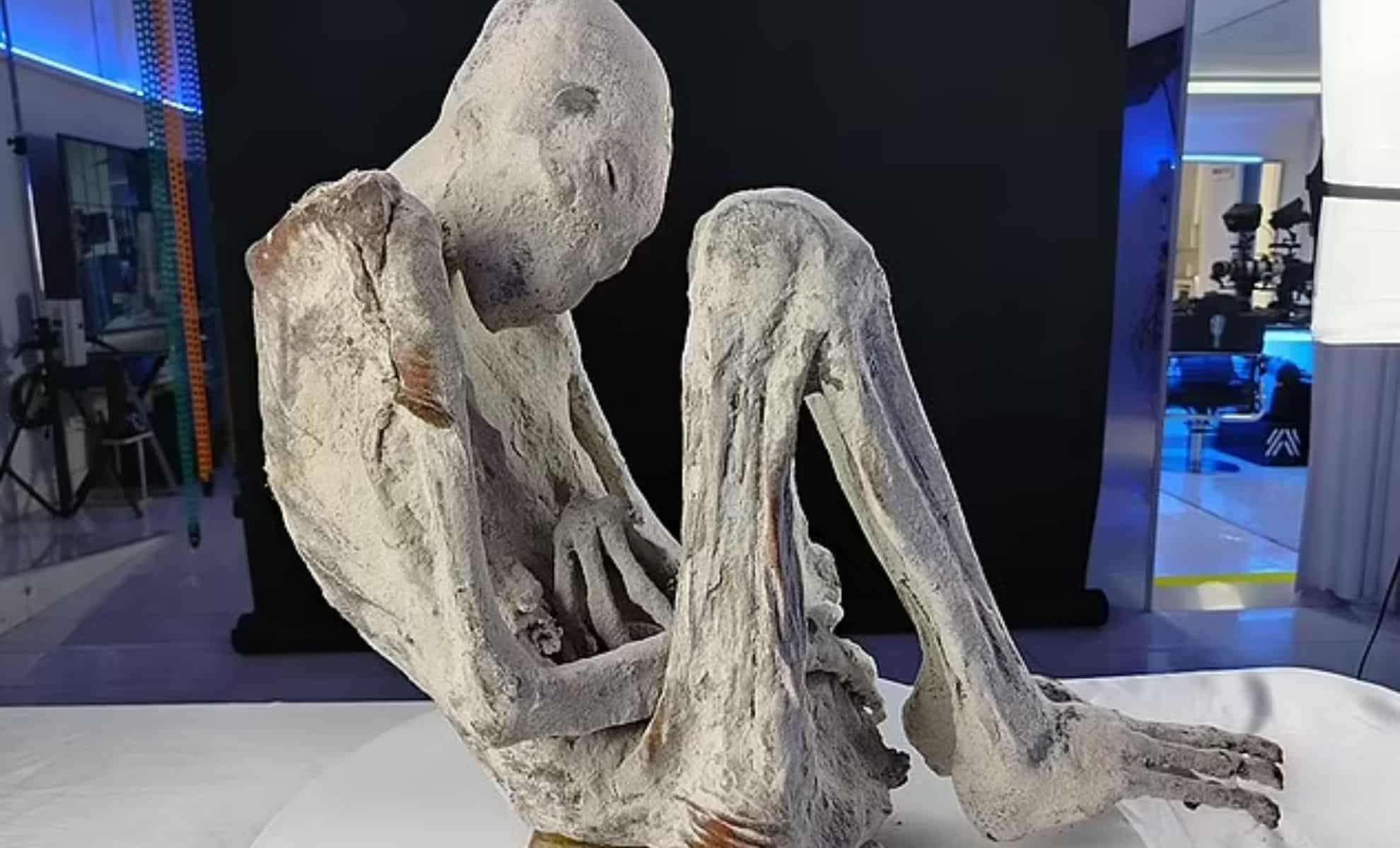
Researchers examining the disputed so-called “alien mummies” discovered in Peru’s Nazca Desert have unveiled fresh evidence detailing the severe injuries and possible death causes of two prominent specimens.
Fatal Trauma in Two Female Mummies
Led by Dr. José Zalce, former head of the Mexican Navy Medical Department, the investigation revealed that both Maria and Montserrat were women who suffered significant physical damage. Maria, estimated to be 35 to 45 years old when she died, exhibited a large pelvic injury, puncture marks suggestive of bites or bruising, and claw-like lacerations on her body.
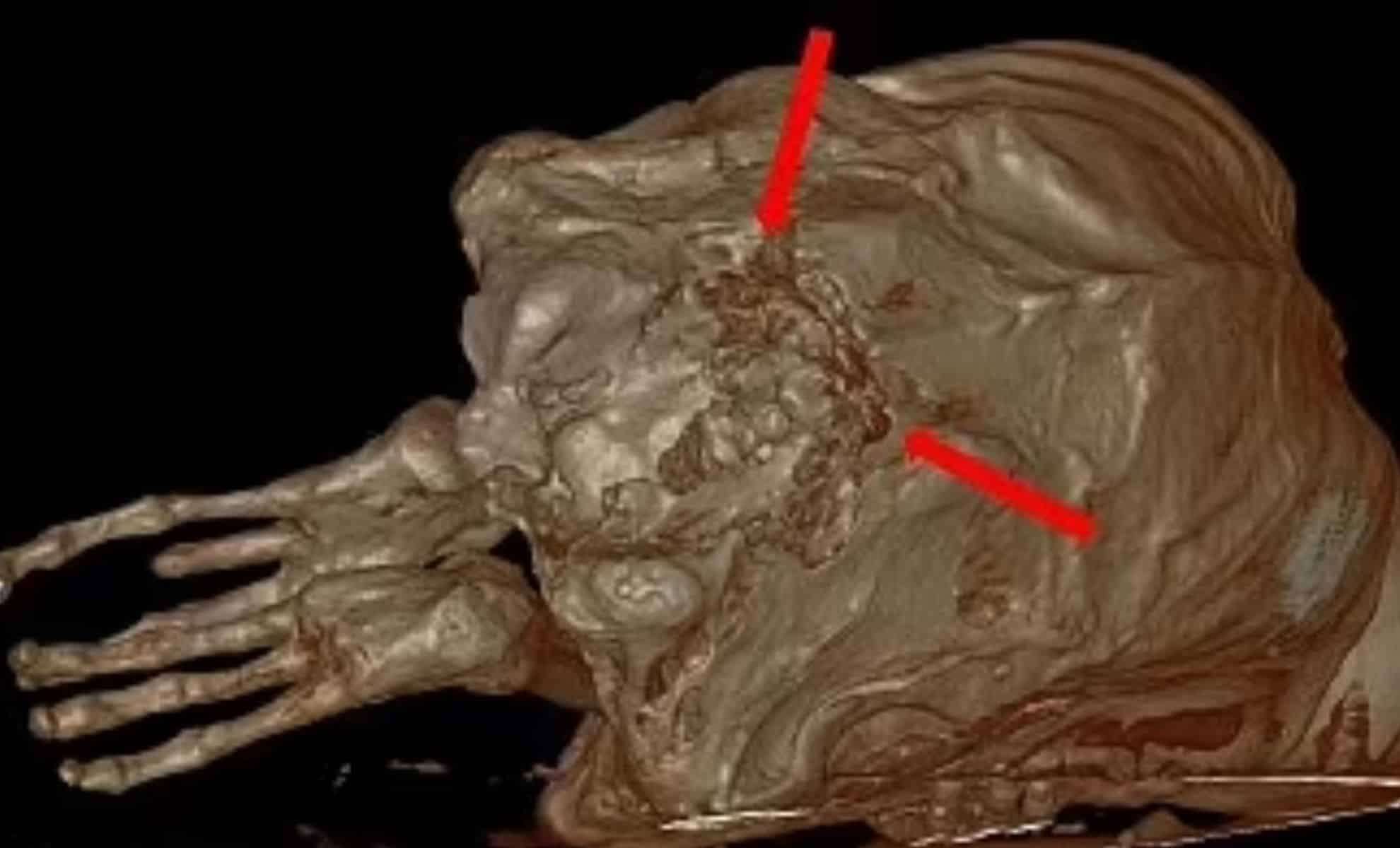
Medical imaging exposed internal injuries, including blood clot formations, fractured bones, and tissue damage spanning from her tailbone to the hip. Particularly, two small vertebrae in the coccyx were fractured, with surrounding soft tissue such as skin and fat missing.

The trauma pattern on Maria’s remains led scientists to propose that she might have fallen from a height, crashing against rocks. One injury featured a distinctive “zigzag” fracture indicative of a violent impact.
Montserrat’s Trauma Indicates Extended Suffering
Montserrat, who was between 16 and 25 years old, displayed contrasting injuries. CT scans showed a puncture in the chest area between the fifth and sixth ribs, alongside multiple fractures in her shoulder blade and ribs.
The research team suggested this damage resulted from Montserrat being pressed upright against a rigid surface at death. The absence of callus formation—a healing process following fractures—suggests these injuries occurred either shortly before or after death, hinting at prolonged trauma rather than a single fatal event.
Distinct Physical Traits Fuel Ongoing Debate
These revelations have reignited discussions about the origin of the mummified remains. Both Maria and Montserrat possess elongated skulls, three fingers and toes, and retained internal organs such as hearts, livers, and intestines. Maria’s height, approximately five feet six inches, challenges previous beliefs that the beings were miniature in stature.
Dr. Zalce, who has examined 21 such bodies, highlighted features like fingerprints, bone wear patterns, tooth structures, and muscle remnants. He argues these provide compelling proof that the specimens are authentic organic remains of once-living beings.
Divided Opinions on Authenticity
The mystery emerged in 2017 when journalist and ufology advocate Jaime Maussan brought these mummies into public view. Covered with a white preservation powder, they were notably exhibited before Mexico’s Congress twice in 2023, capturing global attention.
However, experts analyzing similar remains have presented conflicting views. Flavio Estrada, a forensic archaeologist, asserted in early 2024 that the bodies were fabricated from animal bones and modern adhesives, inconsistent with historical mummification techniques.
Estrada firmly stated, “they are not extraterrestrials; they are not aliens.” He claimed the samples he reviewed were mere artificial dolls crafted recently to mimic mummified beings. In contrast, Joshua McDowell, an ex-prosecutor and defense lawyer who examined one of the mummies, disputed Estrada’s conclusions.
McDowell noted, “The bodies Estrada assessed are unrelated to the specimens in our possession. Those were folk dolls made to replicate [mummies] seized at an airport.” The question of the true nature and provenance of these enigmatic bodies remains deeply contested.
- Categories:
- News








0 comments
Sign in to Comment