
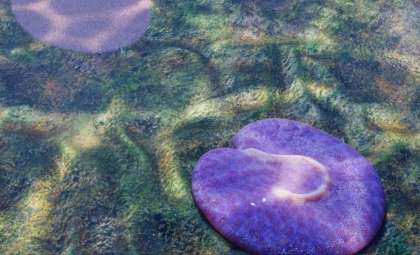
Published in the Proceedings of the National Academy of Sciences (PNAS), this research offers fresh perspectives on a longstanding scientific mystery: the true nature of Earth’s initial animal inhabitants. Researchers at the Massachusetts Institute of Technology (MIT) have uncovered convincing proof that sponges—simple, soft-bodied organisms—might have been among the planet’s earliest animals. By examining chemical residues preserved in ancient rock formations, the study moves us closer to decoding the beginnings of animal evolution.
Unearthing Clues from Deep Time
Since creatures like sponges lack bones or shells, their physical remains rarely survive in the fossil record. Typically, fossils originate from hard tissues such as bones or cartilage, making evidence for soft-bodied animals like sponges or comb jellies especially scarce.
To overcome this challenge, scientists have adopted innovative approaches that extend beyond traditional fossil hunting. Instead, researchers search for molecular evidence, minute traces hinting at ancient life. This investigation concentrated on sterols, molecules integral to the cell membranes of advanced organisms. While primitive life forms do not synthesize these sterols, modern sponges do, offering a crucial diagnostic tool for the researchers.

Linking Sponges to Over 500 Million Years Ago
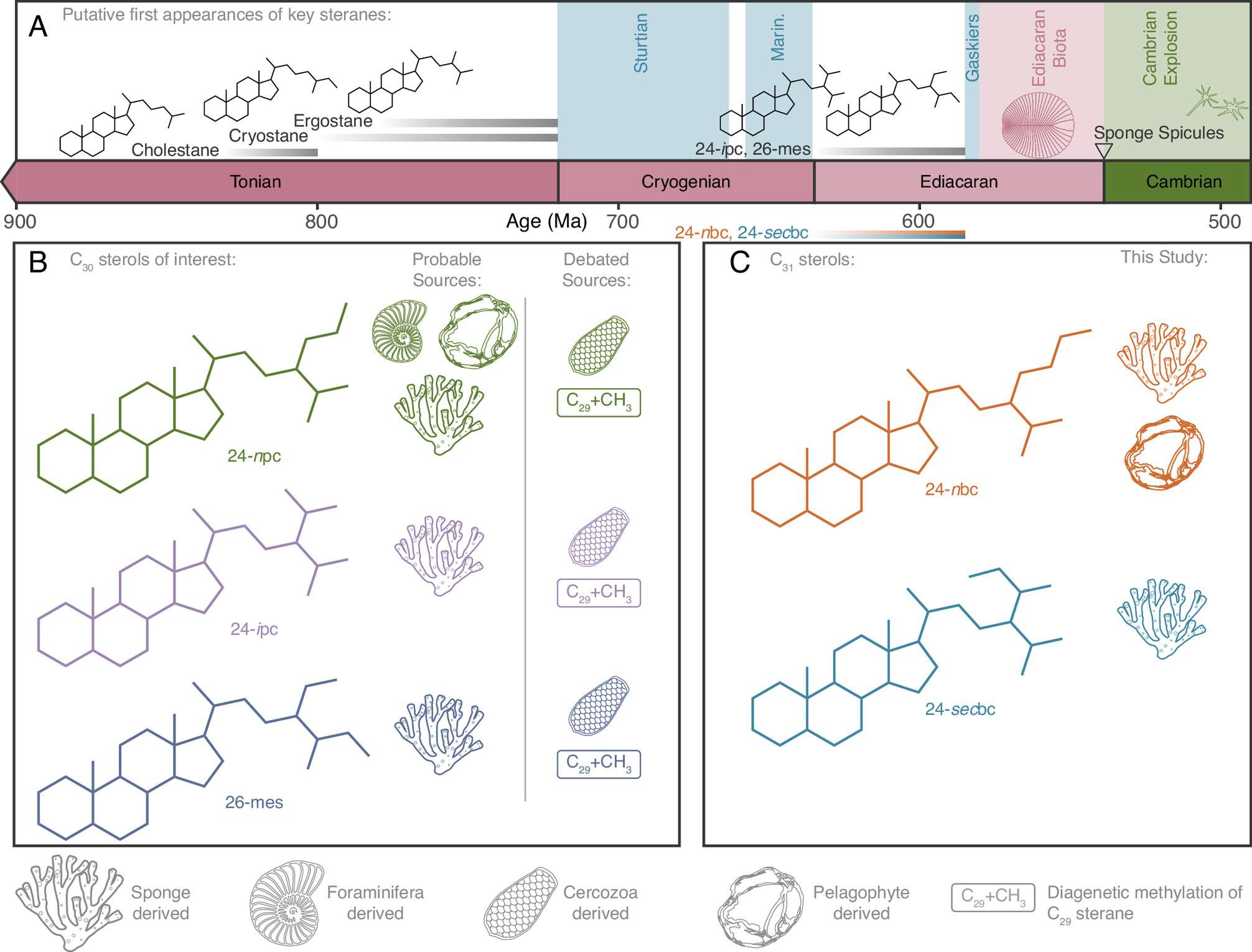
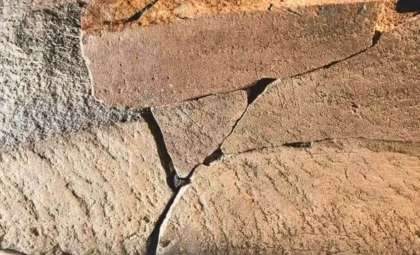
In 2009, geobiologist Roger Summons and colleagues at MIT identified sponge-characteristic sterols in Marinoan age rocks from Oman. These lipid compounds, known as C30 sterols, offered a rare window into the early biological history of our planet. Yet, doubts lingered over whether these chemicals could have originated from organisms other than sponges.
Further research led to the discovery of a second biomarker, C31 sterols, produced by the same gene found in modern sponges. This finding bolstered the argument that sponges were indeed the source of the initial sterol signals and likely among Earth's earliest animal forms.
The Path from Molecular Evidence to Ancient Creatures
Led by Lubna Shawar, the team meticulously validated these ancient molecular fossils, recreating the fossilization process in laboratory experiments to confirm alignment between ancient sterols and their contemporary analogs.
“We don’t know exactly what these organisms would have looked like back then, but they absolutely would have lived in the ocean, they would have been soft-bodied, and we presume they didn’t have a silica skeleton,” said Roger Summons.
The scientists aim to investigate additional prehistoric rock samples to uncover more evidence of early life. According to Shawar, this breakthrough relied on integrating diverse lines of evidence:
“It’s a combination of what’s in the rock, what’s in the sponge, and what you can make in a chemistry laboratory.(…)These special steranes were there all along,” he concluded, “It took asking the right questions to seek them out and to really understand their meaning.”
These molecular fossils provide a novel approach to exploring the dawn of complex life. Presently, they strongly support the role of sponges as likely Earth’s earliest animals.
- Categories:
- Science







0 comments
Sign in to Comment