
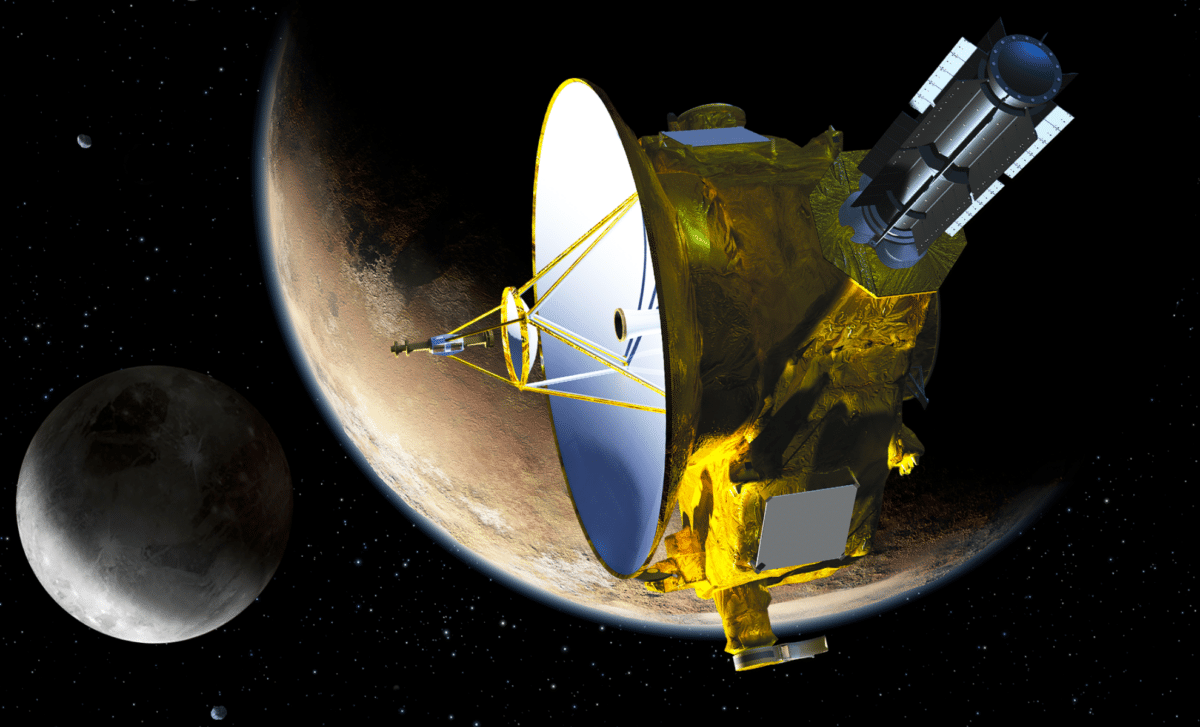
NASA’s New Horizons probe is on course to reach one of space exploration’s pivotal boundaries. Having revolutionized our knowledge of Pluto and the Kuiper Belt, it is now nearing the solar system’s boundary called the heliosphere, a vast magnetic shield created by the Sun. Recent analyses suggest this landmark crossing could occur anywhere between 2029 and 2040, offering a unique chance to study where solar winds yield to the interstellar environment.
Pinpointing the True Edge of Our Solar System
Identifying the exact end of the solar system is a challenge much more complex than it seems. The heliosphere fluctuates as it responds to changes in solar activity and the pressure from interstellar material flowing through the galaxy. This variability means predicting when New Horizons will meet the termination shock calls for advanced simulations rather than a straightforward distance-based estimate. Currently, the spacecraft is roughly 66 astronomical units (AU) from the Sun, where one AU equals the average distance between Earth and the Sun—approximately 149 million kilometers (93 million miles). Scientists are entering a crucial observational phase as new data continue to challenge and enhance our understanding of the Sun’s influence.
Ongoing model improvements aim to prepare for an event only two other spacecraft have witnessed. Dr. Jonathan Gasser, the lead author of two recent studies, elaborated:

“We want to understand when the spacecraft will reach the termination shock to prepare to take measurements and download data about this region.” He added, “Based on our research, we predict that New Horizons will encounter the termination shock as early as 2029 or as late as 2040. And it is possible that it could cross the boundary more than once as the heliosphere continues to expand and contract.”
Why the Boundary of the Heliosphere Is Constantly Shifting
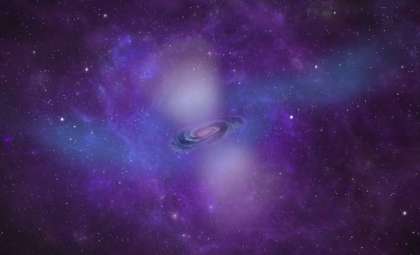
The heliosphere exists because the Sun emits a continual flow of charged particles known as the solar wind. These particles travel outwards at speeds nearing 1.6 million kilometers per hour, creating a protective bubble that envelops all planets and shields the solar system from much of the high-energy radiation from interstellar space. However, this bubble is highly dynamic: intense solar activity strengthens the solar wind, pushing the heliosphere’s edge further out; during quieter solar phases, the boundary shrinks.
New insights suggest an additional factor influences this boundary: ionized particles from the galaxy collide with the outward-moving solar wind and decelerate it. When the solar wind drops below the sound speed of the surrounding medium, it forms the termination shock, a fascinating and valuable region of space. Because both solar and interstellar conditions fluctuate over time, the boundary shifts, potentially allowing New Horizons to cross this frontier multiple times.
A Chance to Follow Voyager Probes into Interstellar Territory
So far, only Voyager 1 and Voyager 2 have passed through the termination shock into interstellar space, making any additional mission entering this region especially important. When Voyager 2 encountered the termination shock, it recorded a sharp 46 percent slowdown in the solar wind speed, confirming the transition from solar influence to the interstellar medium. New Horizons employs a different suite of instruments and will experience this boundary under distinct solar conditions, offering fresh perspectives to complement those from the Voyager missions.
These observations could help clarify how the heliosphere's structure changes over time and refine models of the ongoing interaction between solar and interstellar matter. Dr. Heather Elliott from the Southwest Research Institute emphasized the mission’s broader impact: “Studying the heliosphere is like solving a cosmic puzzle. Not only do we learn more about how the Sun’s influence ends, but we also gain a deeper understanding of the boundary between our solar system and interstellar space – a critical step toward planning future interstellar travel.”
New Research Sets the Stage for a Landmark Discovery in Deep Space
The recent predictions draw on multiple scientific studies exploring both the heliosphere’s outer bounds and the behavior of the solar wind at great distances. These results have been published in three separate papers—two focusing on the heliosphere boundary appeared in The Astrophysical Journal and Advances in Space Research, while another analyzing solar wind speeds was featured in The Astrophysical Journal.
Together, these publications create a detailed and dynamic image of the environment awaiting New Horizons as it journeys ever deeper into outer space. With every kilometer traveled, humanity approaches another extraordinary encounter with the threshold between our solar system and the vastness that lies beyond. Whether the spacecraft crosses this boundary within a few years or near the decade’s end, the findings promise to expand our knowledge of the Sun’s final frontier and the nature of interstellar space itself.
- Categories:
- News








0 comments
Sign in to Comment